Home › Ise Jingu day trip
Day trip · Mie
Ise Jingu day trip from Osaka: Japan's holiest shrine, honestly
KBy Kai Sato · a 28-year Osaka local
Visited and photographed in 2026 — every photo here is ours, taken on the day. Train times and fares change; check the current schedule before you go.
Most first-time visitors to Osaka never even hear about Ise Jingu — which is strange, because to Japanese people it's arguably the single most important place in the country. It's the spiritual home of Shinto: a vast complex of shrines in the forest of Mie Prefecture, dedicated to Amaterasu, the sun goddess from whom the imperial line is said to descend. And it's about two hours from Osaka by train. This is our honest take on doing it as a day trip — what it's actually like, and whether you should.
Ise is not a "sightseeing" shrine, and if you arrive expecting gold and grandeur you'll be confused: the buildings are deliberately plain, unpainted cypress, rebuilt from scratch every 20 years. The magic is the atmosphere — thousand-year-old cedars, white gravel, the Isuzu river, a genuine sense of the sacred that Kyoto's busier temples have lost. If you have only two or three days in Osaka, do Kyoto or Nara first. But if you've been to Japan before, or you want the country's spiritual heart without the selfie crush, Ise is worth the two hours each way — especially paired with the Meoto Iwa rocks and sunset by the sea.
Here's the thing to manage before you go: Ise Jingu is spectacular in significance, not in spectacle. There's no towering pagoda, no vermilion and gold. You cannot even photograph the innermost sanctuaries — a rope and a plain wooden fence are as close as anyone but priests and the imperial family gets. What you get instead is one of the most atmospheric walks in Japan.
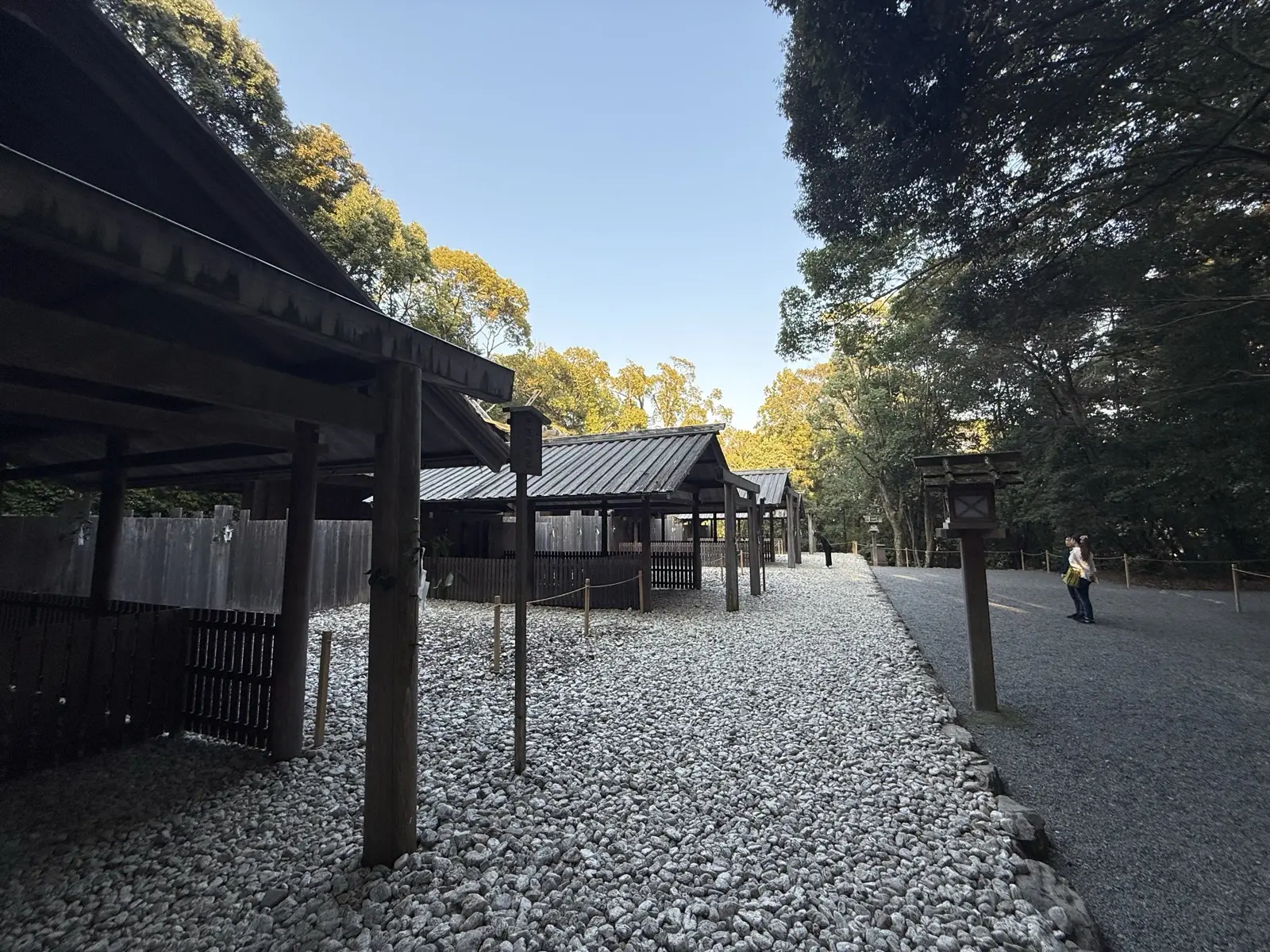
That austerity is the whole point. The shrines are torn down and rebuilt on an adjacent plot every 20 years (the Shikinen Sengu; the last rebuild was 2013, the next is 2033), so what you're looking at is both ancient and brand new — a 1,300-year-old tradition of renewal. Once that clicks, the plainness stops reading as "underwhelming" and starts reading as the opposite.
The easy way is the Kintetsu Limited Express from Osaka-Namba straight to Iseshi or Ujiyamada station — just under two hours, about ¥3,510 one way, with reserved seats (comfortable, and worth reserving in advance on a weekend). Ujiyamada is the more convenient Kintetsu station; Iseshi is served by both Kintetsu and JR.
One honest money note. The Kintetsu Rail Pass is a genuinely good deal if you're also doing Nara and Kyoto — but be clear on the catch: the pass covers regular trains, not the Limited Express seat. To ride the fast reserved train to Ise you still buy a Limited Express ticket on top. Do the maths against a plain round-trip ticket for your exact itinerary — our Kansai transport passes guide breaks down when each pass actually pays off, and it's on the same page as our airport and ICOCA advice.
Ise Jingu is really two main shrines a few kilometres apart, and there's a traditional order. Start at the Geku (外宮, Outer Shrine), dedicated to Toyouke, the deity of food, clothing and shelter — it's a 5-minute walk from Iseshi station, so it's the natural first stop. Then take a bus (about 15–20 minutes) to the Naiku (内宮, Inner Shrine), dedicated to Amaterasu and the more famous of the two.
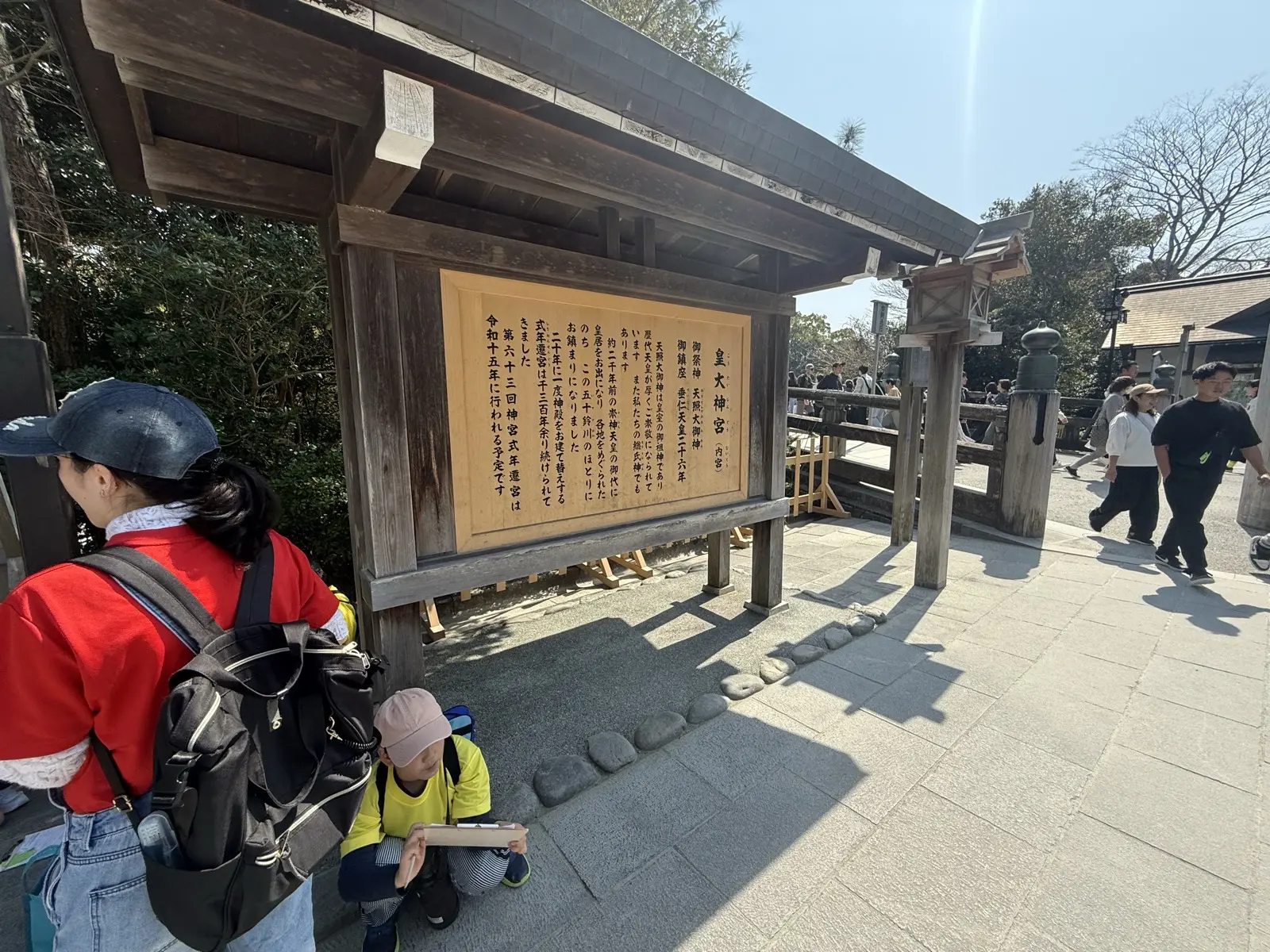
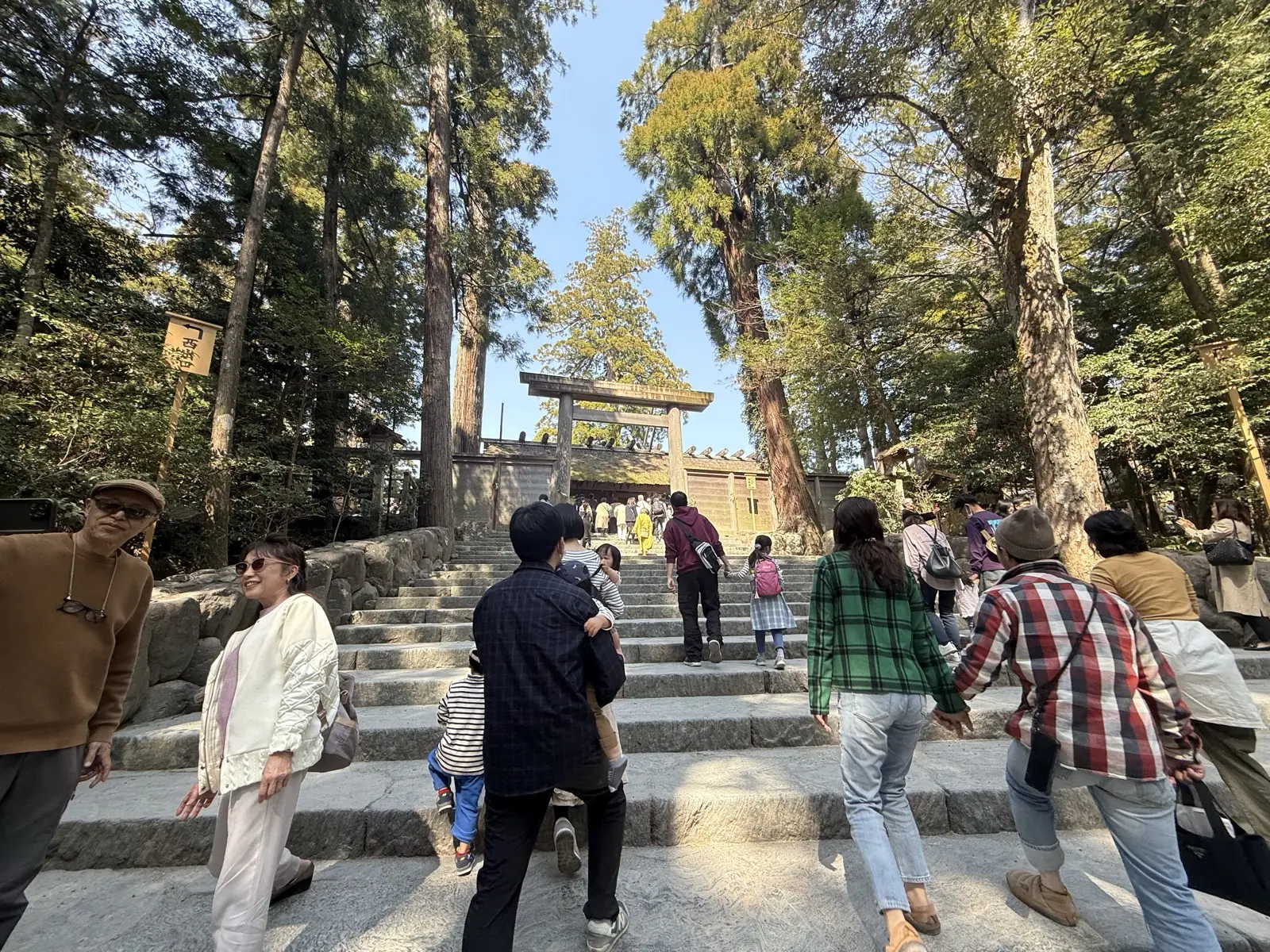
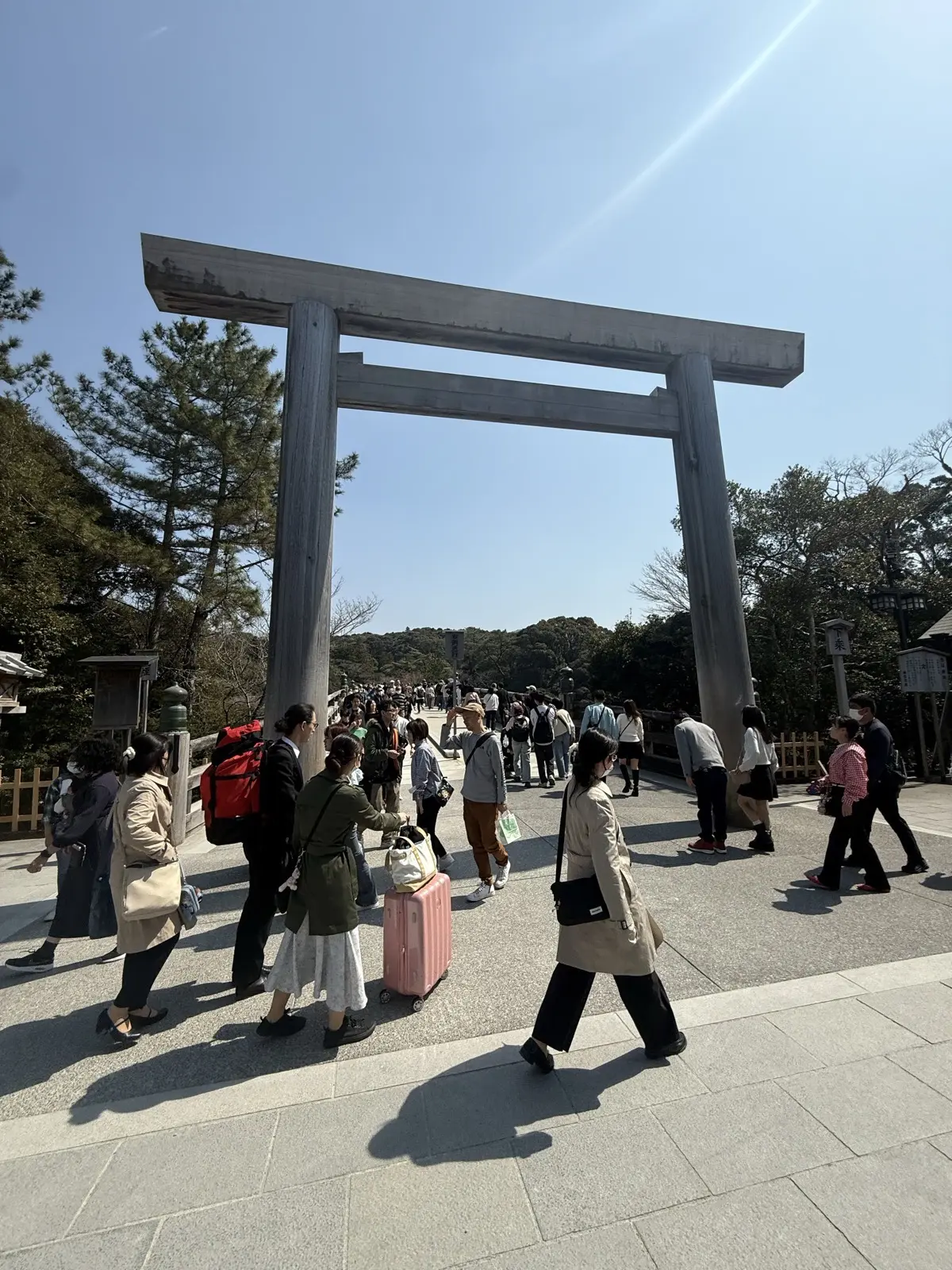
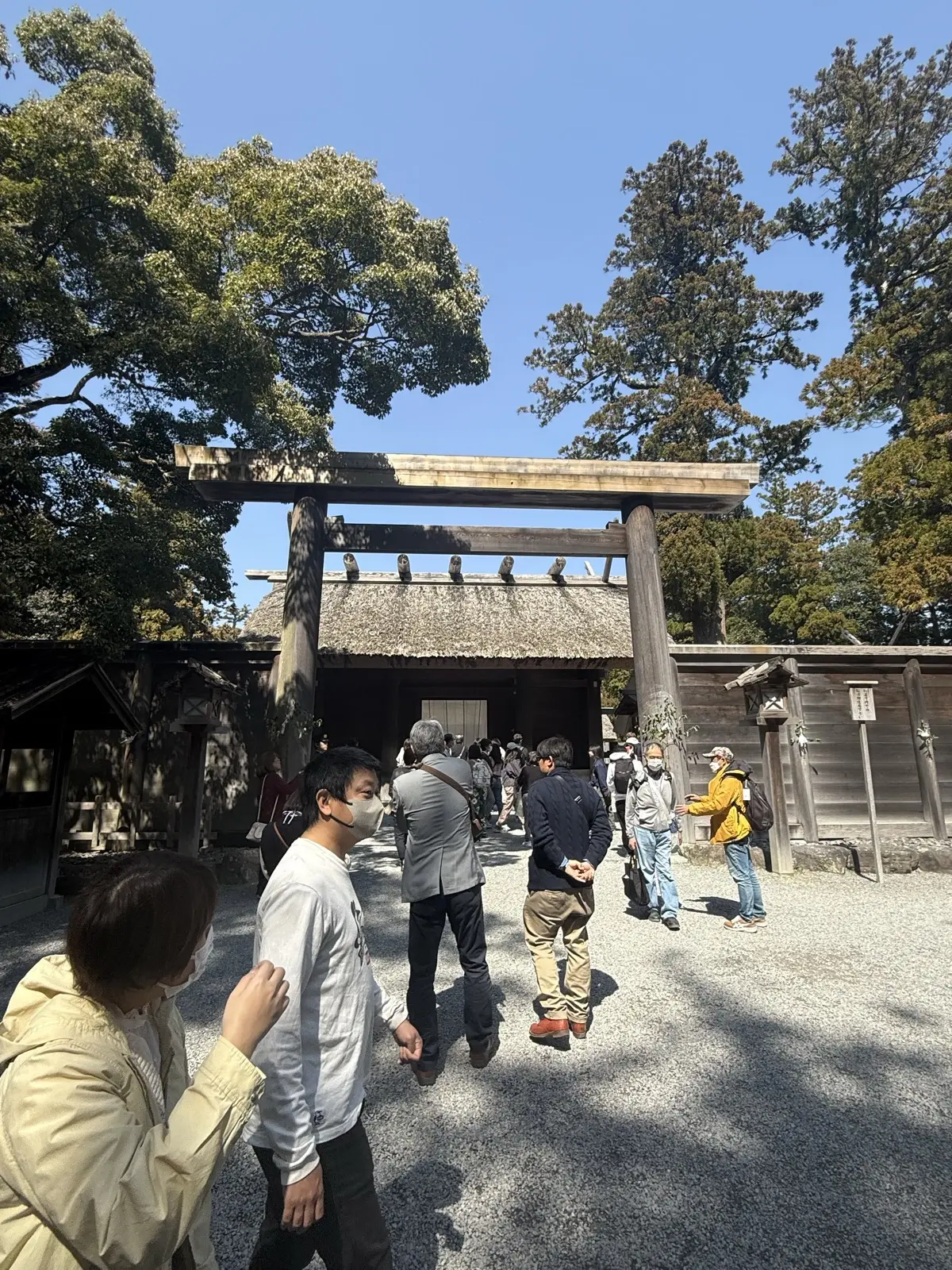
At the Naiku you cross the Uji Bridge over the clear Isuzu river, rinse your hands (many people rinse them in the river itself), and walk a long gravel approach under enormous cedars to the main sanctuary. The final climb is a flight of stone steps to a plain wooden gate — and that's where the cameras have to stop.
Budget roughly 30 minutes for the Geku and an hour for the Naiku, plus the bus between them. Neither charges admission — Ise is free.
If Ise Jingu is the significance, Meoto Iwa (夫婦岩, the "Wedded Rocks") is the postcard. A short trip toward the coast at Futami, two rocks stand in the sea joined by a great shimenawa straw rope — a larger "husband" rock and a smaller "wife" rock, symbolising marriage and the union of the creator deities. A tiny torii sits on top of the larger one.
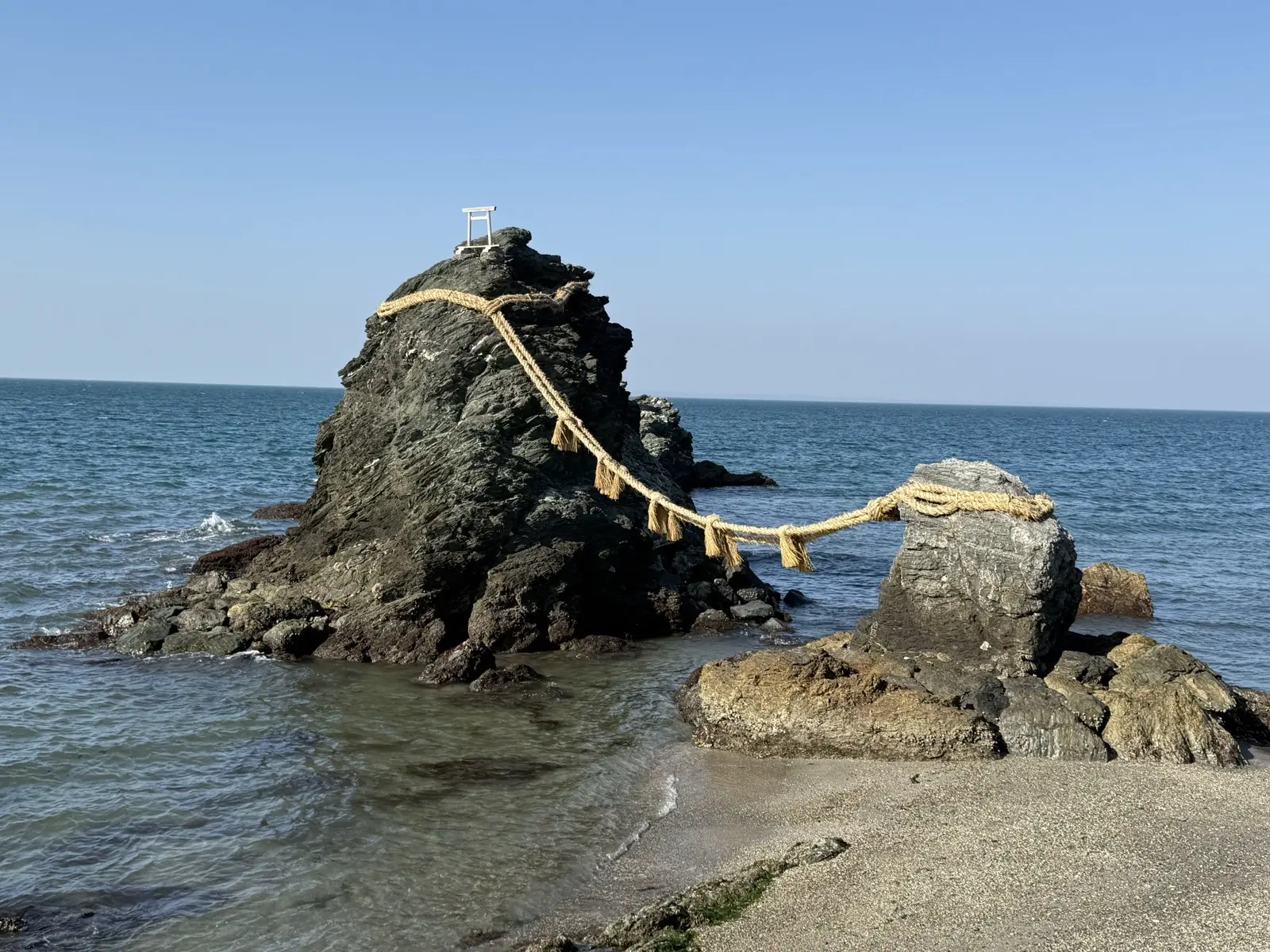
They belong to Futami Okitama Shrine, which is free and, by tradition, the first place pilgrims came to purify themselves in the sea before heading to Ise Jingu — so if you're a purist, Meoto Iwa comes before the shrines, not after. Look for the frog (kaeru) statues around the shrine; kaeru is a pun on "return safely."
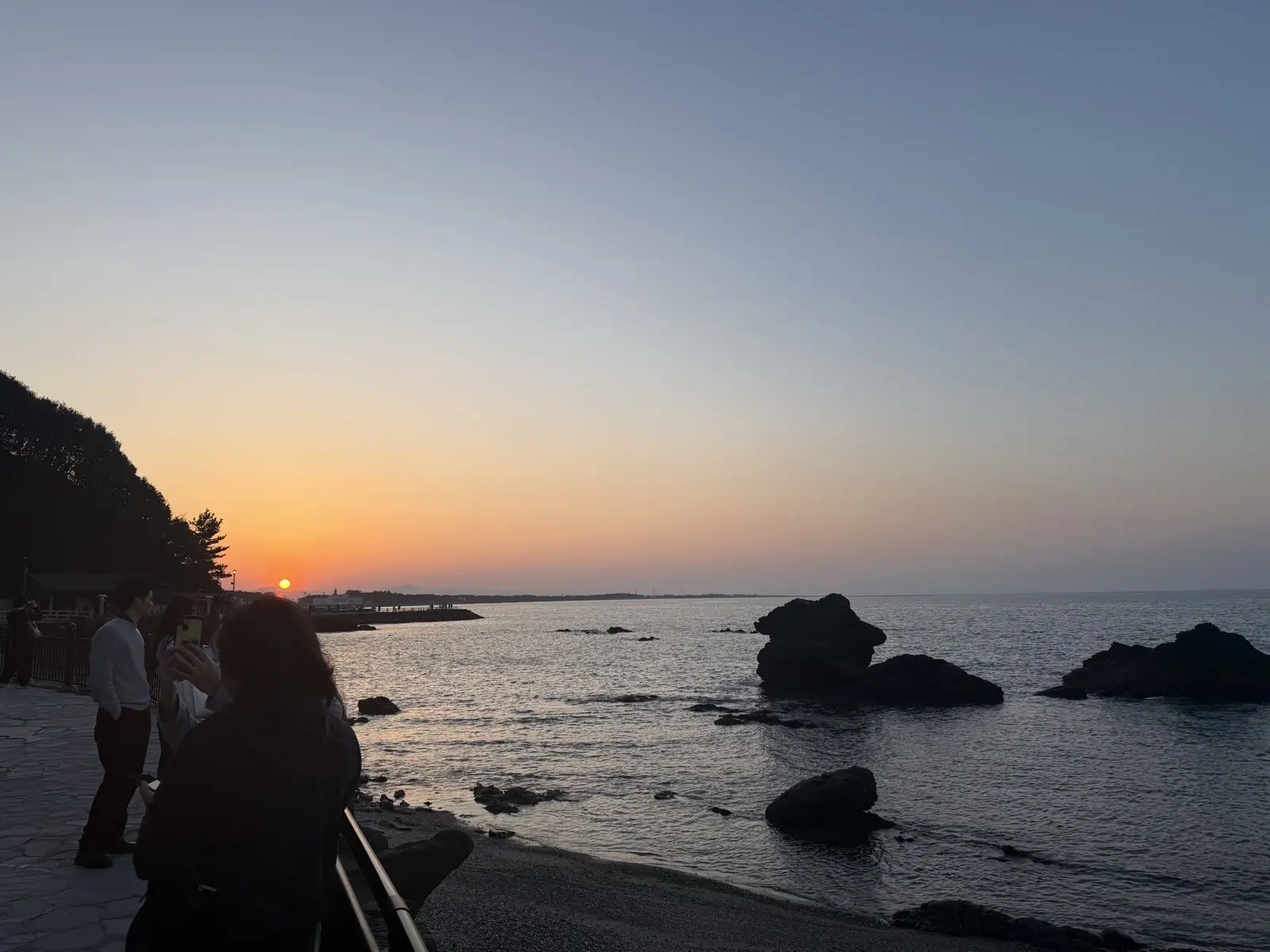
The famous shot is the sun rising between the two rocks, which happens from around May to July (best near the summer solstice) — you'd need to be there before dawn, which really means staying overnight nearby. For a day-tripper, the rocks are still lovely by day, and the coast is a calm, uncrowded contrast to the forest of the shrines.
Access: Futami Okitama Shrine is about a 15-minute walk from JR Futaminoura station, or a bus from Iseshi to the "Meoto Iwa Higashiguchi" stop and a 5-minute walk.
Right outside the Naiku is Oharaimachi, a beautifully preserved old street of wooden shopfronts, with the lively Okage Yokocho district in the middle. This is where you eat, and it's genuinely good: Ise udon (soft, thick noodles in a dark, sweet-savoury sauce — nothing like Sanuki udon, and worth trying precisely because it's different), grilled skewers, and Akafuku, the famous soft mochi topped with sweet red-bean paste that's been made here for three centuries. It's touristy but authentically so — this is where locals bring visiting family too.
A realistic day plan from Osaka: catch a morning Kintetsu Limited Express from Osaka-Namba (~2 hr); Geku from Iseshi station; bus to the Naiku; lunch on Oharaimachi; then, if you have the energy, out to Meoto Iwa at Futami before heading back. It's a full, satisfying day, and you'll be home in Osaka for dinner.
Etiquette, briefly. At the entrance torii, a small bow. At the purification trough (or the Isuzu river), rinse left hand, right hand, then mouth. To pray: two bows, two claps, one bow. There's no admission and no dress code, but this is a working sacred site, not a theme park — keep your voice down beyond the torii, and don't photograph past the "no photography" points.
When to go. Early is calmer and the low light through the cedars is beautiful. Ise is fine year-round; late winter brings plum blossom, and the Meoto Iwa sunrise season is May–July. Avoid the first days of January unless you specifically want the enormous New Year pilgrimage crowds.
Doing more day trips from Osaka? See our Osaka-to-Kyoto guide and the full things to do in Osaka list — and if you're still planning the trip, the 3-day Osaka itinerary shows where a day like this fits.
Yes, if you value atmosphere and significance over visual spectacle, or you've seen the big Kyoto/Nara sights already. It's Japan's most sacred Shinto shrine, set in beautiful old-growth forest, and far less of a tourist scrum than Kyoto. It's about two hours each way, so it's a full day — first-timers with limited time should usually prioritise Kyoto or Nara first.
Take the Kintetsu Limited Express from Osaka-Namba to Iseshi or Ujiyamada station — just under two hours, around ¥3,510 one way, reserved seats. The Kintetsu Rail Pass can save money if you're also doing Nara and Kyoto, but note it doesn't cover the Limited Express seat fee, which you pay on top.
Both, in that order. Tradition is to visit the Geku (Outer Shrine, a 5-minute walk from Iseshi station) first, then take a bus to the Naiku (Inner Shrine), which is the more famous. Allow about 30 minutes for the Geku and an hour for the Naiku, plus the bus between them.
Yes — it's the scenic highlight and a calm coastal contrast to the forest shrines. The two rocks joined by a sacred rope belong to the free Futami Okitama Shrine. The sun rises between the rocks from roughly May to July, but that needs a pre-dawn (usually overnight) visit; by day they're still a lovely, uncrowded stop.
No. Both the Geku and Naiku are free to enter, as is Futami Okitama Shrine. Your main costs are the train and whatever you eat and buy on Oharaimachi.
Head to Oharaimachi and Okage Yokocho, the old street just outside the Naiku. Try Ise udon (soft thick noodles in a dark sweet-savoury sauce — very different from other udon) and Akafuku, the local soft mochi with sweet red-bean paste that's been made here for centuries.