Home › Osaka at night
Osaka · After dark
Osaka at night: the prettiest spots a local actually loves
KBy Kai Sato · a 28-year Osaka local
Details last verified July 2026 — illumination dates change every year, so always check the current-year schedule before you go.
Here's a thing most visitors never find out: they arrive into Osaka Station, glance at the concrete and the office towers, decide "okay, Kita is just where you change trains," and hurry south to Dotonbori for the neon. And Dotonbori is great — but this guide is a small argument from a local who grew up here: Osaka is genuinely beautiful after dark, and the prettiest corners are exactly the ones the crowds walk straight past. No entry fee, no ticket — just water, light and reflections. Here's where I actually go.
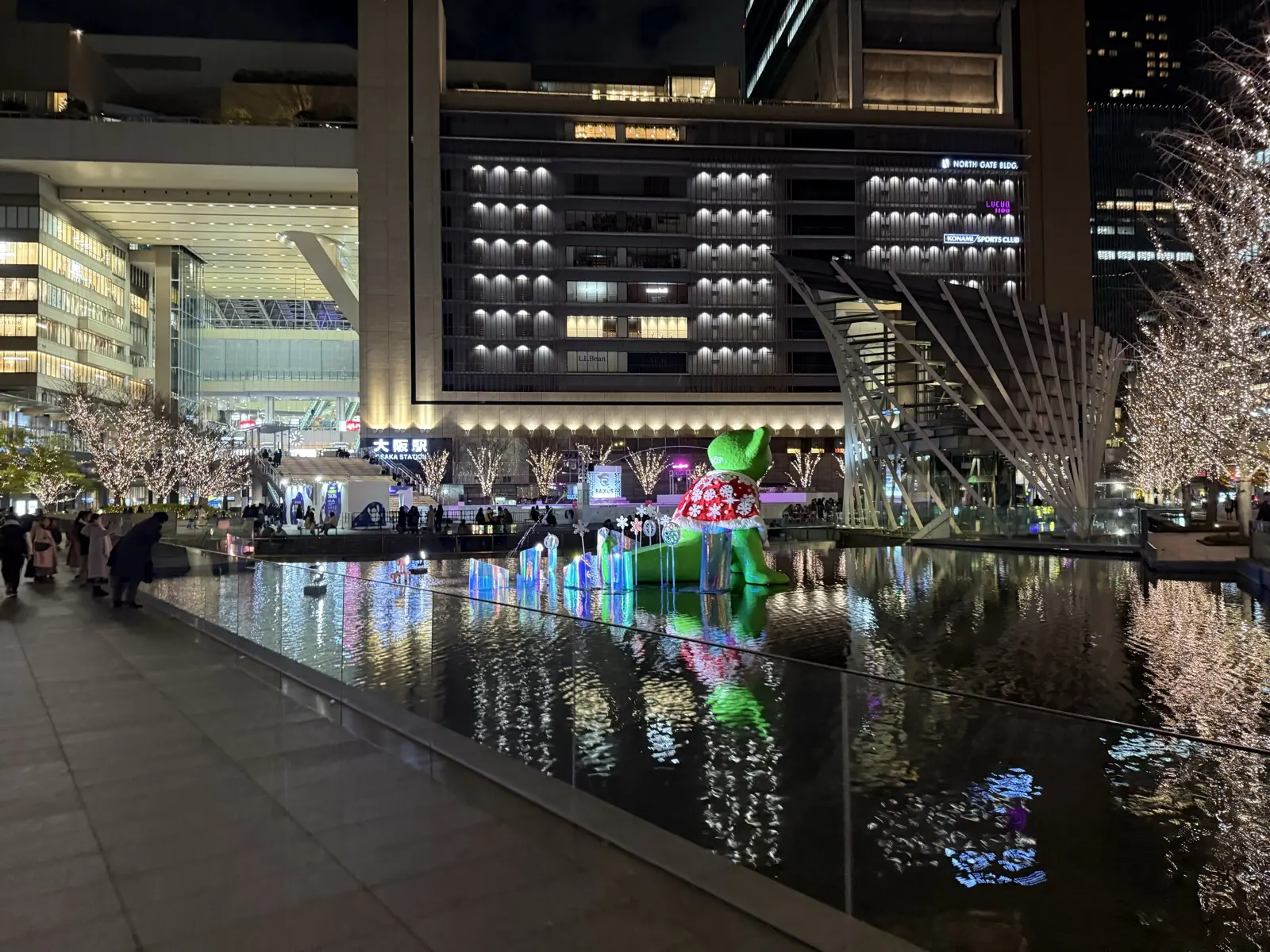
Stand at the water plaza right in front of Osaka Station's north side (Umekita) after sunset — the towers, the trees and the lights all mirror in the shallow water. In winter, with the illuminations on, it's one of the most quietly lovely spots in the whole city, and almost nobody makes a special trip for it.
"Kita" (北, "north") is the district around Osaka/Umeda Station. By day it reads as business Osaka; after dark it turns out to be the city's showpiece. The heart of it is Umekita Plaza, the open square directly outside the station's north exit, built with a run of cascades and shallow water to echo Osaka's old nickname, "the city of water." Around 500 LED lights and a drifting mist installation make it feel almost theatrical once the sun goes down.
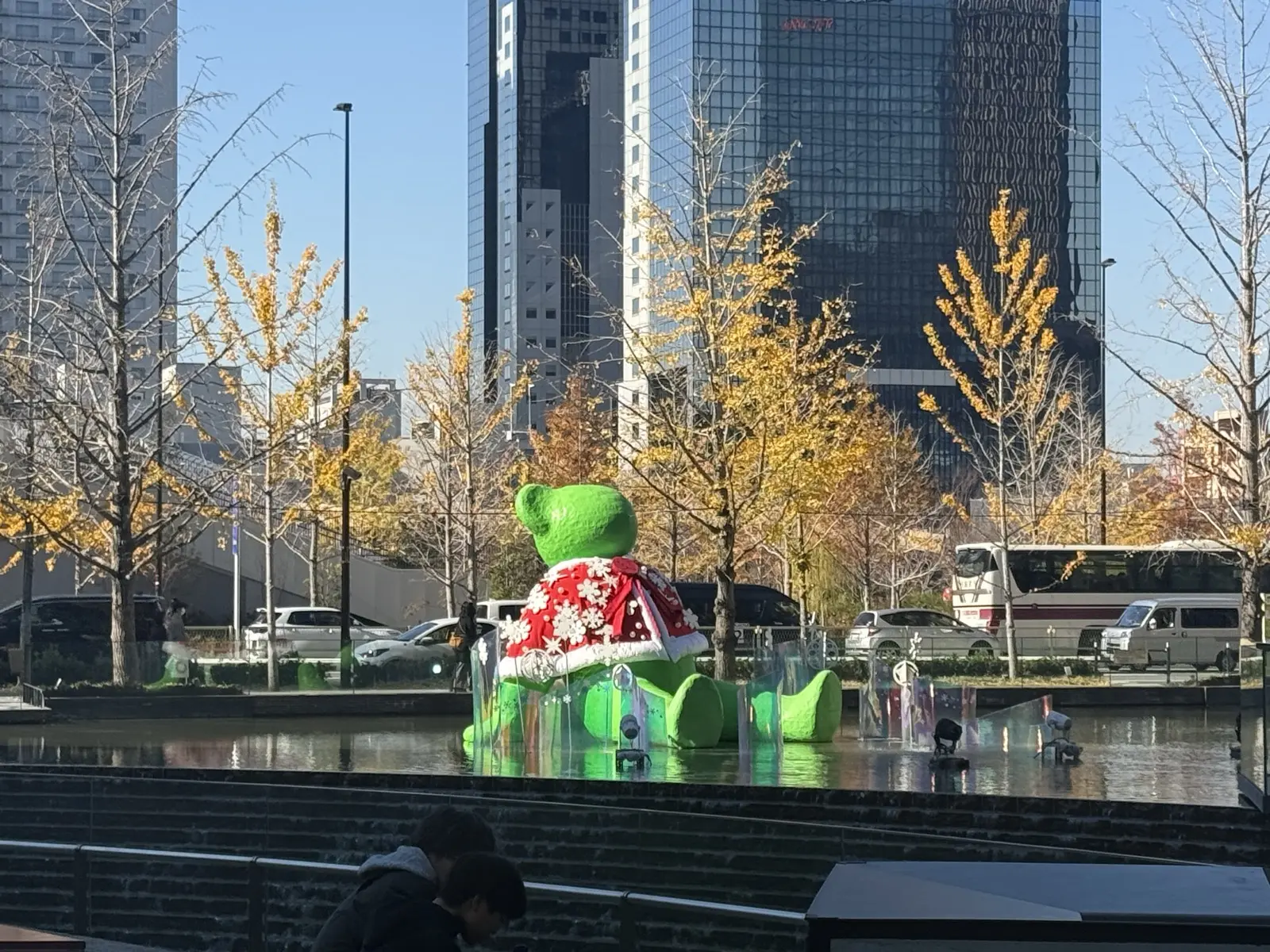
See that big green creature sitting by the water? Everyone photographs it, and nearly everyone — including me, and the local who took these shots — assumes it's a frog. It isn't. It's a giant green teddy bear called "TED HYBER," by the French artist Fabrice Hyber. (Look for the round ears, not a frog's eyes.) It's become an accidental little mascot of the station square — proof that Osaka doesn't take itself too seriously — and a genuinely fun meeting spot. Now you know the secret; go correct someone's Instagram caption.
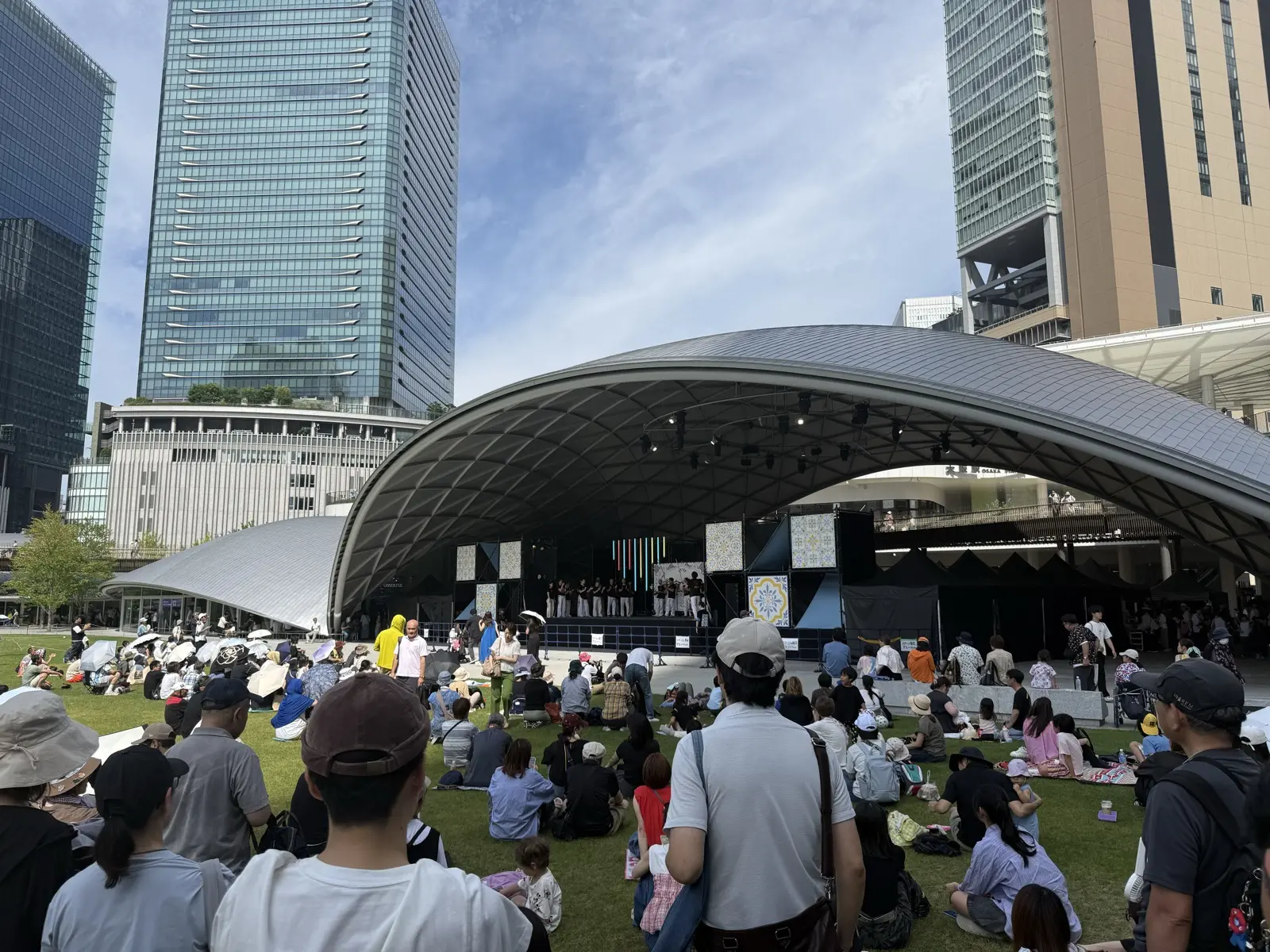
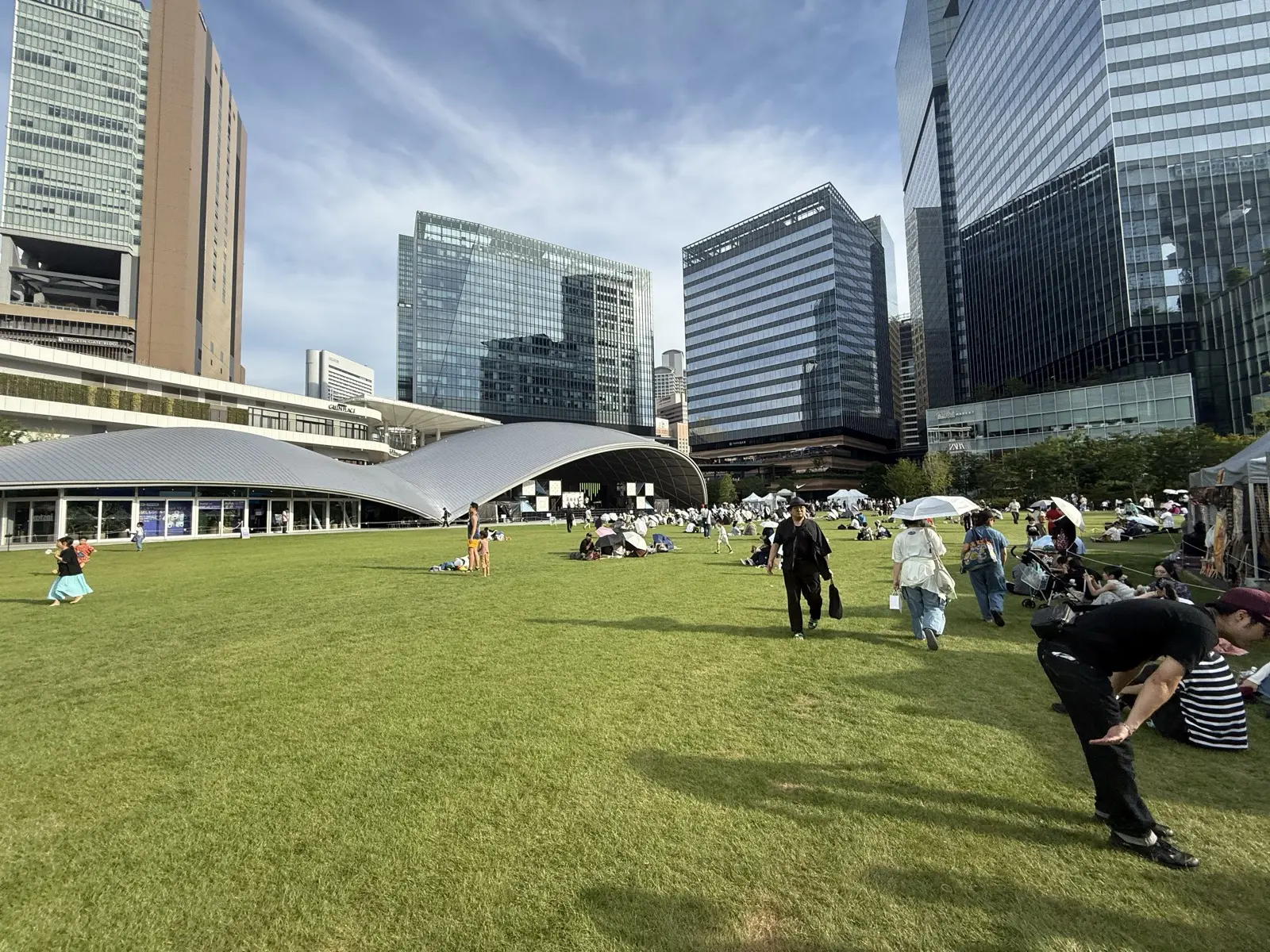
Right beside the plaza is Grand Green Osaka (the Umekita Park), a roughly 4.5-hectare park that opened in 2024 and connects straight to the station. A vast open lawn, a fountain, cafés and shops — it's rare for a major city to put this much green literally on top of its main station, and in the evening the lawn edges and the surrounding towers light up beautifully. It's still under-discovered by overseas visitors, which is exactly why it's worth your time now.
It's also worth a quick check of what's on before you go: the plaza and the park lawn regularly host events — open-air performances, seasonal pop-up markets and food stalls — so there's often something extra happening on the grass, not just the space itself.
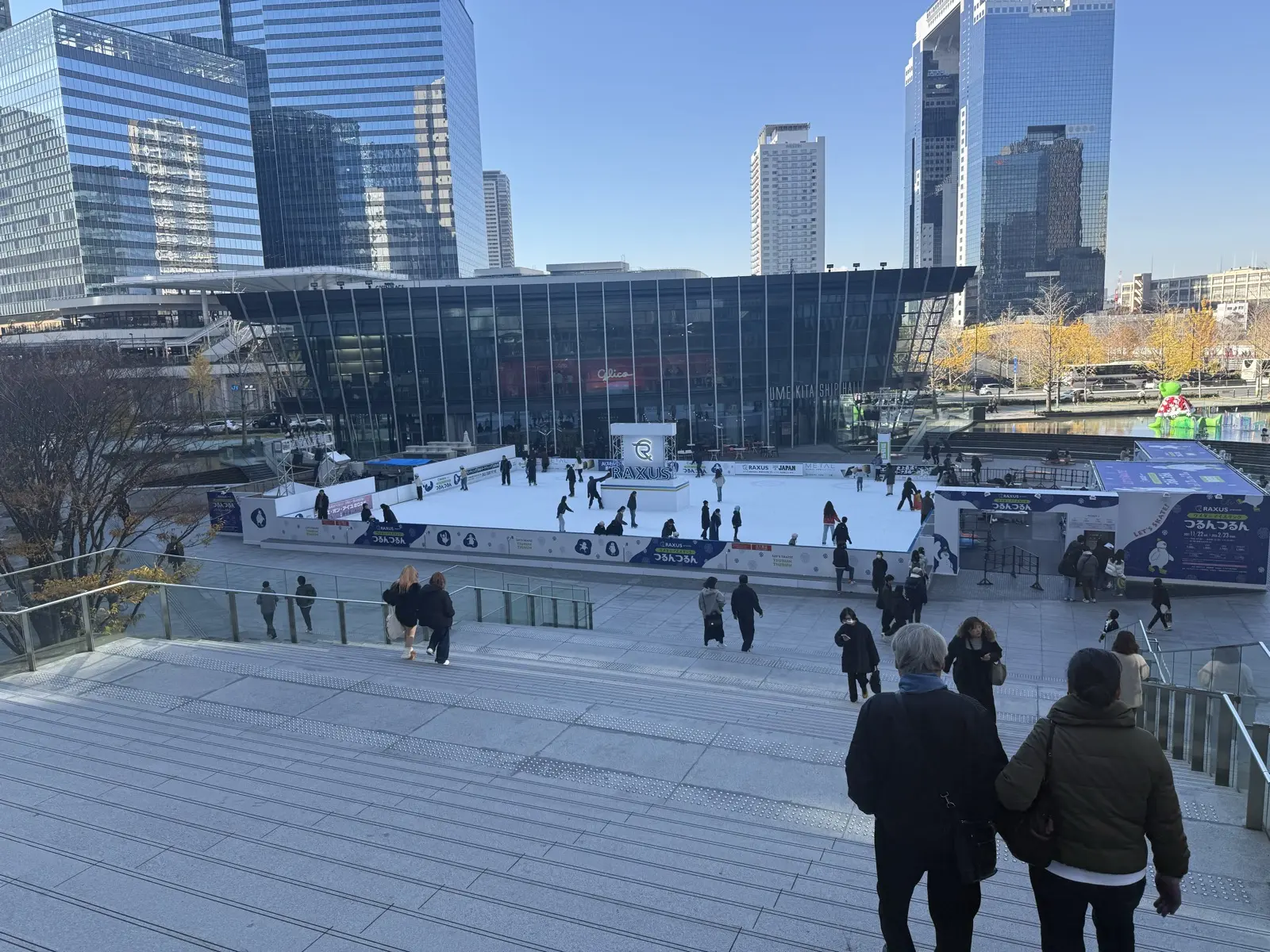
Come in winter and a pop-up open-air ice rink appears in the plaza, framed by the glass station building and the skyscrapers behind — a very Osaka mix of the everyday and the spectacular. (Dates and prices change each year; check before you go.) Just beyond, the tree-lined promenades are strung with fairy lights, and a scattering of light-art pieces sit in the reflecting pools.
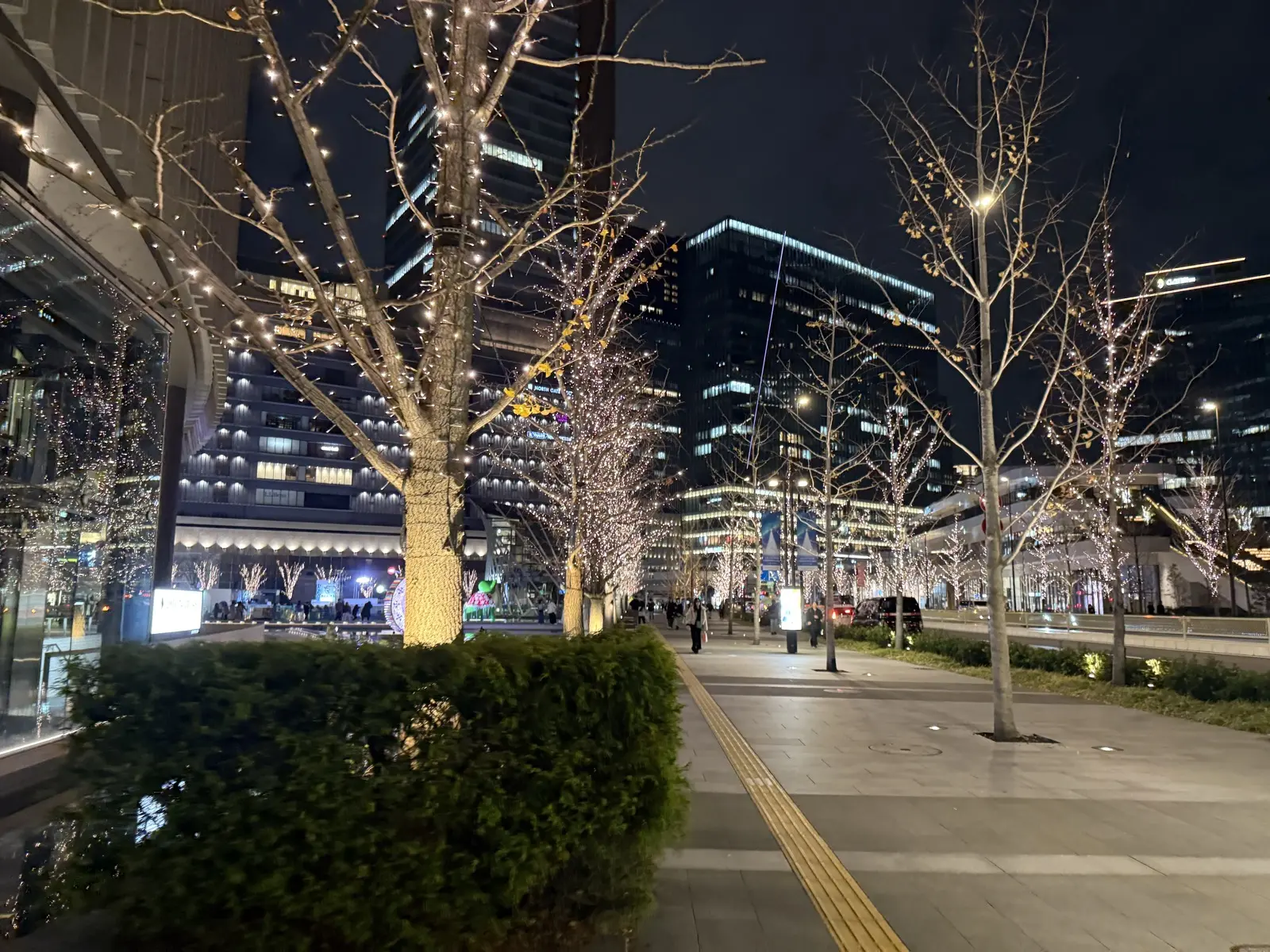
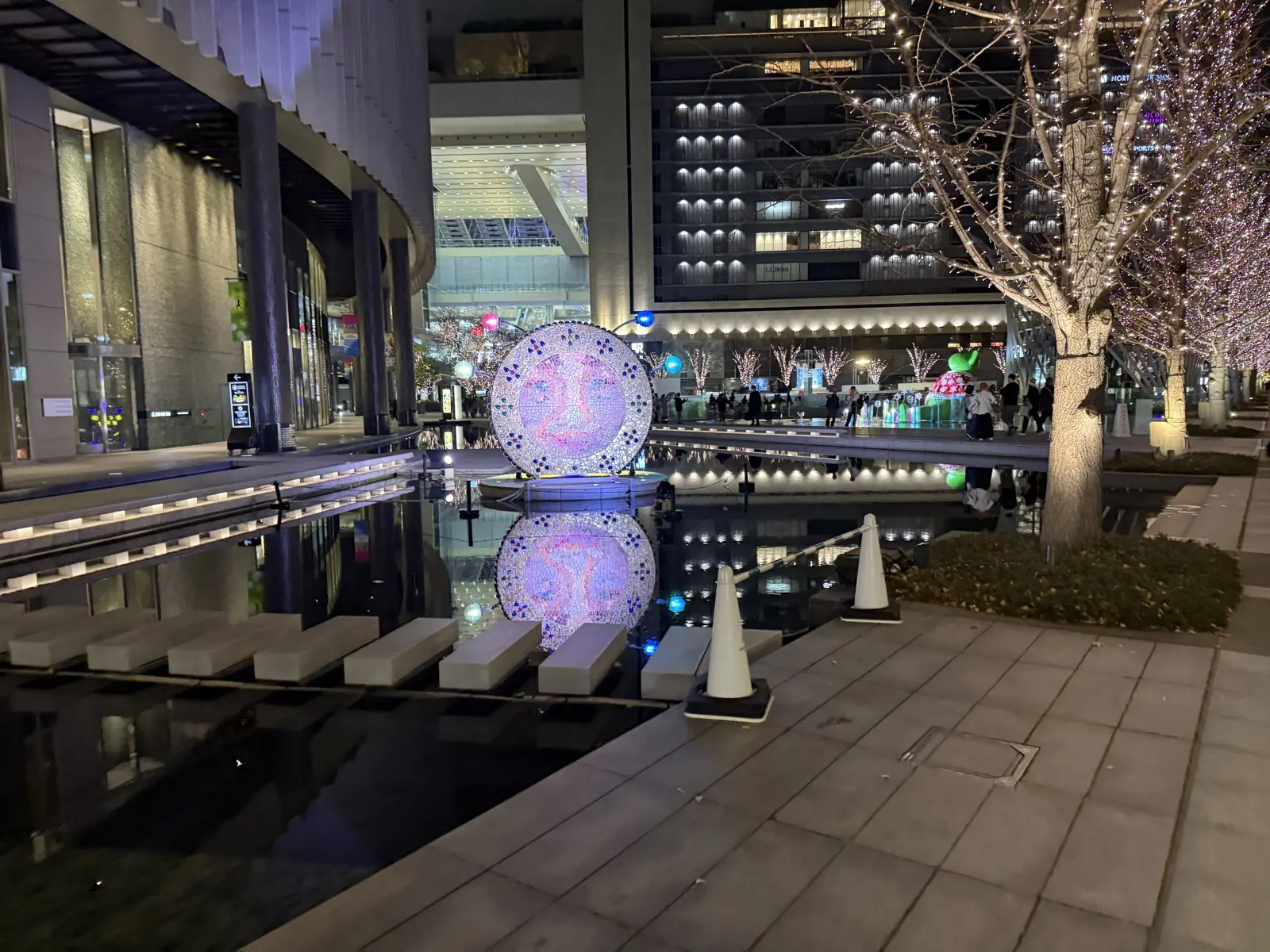
For the view from above the lights, the nearby Umeda Sky Building observatory is a 10-minute walk and one of the best night viewpoints in the city — worth pairing with this on the same evening.
A short walk (or one stop on the Keihan Nakanoshima Line) south of Kita is Nakanoshima, the long river island where the Dojima and Tosabori rivers split around a strip of grand old architecture. By day it's a quiet business-and-culture island; after dark it becomes the calmest, prettiest walk in central Osaka. The rivers turn to black mirrors, the office towers and the old red-brick buildings reflect in the water, and Osaka's beautifully lit-up retro steel bridges glow in shifting colours.
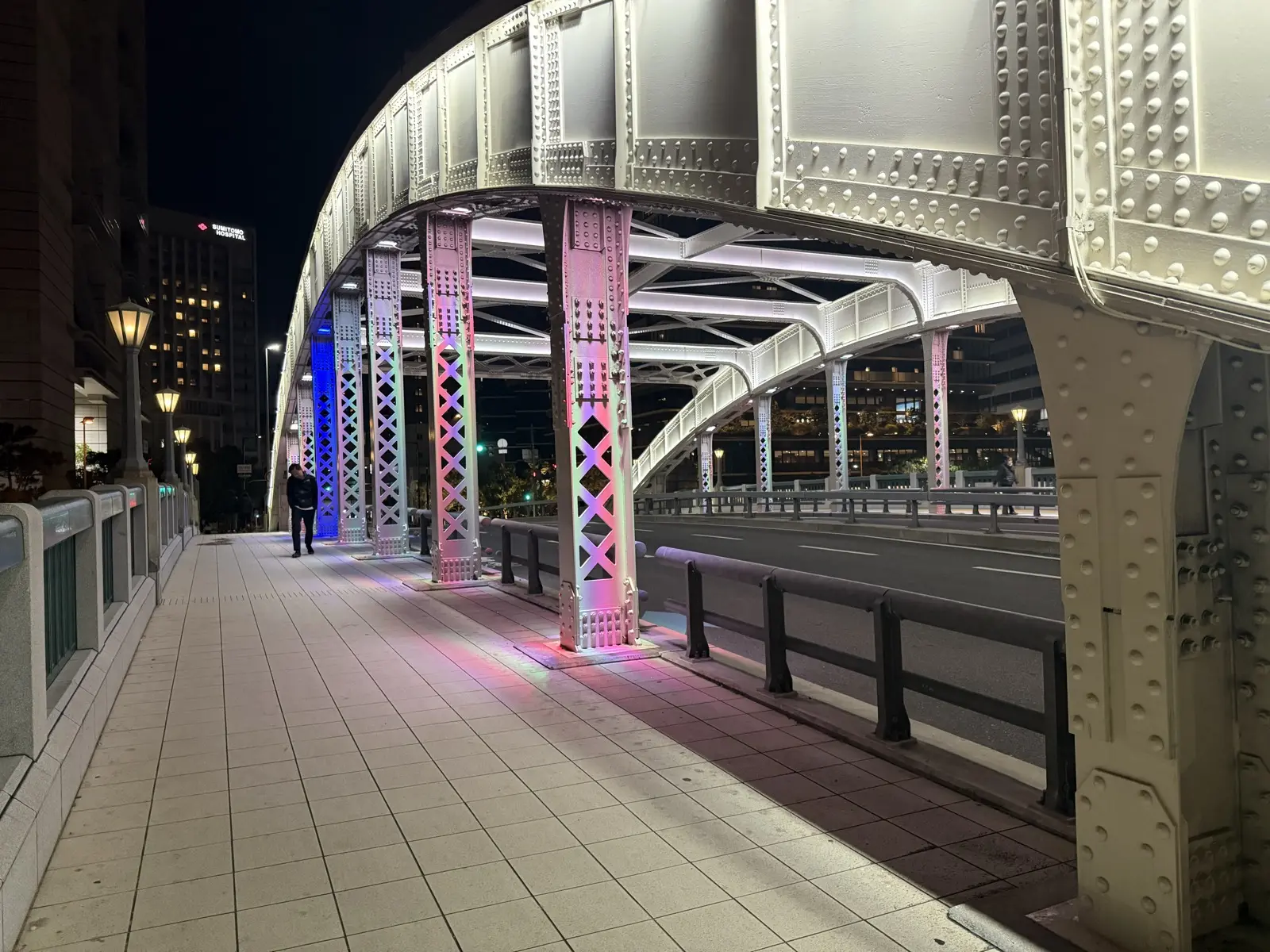
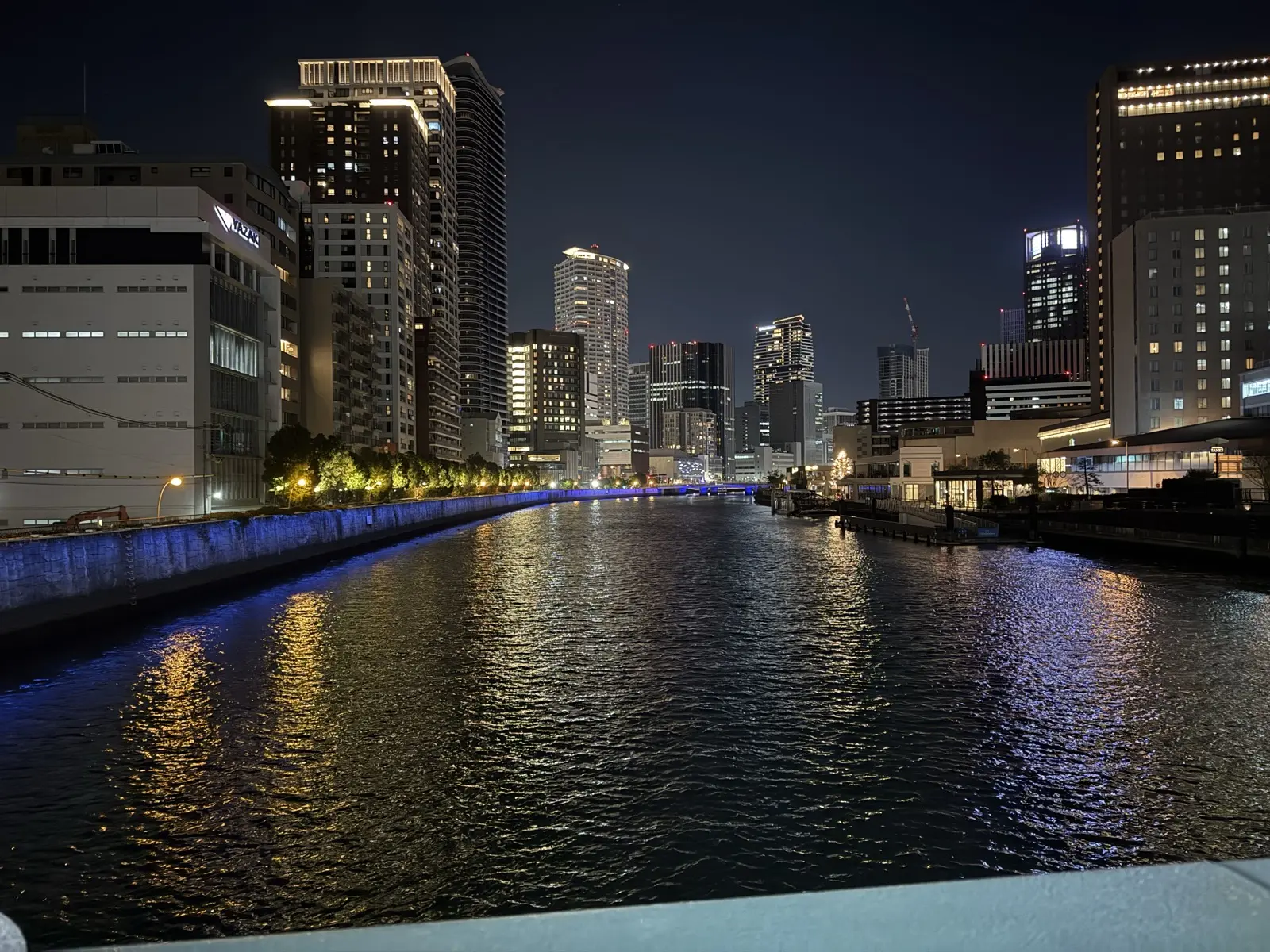
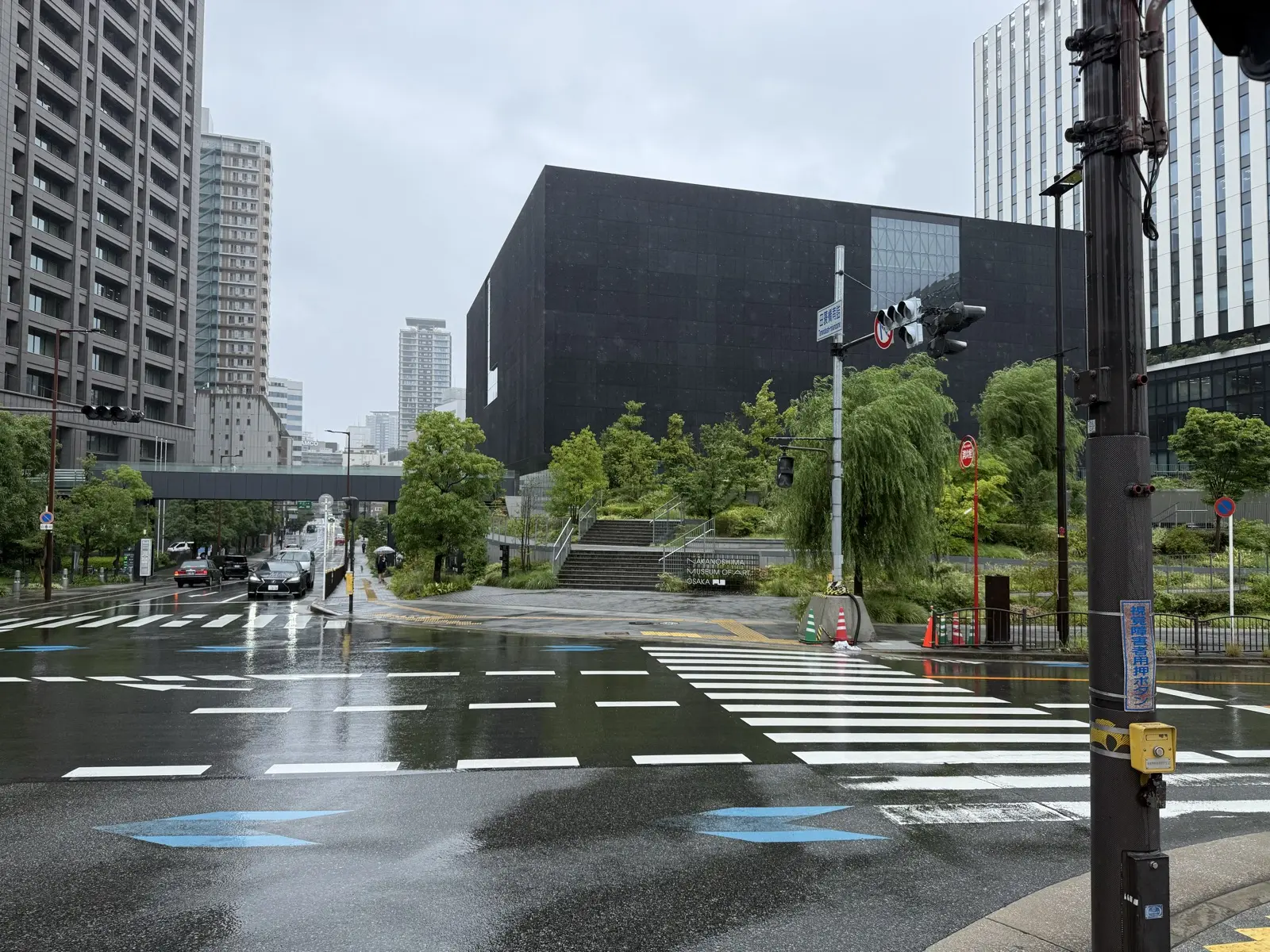
Nakanoshima is also home to the stately Osaka City Central Public Hall — a 1918 red-brick landmark — and a cluster of grand old banks and halls, all handsome under floodlight. If you're visiting the area by day, our Nakanoshima Museum of Art guide covers the black-cube art museum and the two other museums right next to it.
Osaka is at its most beautiful from roughly mid-November through late December, when the city runs its "Festival of Lights." The two you should plan around:
Outside winter, none of this needs a festival: the Umekita water plaza and the Nakanoshima rivers are quietly gorgeous on any clear evening, all year round.
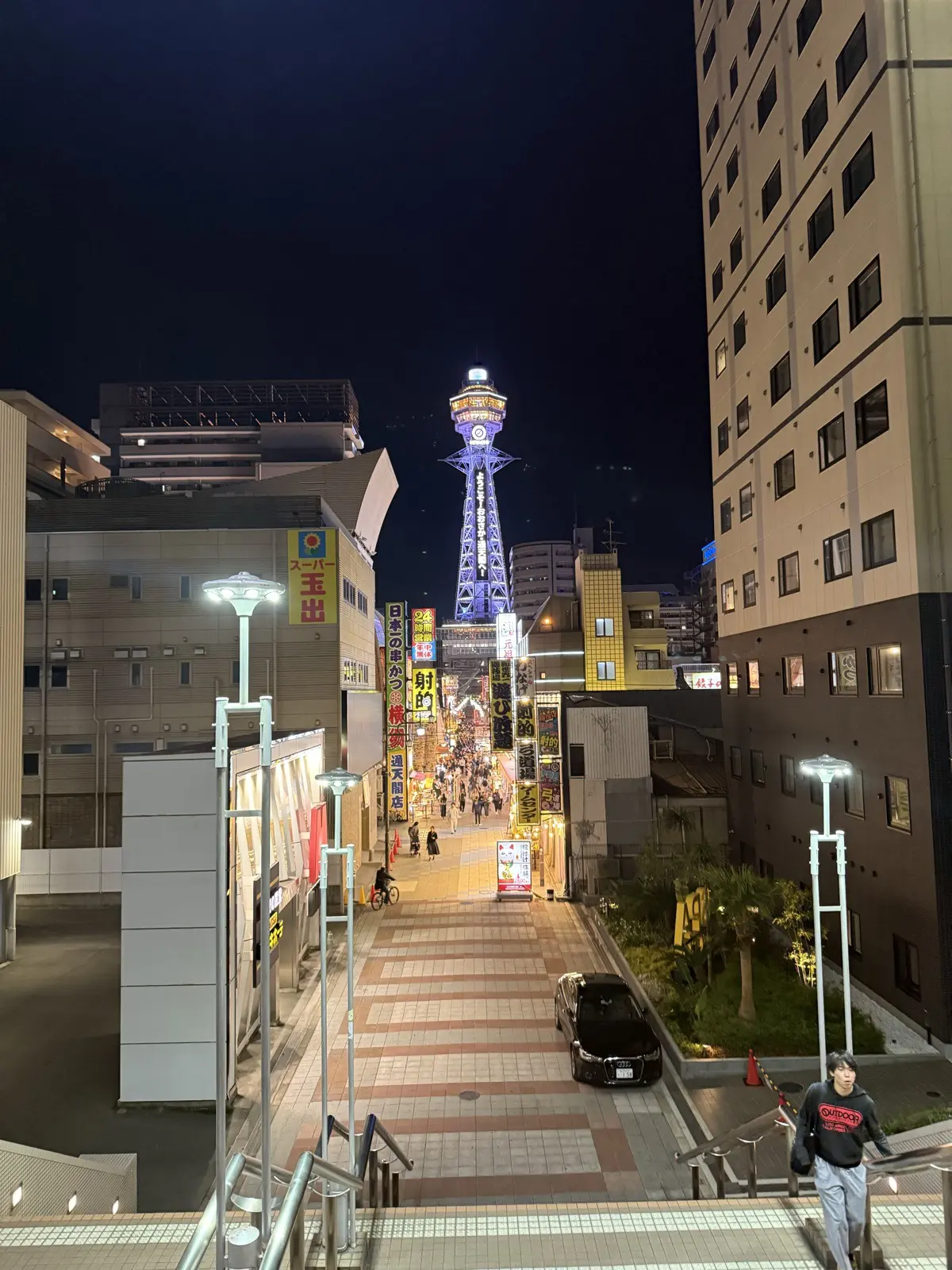
You already know about Dotonbori: the running Glico man sign, the giant crab, the wall of neon reflected in the canal. It's iconic and you should see it once — it's the loud, joyful, tourist-packed face of Osaka at night. Just know that's what it is: a happy crush of people. Do both. Go to Dotonbori for the buzz and the photo; come to Umekita and Nakanoshima for the version of night-time Osaka that locals actually find beautiful. For where Dotonbori fits in a full day, see our things to do in Osaka guide.
Everything here is walkable, free, and clustered around Osaka Station:
Give yourself a slow evening: start at the Umekita water plaza, drift down to the Nakanoshima rivers, and end with the view from the Umeda Sky Building. That's the beautiful Osaka the tour groups never slow down for.
Yes — and not just Dotonbori's neon. The water plaza and new park at Osaka Station (Umekita), the Nakanoshima riverside with its lit-up retro bridges, and the winter illuminations are genuinely beautiful, free, and far calmer than the Dotonbori crowds.
It's not actually a frog — it's a large green teddy bear called "TED HYBER," an artwork by the French artist Fabrice Hyber, sitting by the water feature in Umekita Plaza outside Osaka Station. Almost everyone mistakes it for a frog.
Roughly mid-November to late December. The Nakanoshima "OSAKA Hikari Renaissance" (including the free Central Public Hall projection mapping) usually runs in the second half of December, and the Midosuji Illumination lights the main avenue from around November. Exact dates change yearly — check the current schedule.
If you like city parks, yes. It's a large new park (opened 2024) with a big lawn, fountain and shops, connected directly to Osaka Station — a rare, pleasant green break right at the transport hub, and pretty in the evening light. It's free and always open.
It's a 10–15 minute walk south, or one short ride on the Keihan Nakanoshima Line to Watanabebashi or Naniwabashi. Both areas are safe and pleasant to walk after dark.