Osaka · Landmark & views
Umeda Sky Building: An honest local's guide to the Floating Garden Observatory
KBy Kai Sato · a 28-year Osaka local
✅ Verified on-site · 2026
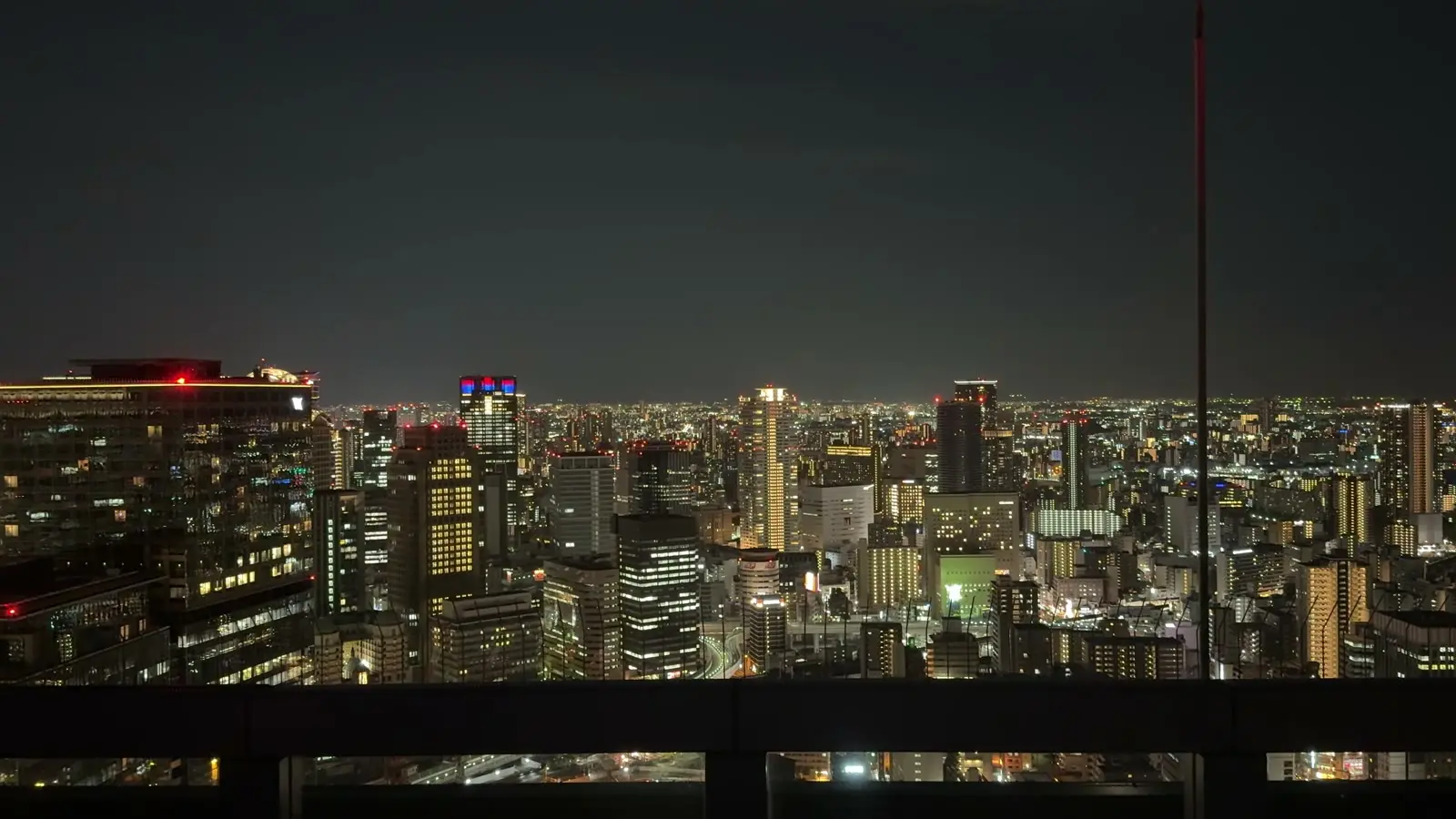
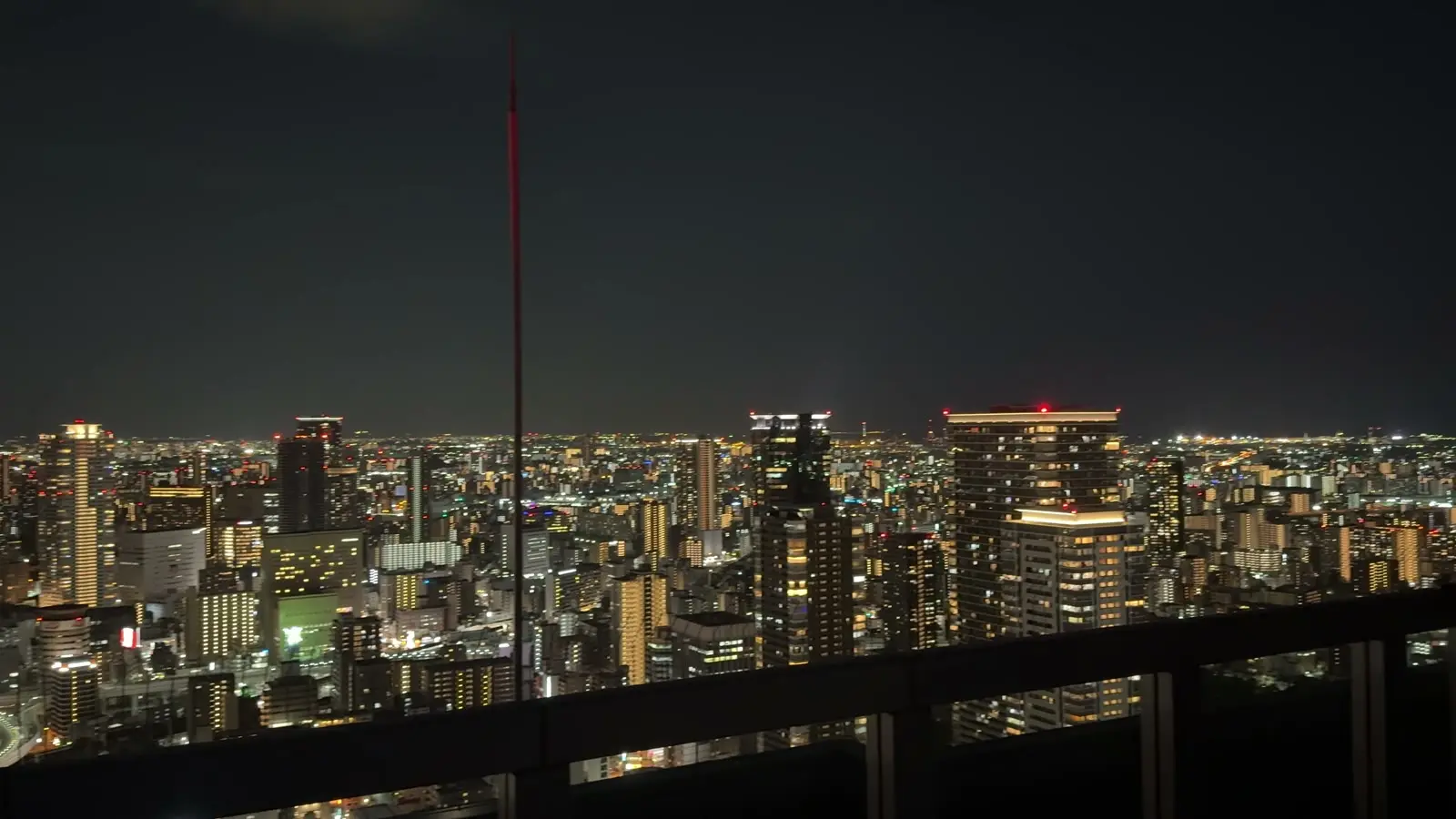
If you only do one skyline view in Osaka, it's the one worth your time. The Umeda Sky Building's Kuchu Teien ("Floating Garden") Observatory isn't the tallest viewpoint in the city — but it's the most memorable, because the top deck is open-air: you walk out onto a ring in the sky with the wind and the whole of Osaka spread out beneath you — a view that's genuinely better in person than in any photo.
Yes. ¥2,000 is fair for what you get, especially after dark when the city lights come on. Just go in knowing it's popular — it draws a lot of tourists, and it gets busy. Book your ticket ahead (more on that below) and you'll skip the worst of the friction.
You ride up through the building, then take the glass escalator across the gap between the two towers — that stretch alone is a bit of a thrill. Up top you get a 360° open-air walk. It's the rare Osaka viewpoint where nobody rushes you: you can take your time, wander the full ring, and shoot as many photos as you like without anyone moving you along.
The trade-off for all that is crowds. It's firmly on the tourist trail, so at peak times (sunset, weekends, holidays) expect company and a wait for the best railing spots. It's still worth it — just don't expect a quiet, private moment with the skyline.
Straight from the official observatory info: adults ¥2,000, and ¥500 for children aged 4 through elementary school. Open 9:30–22:30, with last admission at 22:00. Hours can shift for special days and maintenance, so it's worth a quick check on the official site before a late visit.
It’s close — about a 7–10 minute walk from JR Osaka Station (Umeda) — but it feels longer because you cross under a wide rail corridor, and this is where most people get lost.
The reliable route from JR Osaka Station: leave via the Central North Exit toward Grand Front Osaka, pass between the Grand Front North and South buildings, then take the underground pedestrian passage beneath the road and tracks — you surface right beside the Sky Building. Don’t navigate by line-of-sight: you can see the twin towers the whole time, but a rail embankment blocks the direct path, so follow the "Sky Building" signage through the underpass instead.
The one piece of advice that really matters: get your ticket in advance. It gets crowded, and buying ahead means you walk in instead of queuing to buy. You can grab a skip-the-line ticket online here:
Get the Umeda Sky Building ticket on Klook →This is an affiliate link — booking through it may earn us a small commission at no cost to you. We only recommend what we'd use ourselves. See our disclosure.
Aim to arrive about 45–60 minutes before sunset: you catch the city in daylight, watch it turn gold, and stay for the lights coming on — three views for one ticket. It's also the busiest window, which is exactly why an advance ticket pays off. If you'd rather dodge crowds, a weekday late morning is calm and still gorgeous.
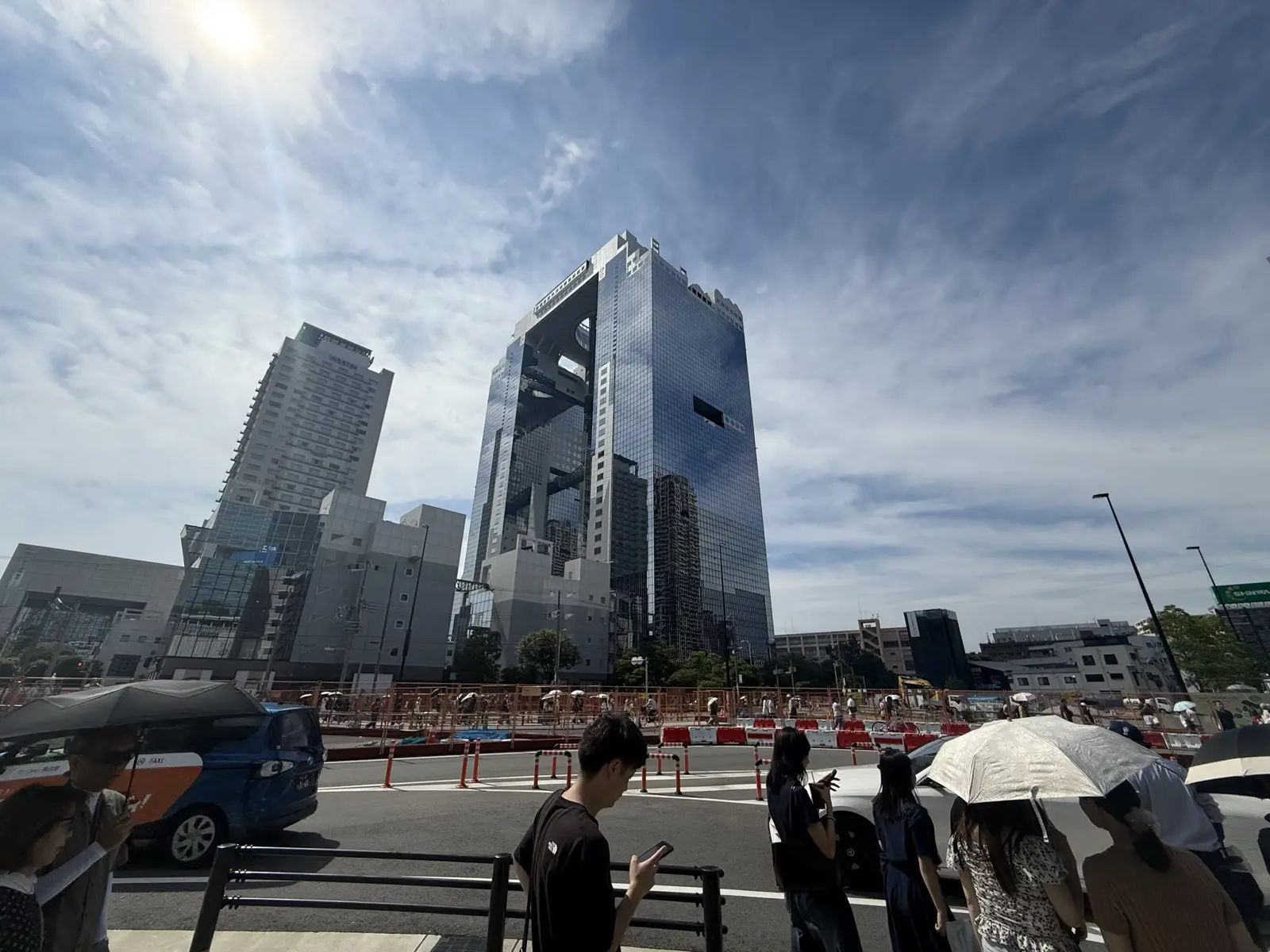
The tower is architect Hiroshi Hara's 1993 landmark: two 40-storey towers joined right at the top, so the ride up finishes with a glass escalator that floats across the open gap between them — a small thrill before you even reach the roof.
Two things not to miss:
The Lumi Sky Walk. After dark, the rooftop path is set with phosphorescent stones that glow underfoot like a field of stars. It's genuinely lovely, and the best reason to make it a night visit rather than a daytime one.
Takimi-koji, in the basement. Before you leave, drop down to the basement floor. There's a recreated Showa-era back-alley of around 20 small restaurants — kushikatsu, okonomiyaki, izakaya — that most visitors walk straight past. It's free to wander, atmospheric, and a great place to eat after the view (it's covered, too, so it doubles as a rainy-day backup).
Standard admission to the Kuchu-Teien (Floating Garden) Observatory is ¥2,000 for adults and ¥500 for children aged 4-12; under-4s enter free. Visitors with a disability certificate pay half price (¥1,000 adult / ¥250 child). Groups of 10 or more get a small discount to ¥1,800 / ¥450 per head.
The most useful money-saving fact for foreign visitors: the observatory is included on the Osaka Amazing Pass (¥3,500 for 1 day / ¥5,000 for 2 days in 2026), which also covers unlimited subway/bus travel. But there is a catch that trips people up — with the pass, entry is free only if you arrive before 15:00. After 3pm the pass drops to just a 10% discount. Since sunset is the whole point for most people, the honest math is: if you visit in the evening, the pass saves you almost nothing here specifically, and you'd buy this ticket separately. If you're touring castles and cruises earlier the same day, one adult observatory entry alone (¥2,000) already covers over half the pass price.
The observatory occupies the 39th and 40th floors plus the open-air rooftop, spanning the gap between the two towers. Entry is via Tower East. You ride elevators to the 35th floor, then transfer to the famous transparent glass-tunnel escalator that crosses the void between the towers up to the 39th floor — a genuine highlight, not just a gimmick.
The ticket counter is on the 39th floor, not at ground level, so if you have an e-ticket voucher you still go up first and exchange or scan it there. The 40th floor is the enclosed indoor gallery; the open-air ring one level up is the rooftop "Sky Walk."
Common mistakes to avoid:
Everyone advises the sunset window, so it's the busiest slot of the day — roughly 30 minutes before to 30 minutes after sunset, worst on weekends, Japanese holidays, and clear evenings. If you want the golden-hour-to-night transition without the tightest crush, arrive 45-60 minutes before sunset to secure a spot on the rooftop railing before the rush, then stay as the city lights switch on.
What happens in bad weather: the indoor 39th/40th-floor galleries stay open in rain and still give full panoramic views. The open-air rooftop can close without notice in heavy rain, strong wind, or lightning — and there's normally no refund just because the rooftop is shut, since the observatory itself is still open. If the outdoor Sky Walk is your main reason for going, check the forecast and consider rebooking a clear evening.
Last admission is 22:00 (building open until 22:30), which makes this one of the better late-night viewpoints in the city — a quieter alternative to arriving at peak sunset is coming an hour or two after dark.
You don't need to leave the building to eat well. On the basement/B1 level sits Takimi-Koji, a dining lane open since 1993 that recreates an early-Showa-era (mid-20th-century) Osaka street — lantern-lit cobblestones, vintage enamel signs, an Inari shrine, and around 20 restaurants. It's touristy but genuinely atmospheric, and covers the Osaka classics: okonomiyaki, kushikatsu, takoyaki, plus izakaya and cafes.
How locals tend to play it: ride up for the observatory around golden hour, then come back down for dinner in Takimi-Koji — it turns one attraction into a full evening without any transit. Prices are mid-range tourist rates rather than cheap-local, so if you're on a tight budget the street-level stalls of nearby central Umeda are cheaper, but the ambience here is part of the draw.
Yes. Wheelchair and stroller users should use the Tower East elevator; staff can guide you to a dedicated lift running from the 1st floor straight to the 39th, bypassing the escalator. There are accessible restrooms above the 39th floor and nursing rooms on the 39th and 40th. The rooftop is reachable, though it may close in severe weather.
Under-4s are free and 4-12s pay just ¥500, so it's family-friendly on price. The glass escalator and glowing rooftop stones tend to hold children's attention. Bring a layer for the wind, and note that the rooftop has open sky exposure.
Plan on 60-90 minutes for the observatory, more if you add dinner at Takimi-Koji.
Not strictly, but for a sunset visit an advance e-ticket saves queue time at the counter. Off-peak (late morning, or later at night) you can usually just walk up.
The open-air rooftop ring, with 360° views and no glass, is what makes this observatory stand out versus enclosed towers. On a clear evening it's the reason to come; in bad weather, the indoor floors still deliver the view.
¥2,000 for adults and ¥500 for children (ages 4 through elementary school), per the official observatory information for 2026.
9:30 to 22:30, with last admission at 22:00. Hours can change on special days or for maintenance, so check the official site for a late visit.
It's about a 10-minute walk from JR Osaka Station (Umeda), via the underground passage under the tracks — just follow the signs.
It's worth doing. It gets crowded, and an advance online ticket lets you skip the ticket queue and walk straight in.
The top deck is open-air — a 360° rooftop ring in the sky. There are also indoor viewing floors just below it, so it's enjoyable in most weather.
Two things most people miss: the Lumi Sky Walk (phosphorescent stones on the rooftop path that glow at night), and Takimi-koji in the basement — a Showa-era retro alley of around 20 small restaurants, free to wander and a good spot to eat after your visit.