Home › Osaka Castle
Osaka · First-hand guide
Osaka Castle: An Honest Visitor's Guide
KBy Kai Sato · a 28-year Osaka local
Real prices, real photos, and a straight answer to the one question every guide dodges — is it actually worth going inside?
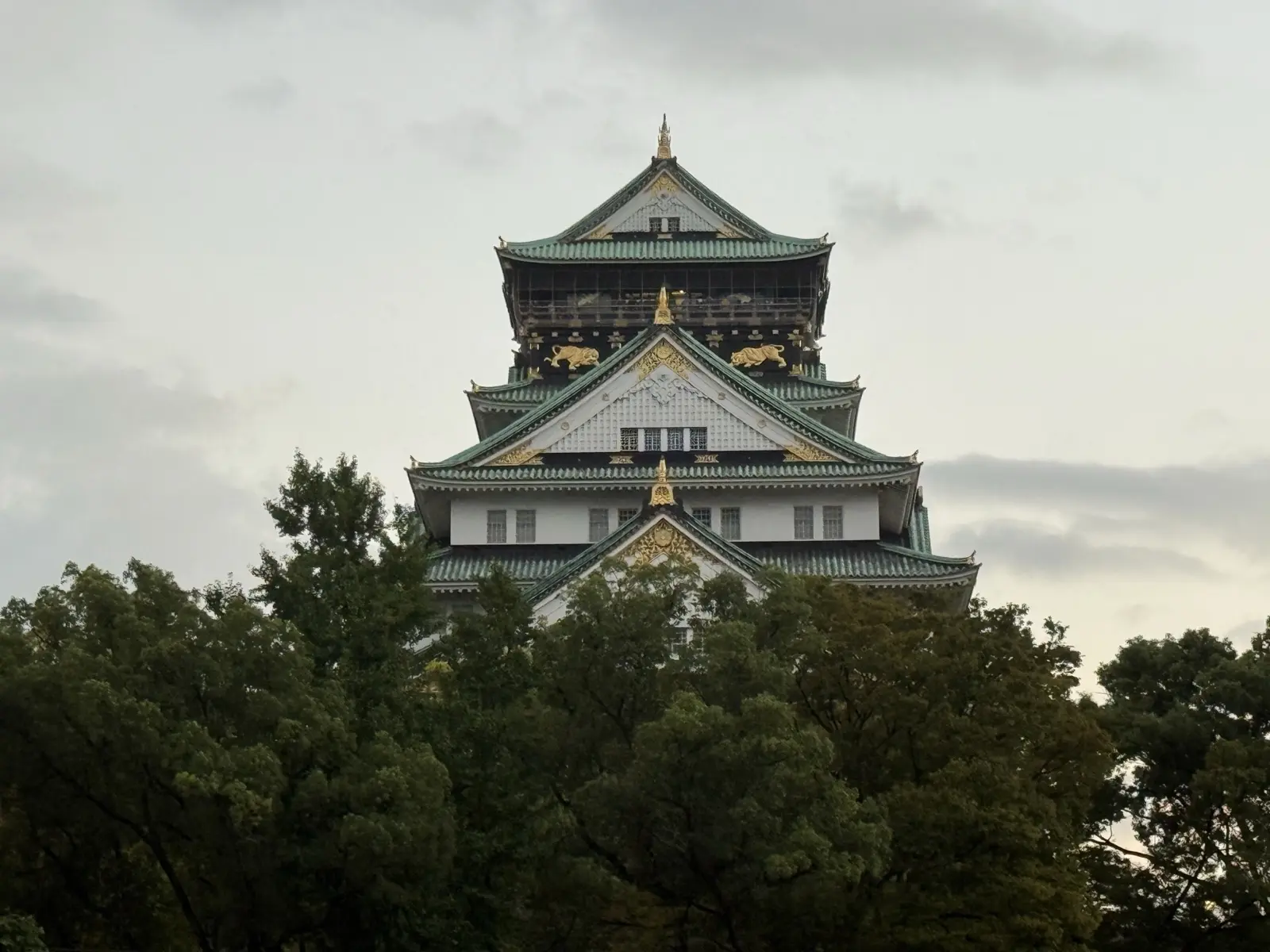
Osaka Castle (大阪城, Ōsaka-jō) is the city's postcard landmark: a green-and-gold keep rising over massive stone walls and a wide moat, ringed by one of Osaka's best parks. Almost everyone puts it on the itinerary. The part nobody tells you plainly: the grounds are the highlight and they're free, while the tower you pay to enter is a modern museum. Here's exactly what to expect, what it costs in 2026, and how to do it without wasting time or money.
| What | Price | Notes |
|---|---|---|
| Main Tower (museum) | ¥1,200 adult | Raised from ¥600 in April 2025 |
| Students (high school / uni) | ¥600 | Bring ID |
| Junior-high & younger | Free | |
| Osaka Castle Park / moat | Free | The exterior, walls & grounds |
| Nishinomaru Garden | Small fee | Best cherry-blossom spot; free with the Amazing Pass |
| Gozabune golden boat | ≈¥1,800 | Cruise on the inner moat; free with the Amazing Pass |
Here's the honest math. The castle museum (¥1,200) + the Gozabune boat (¥1,800) already ≈ ¥3,000 — about the price of a 1-day Osaka Amazing Pass (≈¥3,500), which also covers ~40 attractions (Umeda Sky Building, Dōtonbori cruise, and more) plus unlimited subway & bus. So: doing just the tower? Buy the ¥1,200 ticket. Doing the castle + boat + anything else and hopping the subway? The pass usually pays for itself on day one. (Free entry with the pass applies until 15:00 at many spots — go early.)
Check the Osaka Amazing Pass on Klook → Just the castle ticket →These are affiliate links — if you book through them we may earn a small commission at no extra cost to you. We only recommend the pass when the math actually favours it (above).
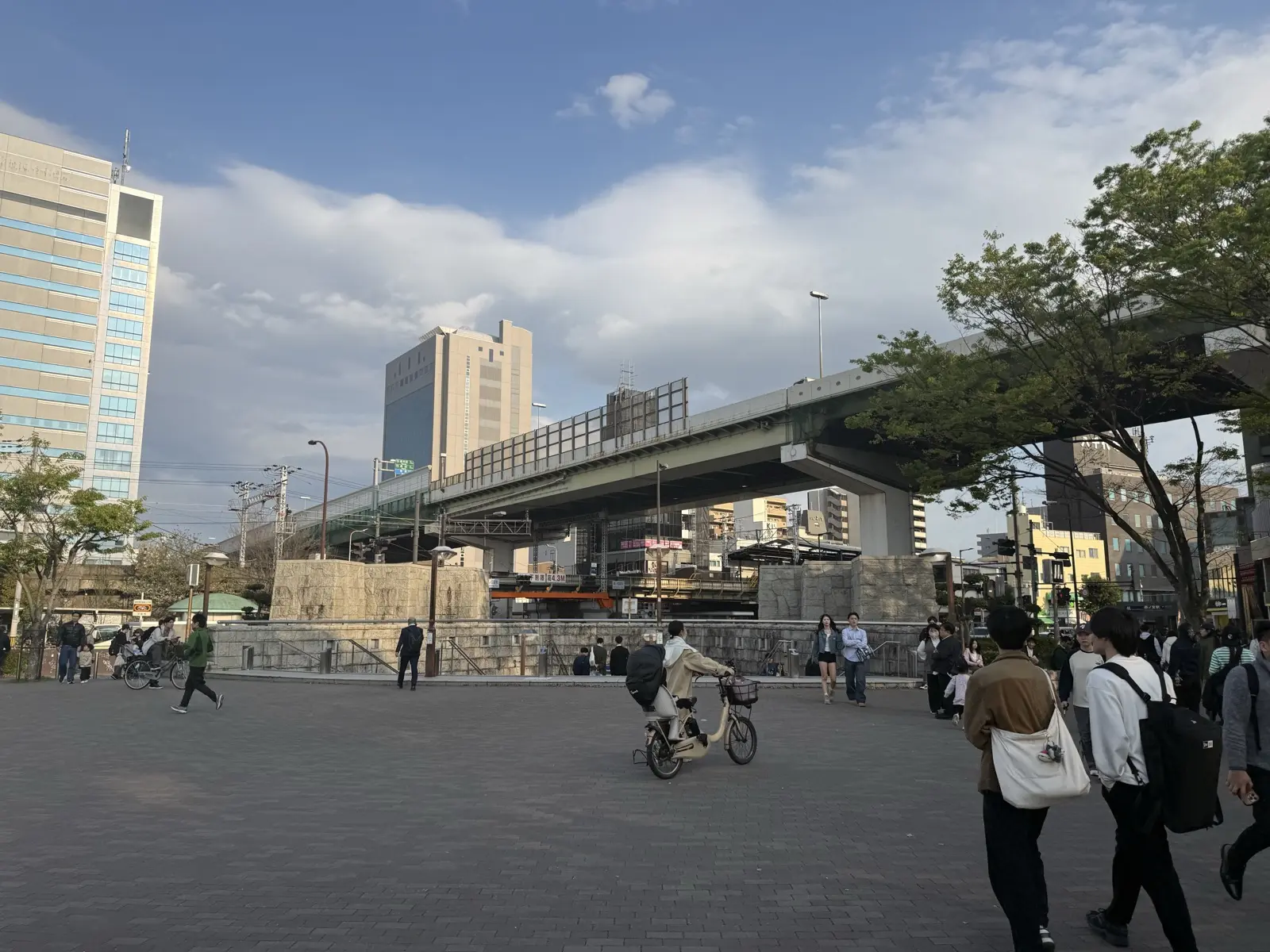
Osaka Castle sits in a large park, so every station drops you a 15–20 minute walk from the tower — there’s no exit right at the door. The three practical options:
| Station | Line | Walk to tower |
|---|---|---|
| Tanimachi 4-chōme | Osaka Metro Tanimachi / Chūō | ~15–20 min via Otemon gate (most scenic) |
| Osakajōkōen | JR Osaka Loop Line | ~15–20 min; closest to JO-TERRACE dining |
| Morinomiya | JR Loop / Metro Chūō & Nagahori | ~15–20 min from the south |
From Osaka Station, the JR Loop Line to Osakajōkōen takes about 10 minutes (≈¥180). The flattest way in is from the Osakajōkōen / JO-TERRACE side.
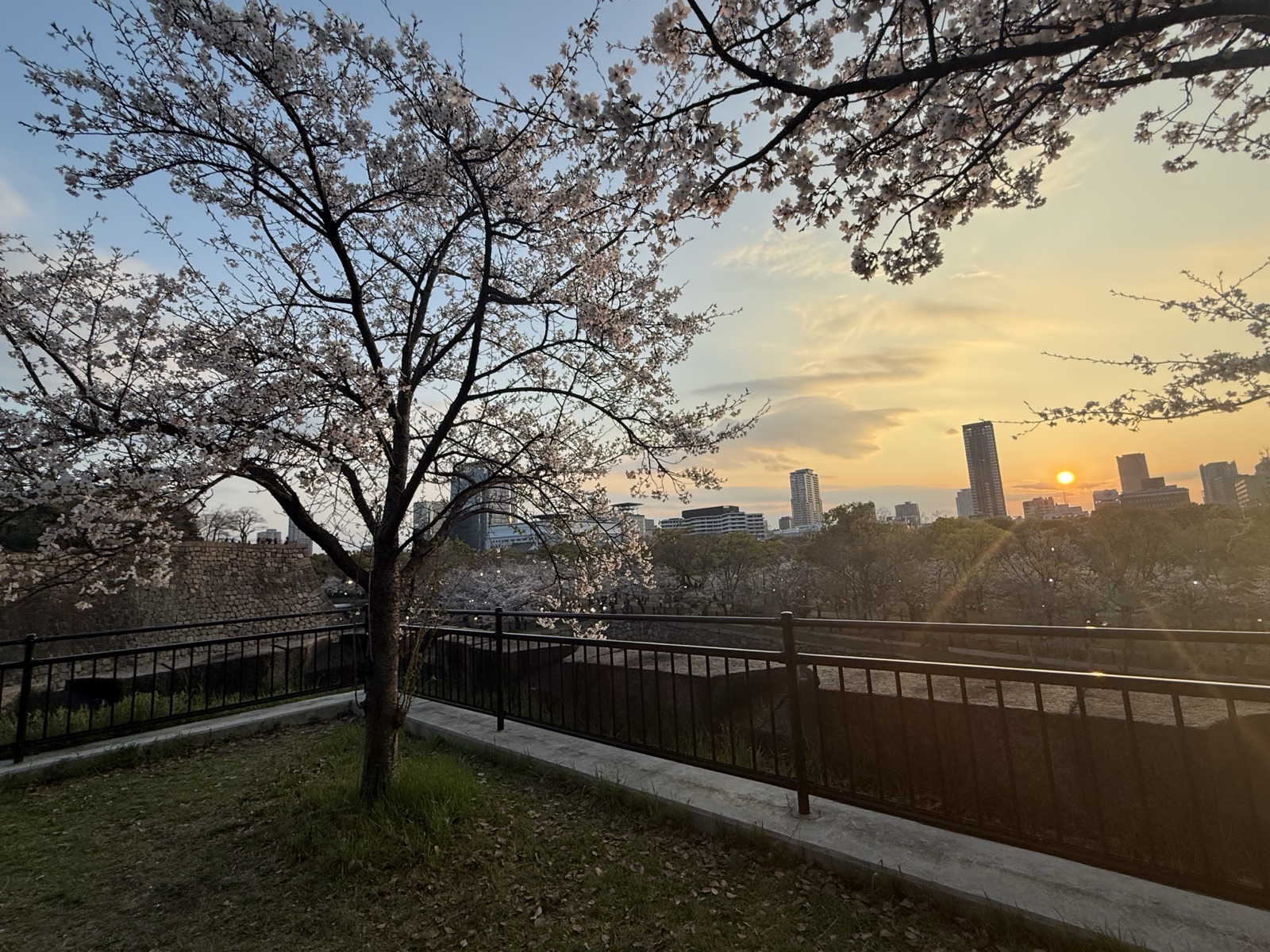
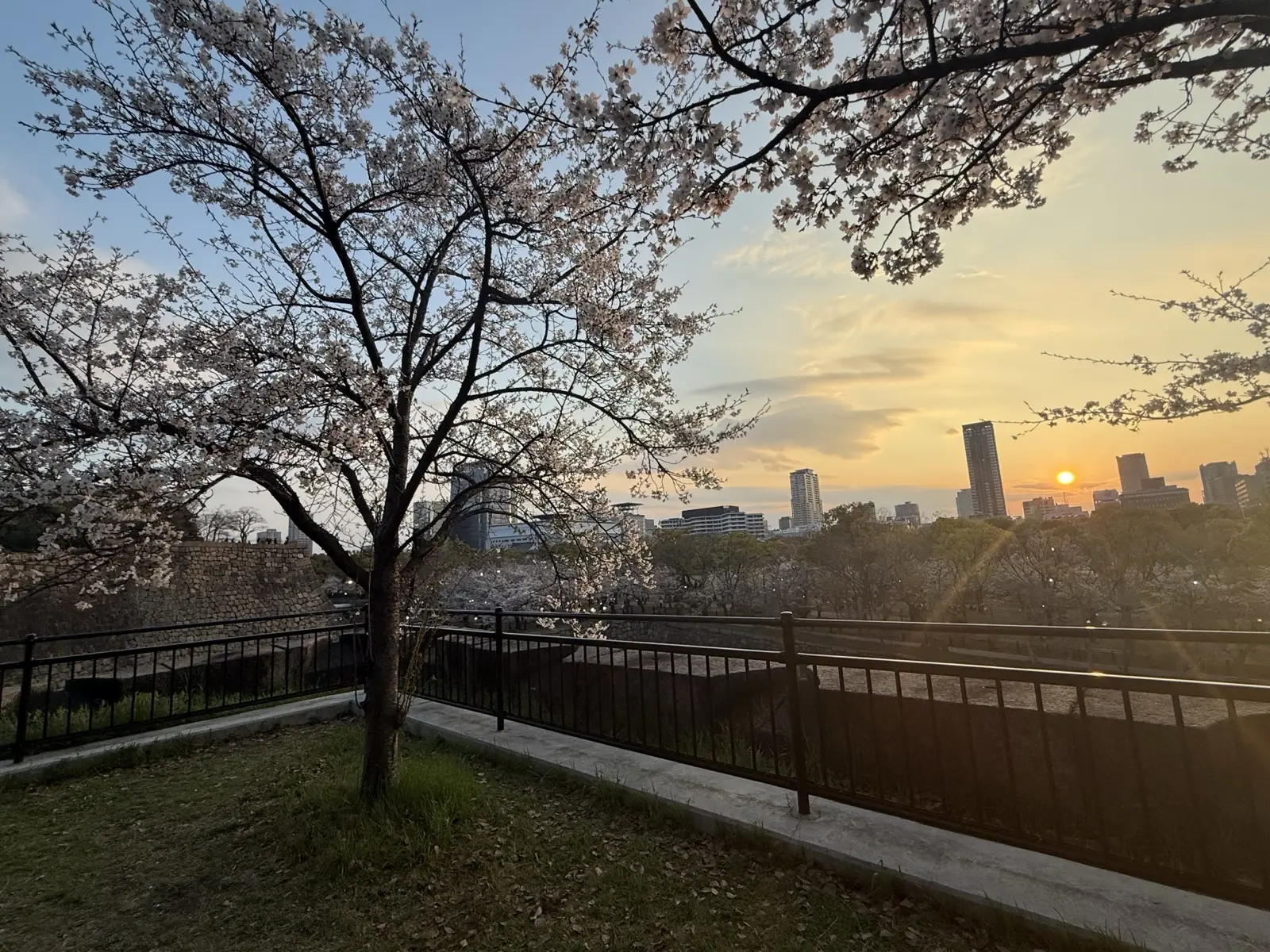
Cherry blossom season (late March–early April) is the peak — Nishinomaru Garden and the western slopes fill with sakura, and during this period (roughly Mar 20–Apr 12, 2026) the tower stays open until 21:00 for evening viewing. Autumn brings golden ginkgo along the approaches. For any season: arrive early — by mid-morning in spring and Golden Week the elevator queue inside the tower can top 45 minutes.
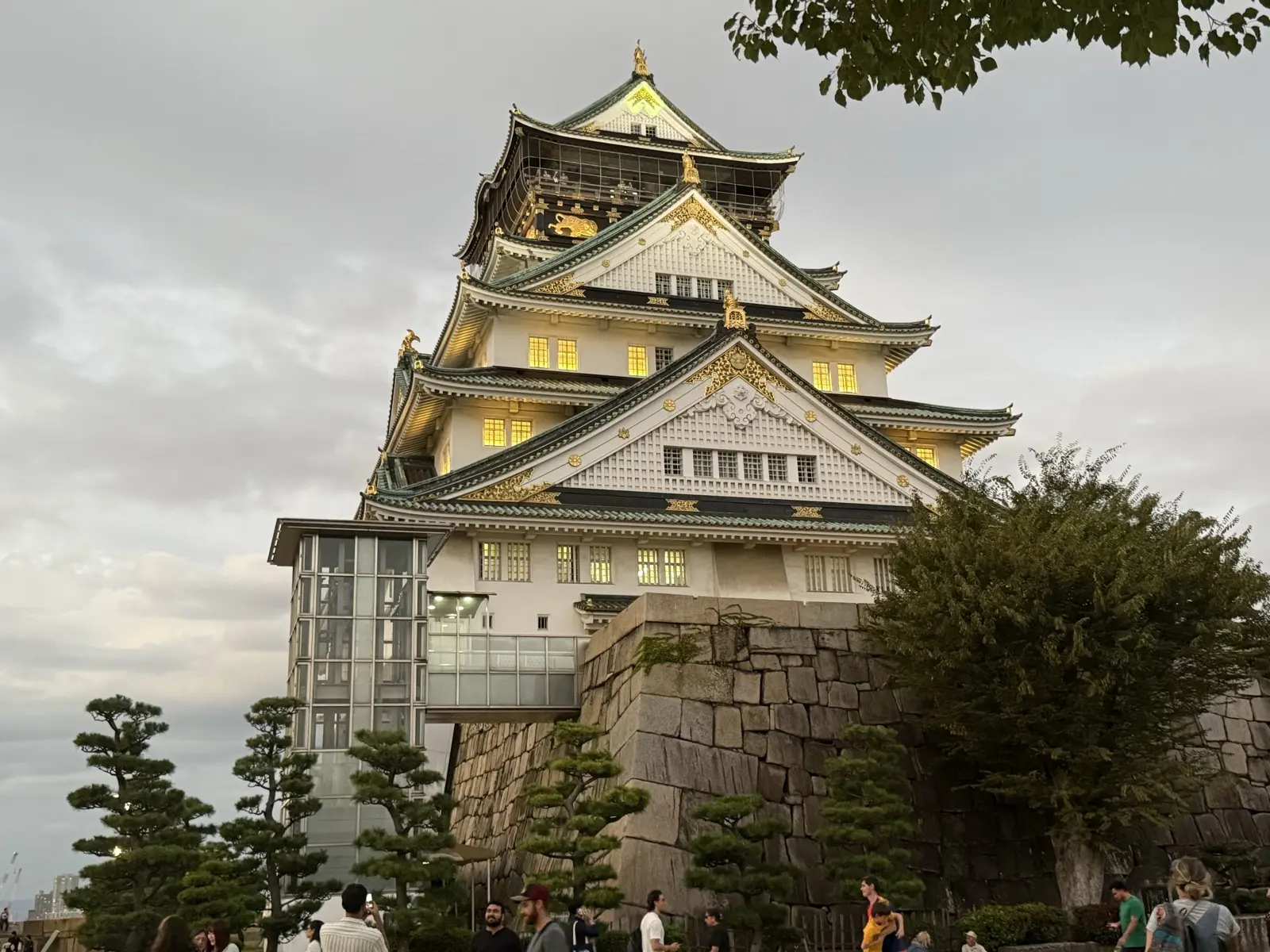
The inner moat and towering stone walls are arguably more impressive than the keep itself. A golden Gozabune boat (≈¥1,800, free with the Amazing Pass) runs along the inner moat for a different angle on the walls.
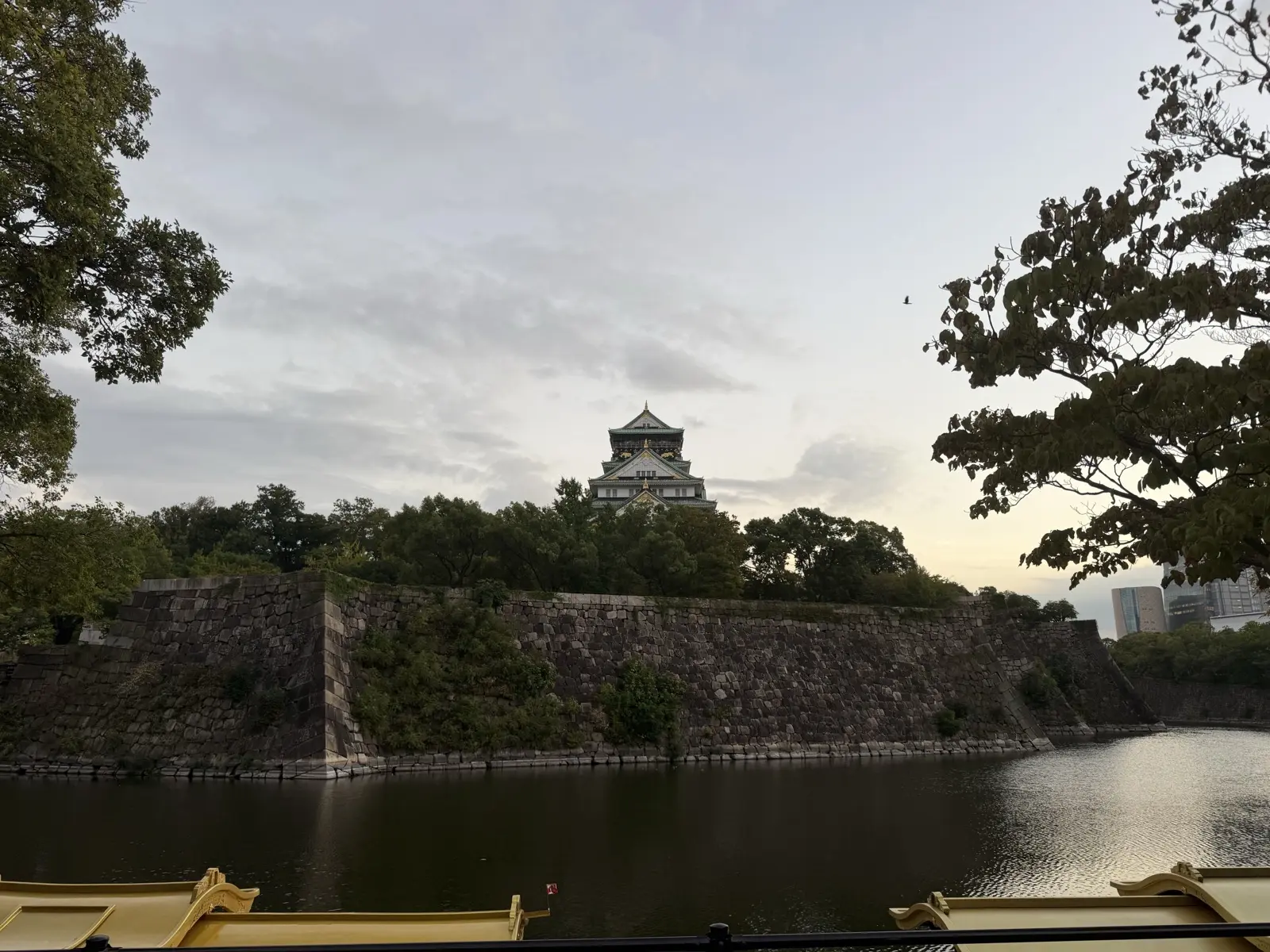
The walls themselves are the underrated highlight. The biggest block, the Tako-ishi (蛸石, "octopus stone"), sits in the Sakuramon gate's inner courtyard — roughly 59 m² of exposed face and an estimated 108 tons, named for a rust-coloured iron-oxide stain said to look like an octopus head.
For a quirkier hunt, look for the Jinmenseki (人面石, "face stone") — a natural stone set in the walls that has looked like a human face since the Edo period, when locals reportedly found it unsettling. It isn't carved; it just happens to resemble a face, and its exact spot isn't signposted — finding it is part of the fun. (All of this is free — it's outside the paid tower.)
Here's the honest twist most visitors miss. The main tower is a 1931 reconstruction — but thirteen genuine structures survive on the grounds as national Important Cultural Properties. The oldest, the Sengan and Inui turrets (yagura), date to 1620; the great Otemon gate, the Tamon turret and the walls date to 1848. So if what you actually want is to stand beside real 400-year-old castle architecture rather than concrete, this — not the tower — is where to look, and the exteriors are free to see around the grounds any time.
The interiors of the Tamon, Sengan and Inui turrets open only during special seasonal openings (roughly spring to autumn; a separate ticket, around ¥1,500 for the three-turret opening). If your dates line up, it's the most authentic history you can touch at Osaka Castle.
Osaka Castle Park is a genuine city green space — locals jog and picnic here, and it's free and open. Worth a wander even if you skip the tower. It's big enough to hide surprises: a riverside BBQ area near the keep, and an early-morning regulars' scene that local TV has featured.
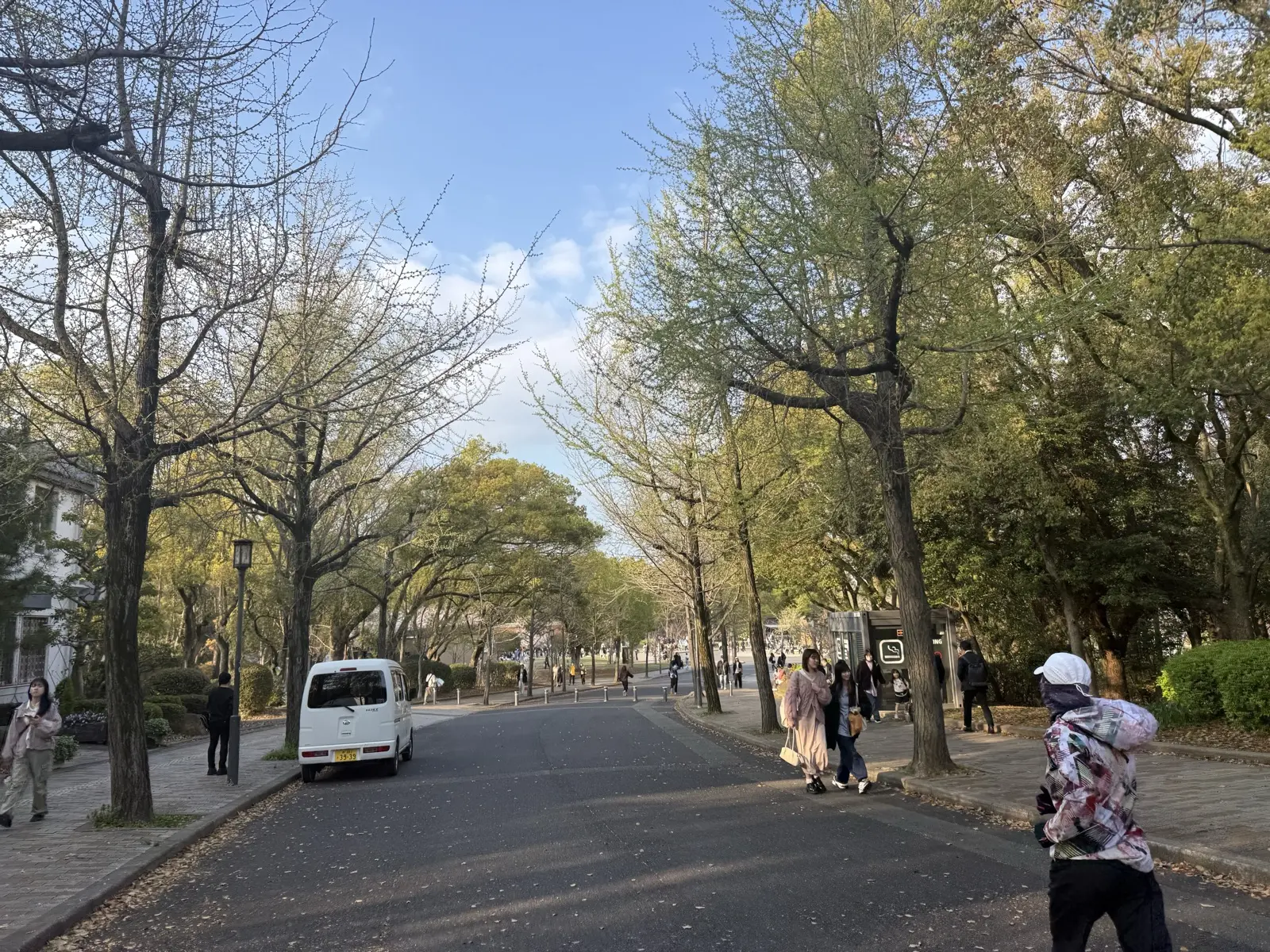
Most guides stop at the keep — but the surrounding park is free, open, and where the city genuinely spends its time. A few things worth planning around:
Osaka Castle Park is one of Japan's running meccas, alongside Tokyo's Imperial Palace loop. At Running Base Osaka Castle (in the JO-TERRACE complex, 2 minutes from Osakajōkōen Station) you can turn up empty-handed: a ¥600 facility fee covers a locker and shower, and you can rent ASICS shoes and full running kit (a towel-and-gear pack runs about ¥1,000; individual rentals from ¥200). Staff speak English — ideal for a sunrise jog around the moat without packing any gear.
On the roof of MIRAIZA OSAKA-JO — a handsome former army-headquarters building beside the keep — Blue Birds Rooftop Terrace does a Japanese-style BBQ with the tower filling your view. It's seasonal (roughly March–November) and not cheap (BBQ from about ¥4,980 per person, more for the castle-facing seats), but the setting is genuinely one of a kind.
A Kansai TV feature recently showed the park's long-running dawn rajio taisō (group radio calisthenics) on the Honmaru plaza — a daily, open-to-anyone session that's become a local institution. If you're up early, you can just join in.
R Baker (open from 7am, terrace seating) and the JO-TERRACE OSAKA dining complex sit near the Osakajōkōen Station side — handy for a coffee or a bite before or after your visit.
On busier days you'll find yatai (festival food stalls) set up around the park — yakitori, grilled squid, the usual. They smell great, but honestly they're tourist-priced: you're paying a premium for the castle backdrop. As a local, I'd grab a skewer or two for the fun of it if you're peckish — but for a proper cheap-and-tasty yakitori dinner I'd skip them and walk to a Torikizoku, the everywhere-in-Osaka izakaya chain where almost everything is one flat, low price and, honestly, tastes better than the stalls. My local order there: get the Momo Kizoku-yaki (their signature grilled chicken-thigh skewer) — that's the one to order — and the shredded cabbage is free refills, so keep asking for more.
Some of these were surfaced by a Kansai TV feature on the park, then verified against each venue's own information.
The main tower (the museum) keeps standard hours of 09:00-17:00, with last admission at 16:30. The one closure to plan around is the New Year break: the interior is shut from 28 December to 1 January. There is no regular weekly closing day, though the museum can close occasionally for maintenance.
Two things trip people up. First, the surrounding Osaka Castle Park is open around the clock and free — only the main keep charges admission, so an early-morning or evening walk to the moat and outer walls costs nothing. Second, hours extend during peak periods: during the cherry-blossom illumination window (roughly 20 March-12 April 2026) the tower and Nishinomaru Garden stay open into the evening. Some listings quote closing as late as 18:00 in high season; treat any single closing time as "verify before you go" and check the official site the week of your visit.
The honest planning tip: the last-admission cutoff of 16:30 is strict, and the climb-plus-museum takes most people 45-90 minutes, so arriving after about 15:30 outside the extended-hours seasons leaves you rushed.
The reconstructed tower is more accessible than most Japanese castles because it has elevators. Anyone can ride the elevator to the 5th floor; the 5th-to-8th-floor stretch (and the descent) is normally stairs only. Wheelchair users and people with mobility difficulties can use the elevator for all floors, including the 8th-floor observation deck, which has a step-free entrance and a widened passage — staff prioritise this, so ask at the entrance rather than queuing behind the crowd.
With small children: strollers are not allowed inside the upper floors because the observation deck gets narrow and crowded, but they can be checked at the ticket gate for free. Admission is free for junior-high age and younger, and ¥600 for high-school and university students (student ID needed), so a family only pays for the adults. The interior is a modern museum with English signage and lifts, which makes it more manageable with kids than the exterior stairs suggest.
You do not have to leave the park to eat well. Two clusters cover most needs:
The honest steer: the sit-down restaurants inside the park charge a location premium, so if budget matters, use JO-TERRACE or eat before you arrive and treat the park itself as the free attraction.
The ¥1,200 tower ticket can be bought at the door, but a few options change the math:
Bottom line: for a single off-peak visit, buy at the gate. For a busy-season weekend or a multi-sight day, a skip-the-line ticket or the Amazing Pass respectively can be genuinely worth it.
How long should I budget? About 1-1.5 hours for the tower and museum; 2-3 hours if you also wander the park, moat and gardens.
Is the observation deck worth it if I don't like museums? The 8th-floor view over Osaka is the main payoff; the honest answer is that view-seekers who skip reading the exhibits can still find the ticket worthwhile, especially on a clear day.
Can I see the tower without paying? Yes — the best exterior photos (from the moat and Nishinomaru side) don't require the museum ticket at all.
Best time to avoid crowds? Early morning on a weekday, or late afternoon; weekends and the cherry-blossom and autumn peaks are busiest.
The main tower (museum) is ¥1,200 for adults in 2026 — raised from ¥600 in April 2025. High-school/university students ¥600 with ID; junior-high and younger free. The park, moat and grounds are free.
The exterior and park are the highlight and they're free. Inside is a modern 1931-reconstruction history museum with an elevator. Worth it for the history and the 50 m observation deck; skippable if you came mainly for photos.
1–1.5 hours for the park/exterior; 2–2.5 hours if you go up the tower (more in cherry-blossom season with the elevator queue).
Late March to early April, usually peaking the first week of April. The tower stays open to 21:00 during sakura season (≈Mar 20–Apr 12, 2026), and Nishinomaru Garden is the top spot.
Only the tower? Buy the ¥1,200 ticket. Castle + Gozabune boat + more, using the subway? The ≈¥3,500 1-day pass usually pays for itself (it includes both plus ~40 attractions and transit). Free entry applies until 15:00 at many spots.