Home › Kyoto day trip › Kinkaku-ji
Kyoto · from Osaka
Kinkaku-ji (Golden Pavilion): an honest guide from Osaka
KBy Kai Sato · a 28-year Osaka local
✅ Verified on-site
Prices, hours & access last verified July 2026 — they can change, so tell us if you spot a difference.
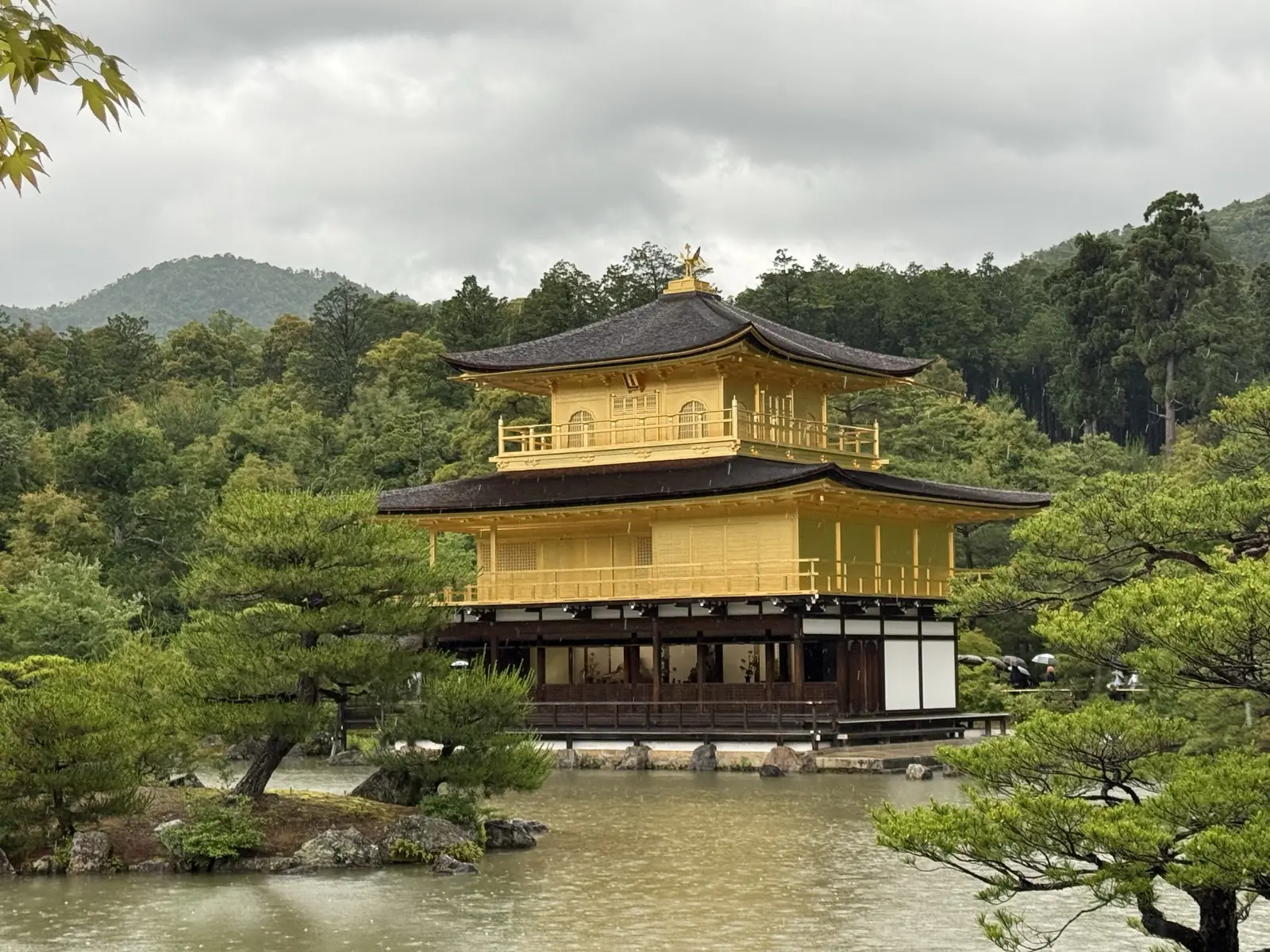
Kinkaku-ji — the Golden Pavilion, officially Rokuon-ji — is one of those sights that somehow lives up to the photos: three storeys wrapped in gold leaf, standing over a still pond that doubles it perfectly on a calm day. It's an easy, iconic day trip from Osaka. Here's the honest picture of what it is and isn't — tell you the one thing that trips people up (getting there), and share the story that turned it from a temple into a legend.
Kinkaku-ji is a short, one-way visit: you walk a set path, see the pavilion from across the pond (you can't go inside it), pass the garden and a tea house, and you're out in 30–45 minutes. Come for the iconic view and the calm — it's a stop, not a half-day out. It can get very busy: go early and it's magic; arrive at midday in peak season and you're shuffling with the crowd.
Plenty of temples are old and beautiful. Kinkaku-ji became world-famous for a darker reason. The gold pavilion you photograph today is not the medieval original — in 1950, a troubled young acolyte monk set the pavilion on fire and burned it to the ground. He'd become obsessed with its beauty. It was rebuilt faithfully in 1955, and the gold leaf was fully restored in 1987 to the dazzling finish you see now.
That arson inspired one of Japan's most celebrated novels: Yukio Mishima's The Temple of the Golden Pavilion (1956), a haunting study of a young monk consumed by the pavilion's perfection. The novel was translated worldwide and cemented Kinkaku-ji in the global imagination — the shimmering gold, the story of a beauty so absolute it drove a man to destroy it. Add its status as a UNESCO World Heritage Site and you have the most photographed building in Kyoto. Knowing the story, that flawless reflection hits a little differently.
The pavilion was built in the 1390s by the shogun Ashikaga Yoshimitsu as a retirement villa; after his death it became a Zen temple. Its charm is partly that each floor is a different architectural style stacked on top of the last — an aristocratic shinden ground floor, a samurai-style middle floor, and a Chinese-style Zen Buddha hall on top, all crowned by a golden phoenix. The top two floors are the ones coated in real gold leaf. It's small, and you view it from a set distance across the pond — which is exactly why that one classic photo is the whole point.
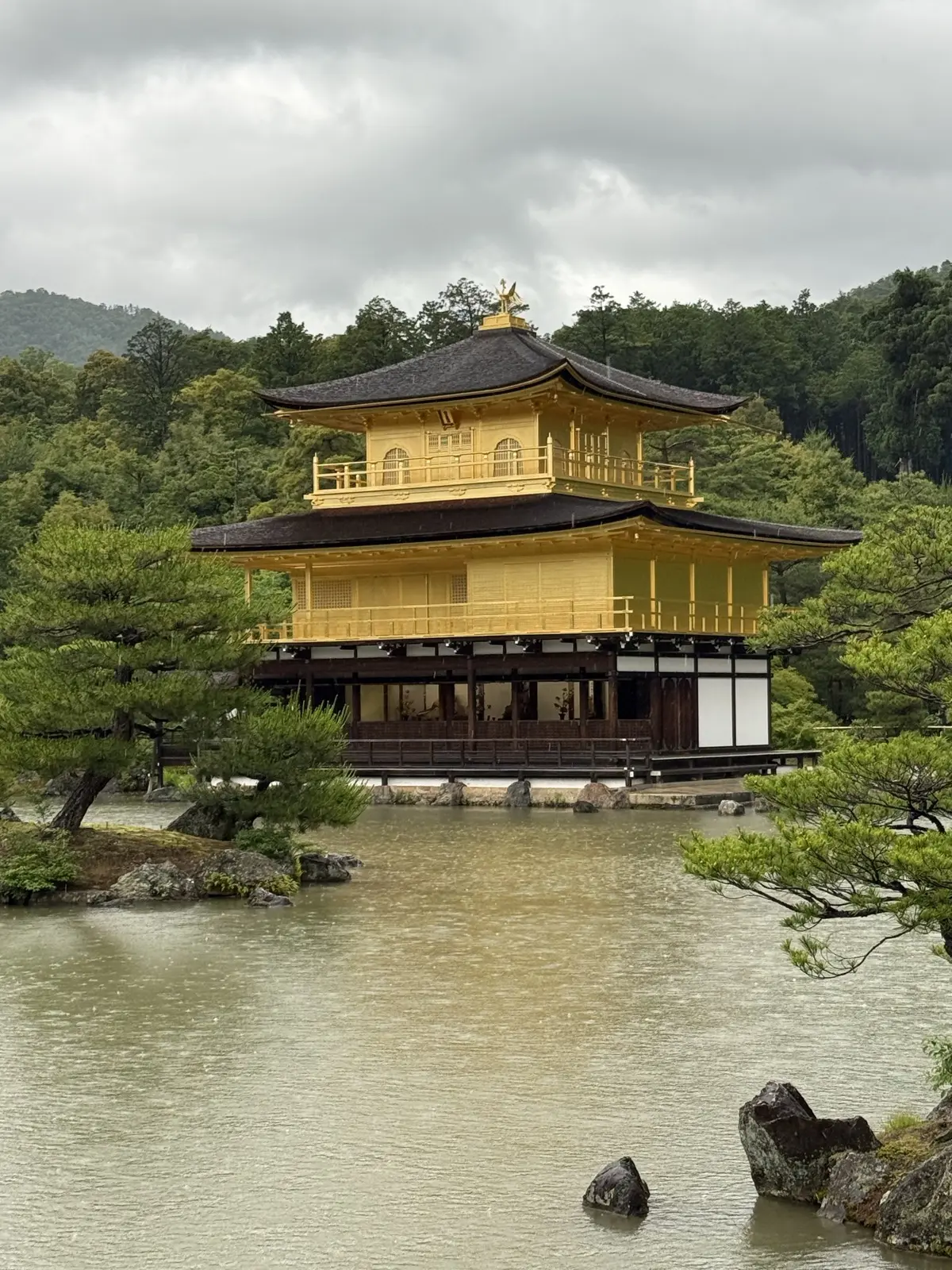
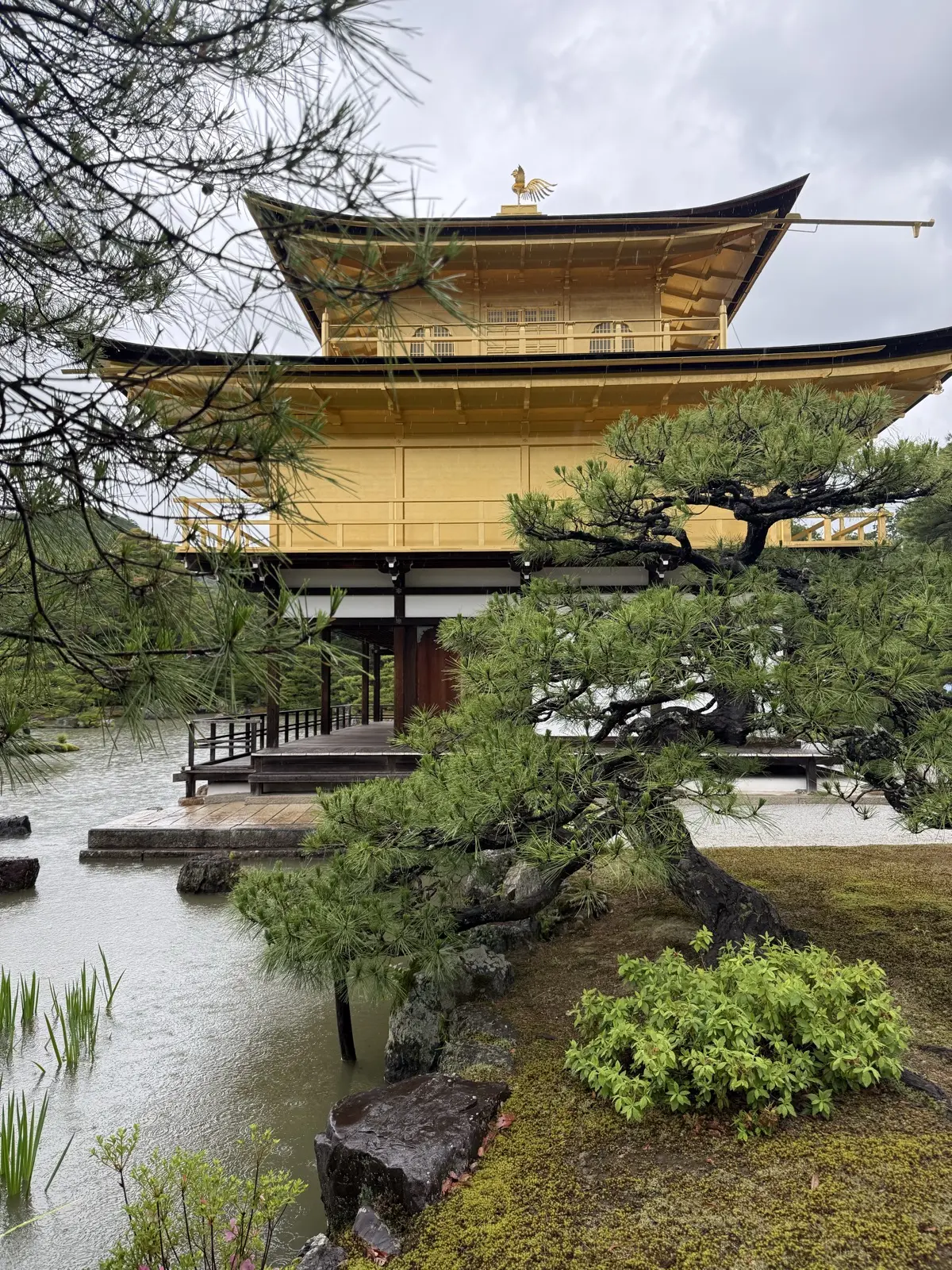
Almost everyone photographs the pavilion and leaves — but the one-way path holds two small features that barely any guide mentions.
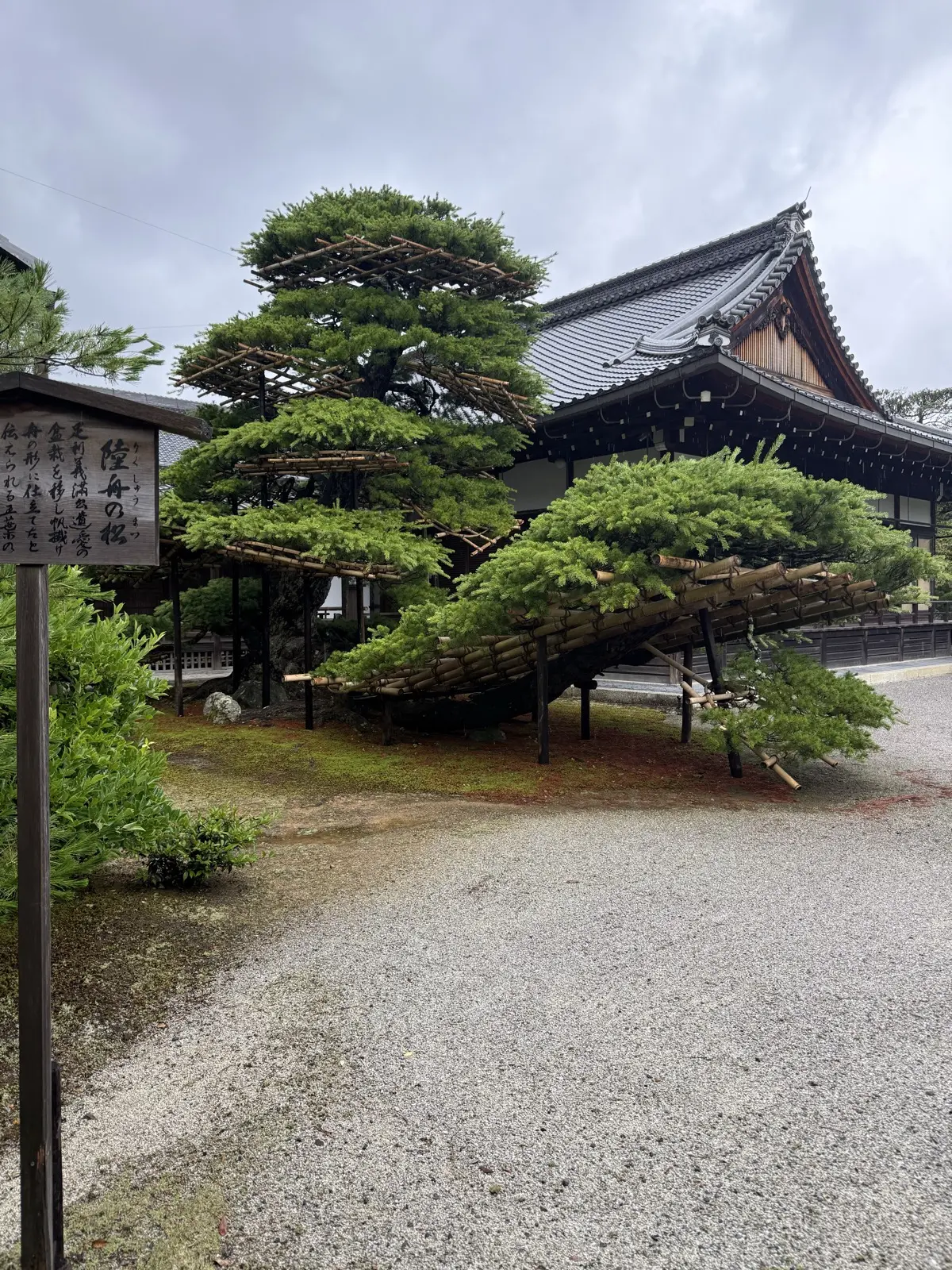
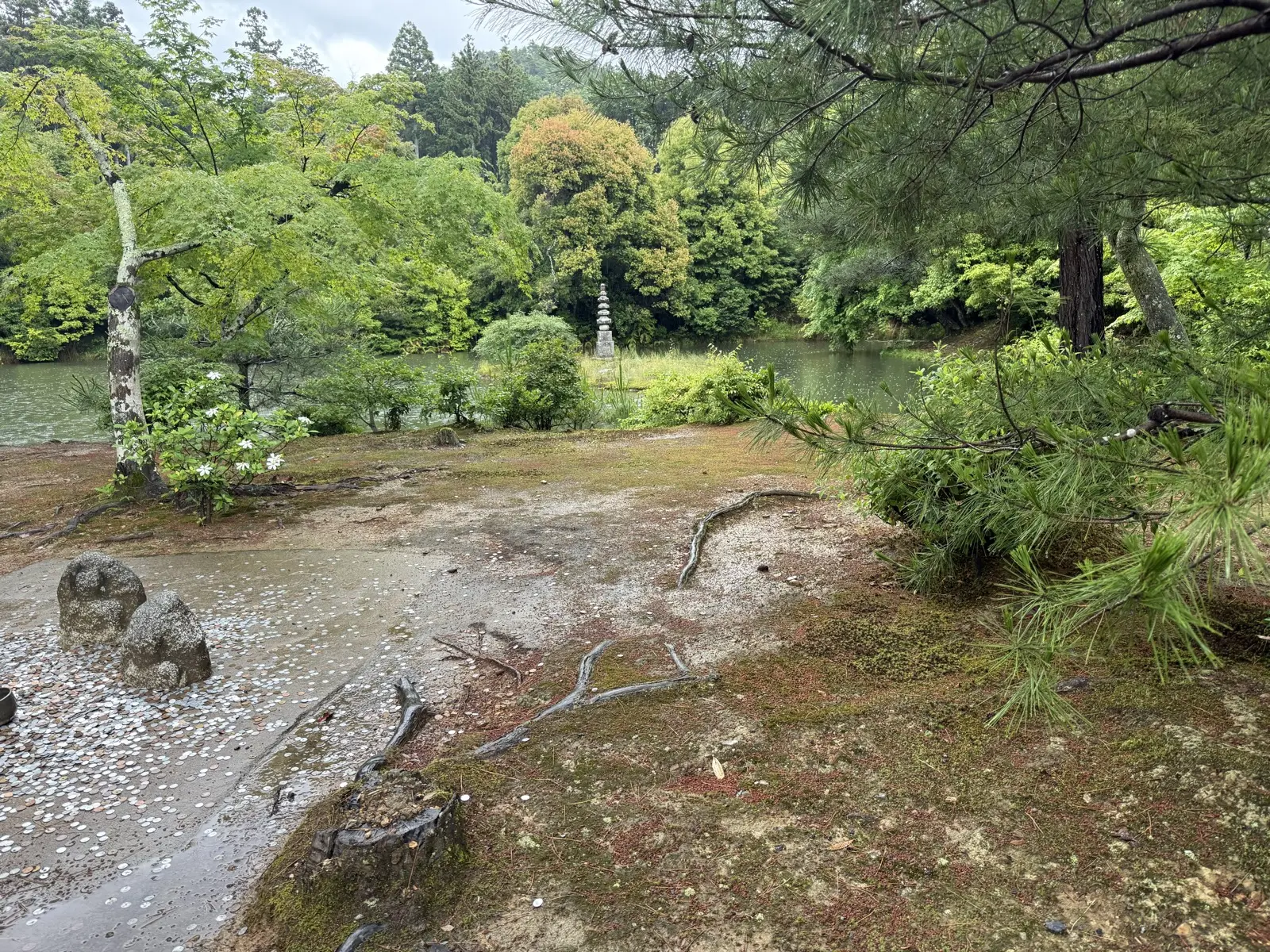
The boat-shaped pine (Rikushū-no-matsu). In the garden by the study hall stands a roughly 600-year-old pine trained into the shape of a ship — grown, the story goes, from a bonsai that Yoshimitsu himself tended, then planted out and shaped over centuries. Its "bow" points west, toward the Buddhist Pure Land, and it's counted as one of the three great pines of Kyoto. Once you know to look for it, it's unmissable — and most people stroll straight by.
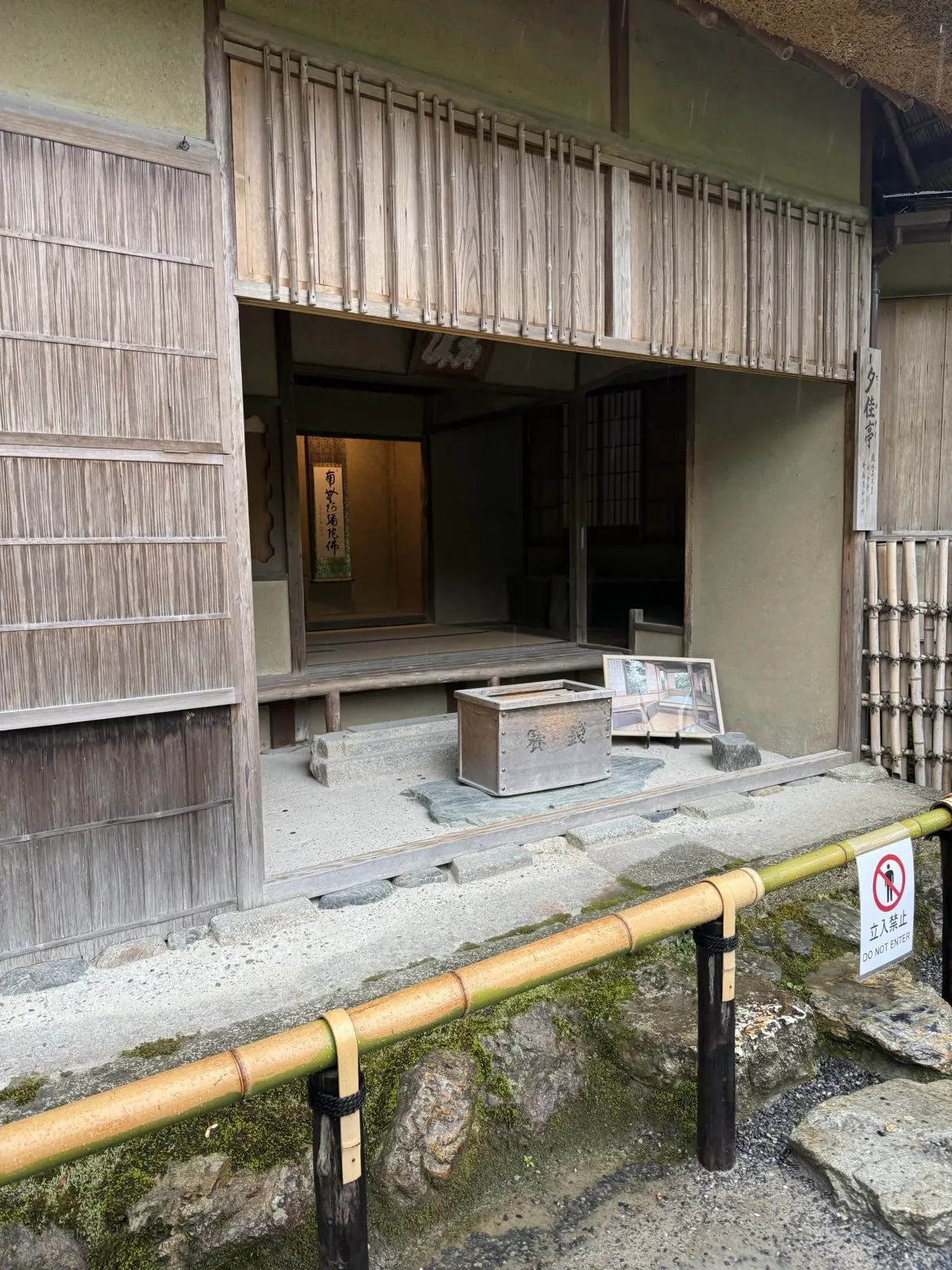
The Sekkatei tea house. Near the end of the walk you pass a small, beautifully rustic Edo-style tea house — its name, Sekkatei (夕佳亭), means roughly "pavilion of evening beauty." It's a quiet, wabi-sabi counterpoint to all that gold, and easy to miss on the way to the exit.
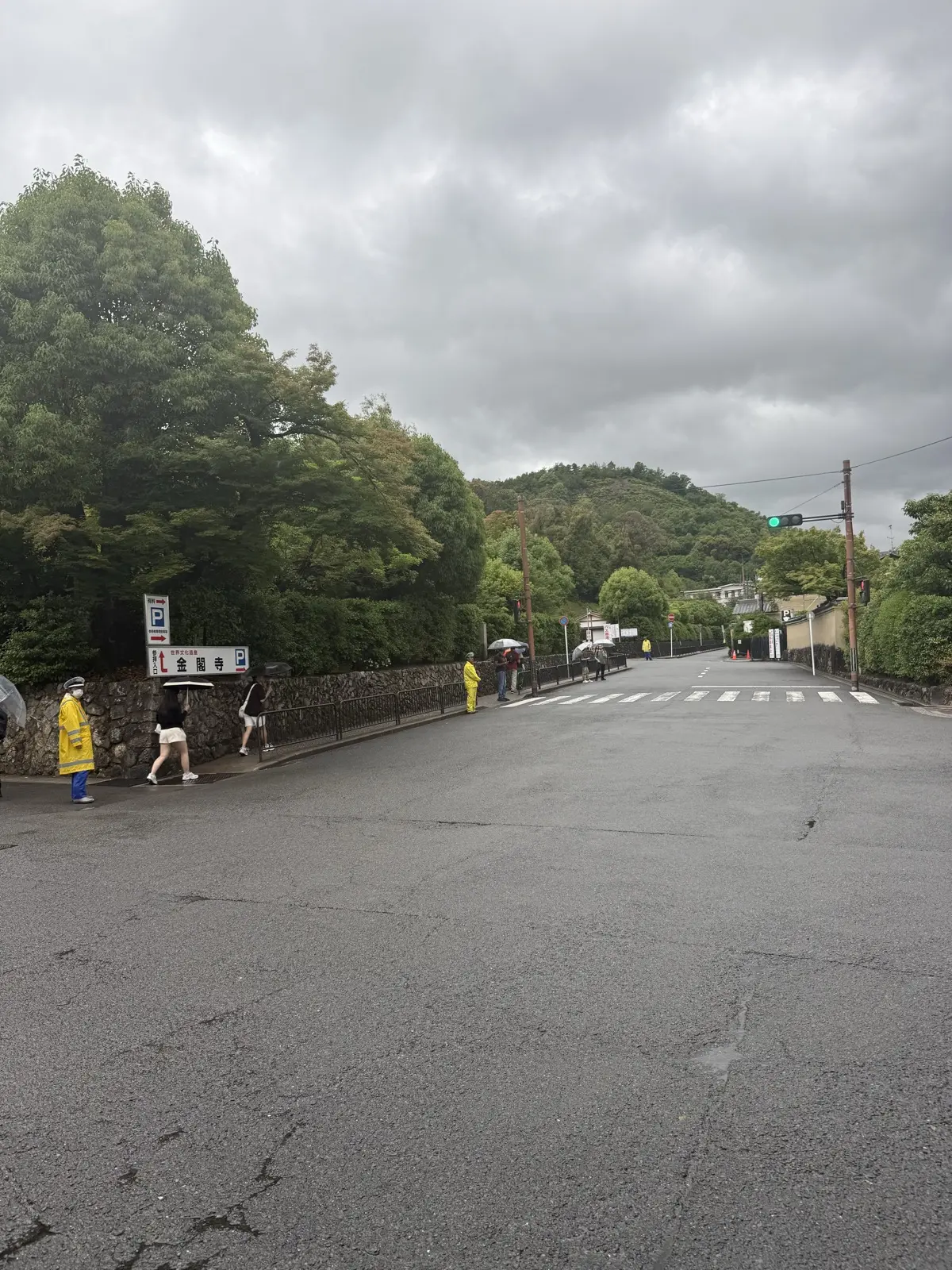
The single most useful thing to know: Kinkaku-ji has no train or subway station. People plan to "take the train to Kinkaku-ji" and there simply isn't one — it's bus or taxi only. Here's the smart way to do it:
Take the JR Special Rapid (Shin-Kaisoku) from Osaka Station to Kyoto Station — about 30 minutes. Then continue by bus below. Total, allow about 1 hour 15 minutes.
Kyoto City Bus 205 (or the 101 sightseeing bus) to the "Kinkakuji-michi" stop — about 40 minutes — then a 5-minute walk. Flat bus fare around ¥230.
The direct bus crawls in traffic. Locals often take the Karasuma subway to Kitaoji Station instead, then a short bus (101/102/204/205) or a quick taxi (~5–10 min) to the temple. It's faster and far less crowded than the long bus from Kyoto Station.
Kinkaku-ji is one of the trickier Kyoto sights to reach on your own. A guided day tour bundles it with the other big sights — and Nara's deer park — in one comfortable trip from Osaka, which is worth it if you are short on time.
Check prices & times on Klook →Good news for Osaka-based travellers: Kinkaku-ji makes an easy half-day trip from Osaka — you don't need to base yourself in Kyoto. Here's the whole route, door to door:
Reckon on about 1 hour 15 minutes each way. Go first thing in the morning — Kinkaku-ji is mobbed by mid-morning and the buses fill up. On-site it's a compact one-way loop (30–45 minutes), so it slots easily into a day that also takes in one or two other Kyoto sights.
Want the whole day mapped out? See our Osaka-to-Kyoto day-trip guide for line-by-line routes and a ready-made plan.
Go right at opening (9:00) or in the last hour before 17:00 to dodge the tour buses — mid-morning to early afternoon is the crush. An overcast or lightly rainy day actually suits it (the gold pops against grey, and the pond is calmer for the reflection). Pair it with Ryoan-ji's famous rock garden, a short bus or walk away, since you've already made the trip out to this quieter northwest corner of Kyoto. And don't stress about spending long here — 30–40 minutes is genuinely enough.
Admission is ¥500 for adults and ¥300 for primary/middle-school children. It's open 9:00–17:00 daily.
Take the JR Special Rapid from Osaka to Kyoto Station (~30 min), then Kyoto City Bus 205 or 101 to "Kinkakuji-michi" (~40 min) and walk 5 minutes. Allow about 1 hour 15 minutes total. There is no train station at Kinkaku-ji — it's bus or taxi only.
No — the current pavilion is a faithful 1955 reconstruction. The original was burned down by a young monk in 1950, an event that inspired Yukio Mishima's famous novel. The gold leaf was fully restored in 1987.
About 30–45 minutes. It's a one-way viewing path, not a large complex — you see the pavilion from across the pond, walk the garden, and leave.
No, you can't enter the pavilion itself; you view it from a set distance across the pond, which is where the classic photo is taken.