Home › Kyoto day trip › Kiyomizu-dera
Kyoto · from Osaka
Kiyomizu-dera: an honest guide from Osaka
KBy Kai Sato · a 28-year Osaka local
✅ Verified on-site
Prices, hours & access last verified July 2026 — they can change, so tell us if you spot a difference.
Kiyomizu-dera is the Kyoto temple almost every Japanese person has stood on at least once — like most of us, my first time was on a primary-school class trip (shūgaku ryokō). It's built into the Higashiyama hillside, and its giant wooden stage hanging over the trees is one of Japan's true icons. Unlike some famous sights, this one rewards the time you give it: a proper visit, the walk up, and a couple of small rituals most tour groups rush past. Here's how to do it right — and the one timing trick that changes everything.
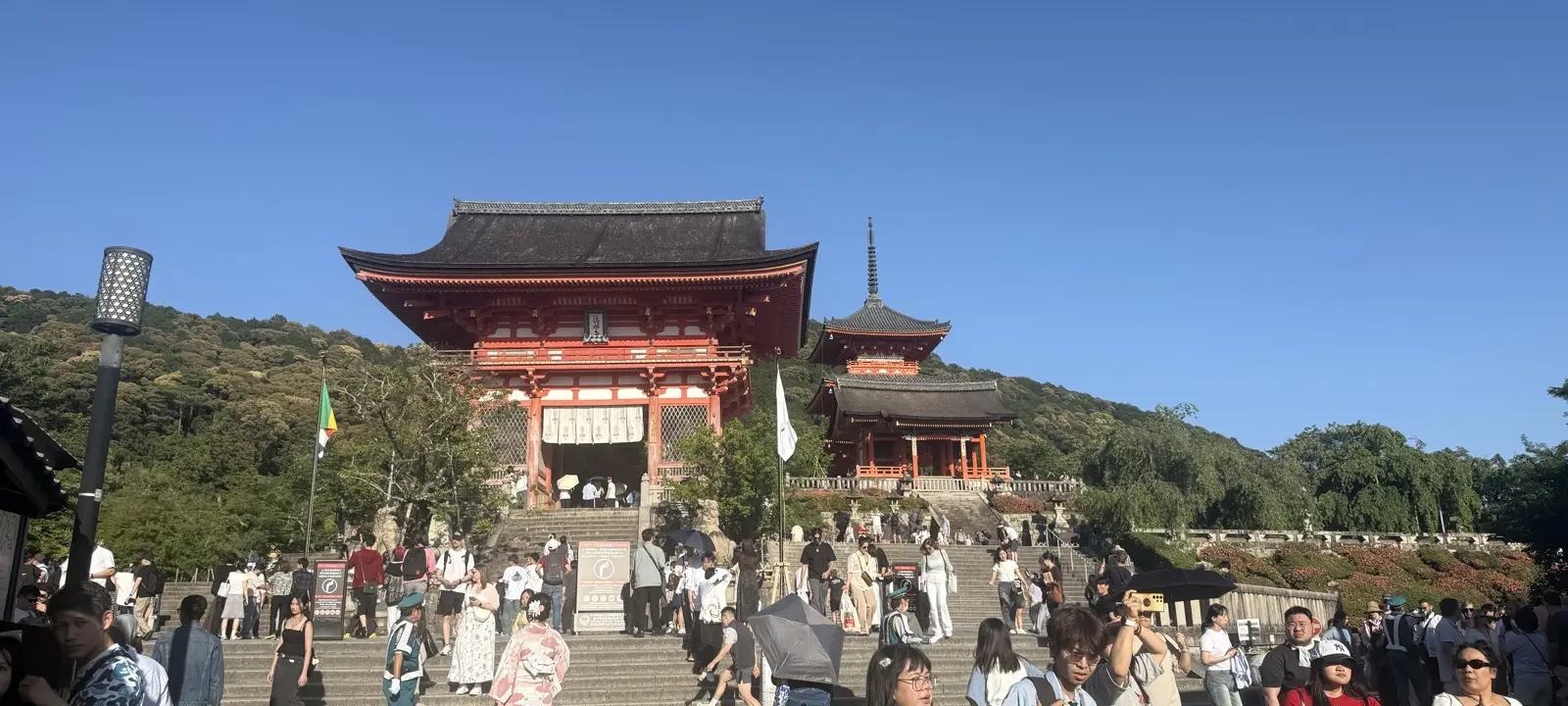
Kiyomizu opens at 6:00 in the morning — almost unheard of for a major sight. By 10am it's shoulder-to-shoulder; at 6:30 you can have that famous stage practically to yourself, in soft morning light, before the tour buses arrive. If you do one thing with this guide, arrive early. It's the difference between a magical Kiyomizu and a stressful one.
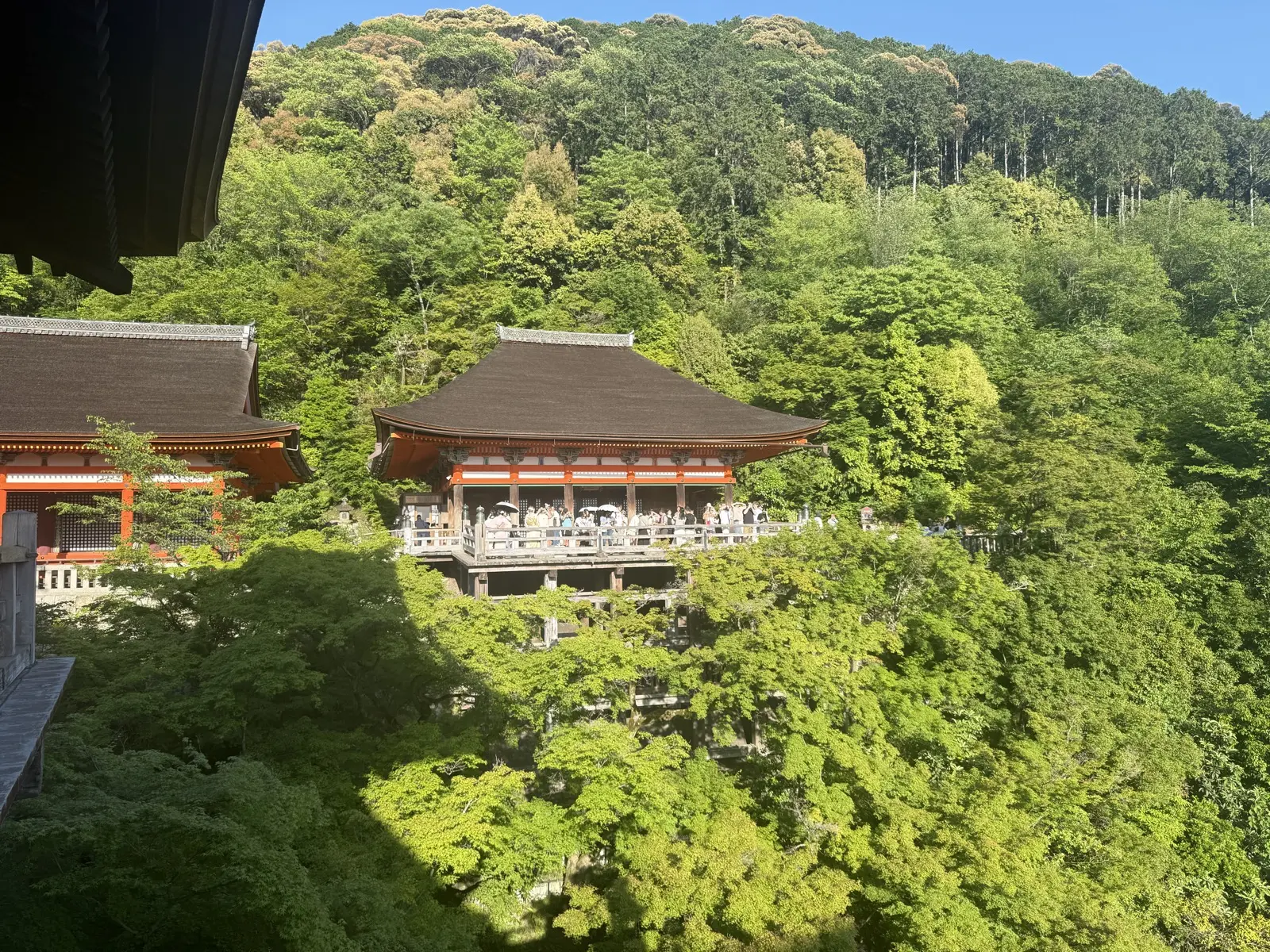
The main hall's wooden stage juts 13 metres out over the hillside, held up by a lattice of tall pillars joined without a single nail — a National Treasure, and the view from it stretches over a sea of maples and cherry trees to the city and Kyoto Tower beyond. It's spectacular in cherry-blossom and autumn-leaf season (and mobbed then, too).
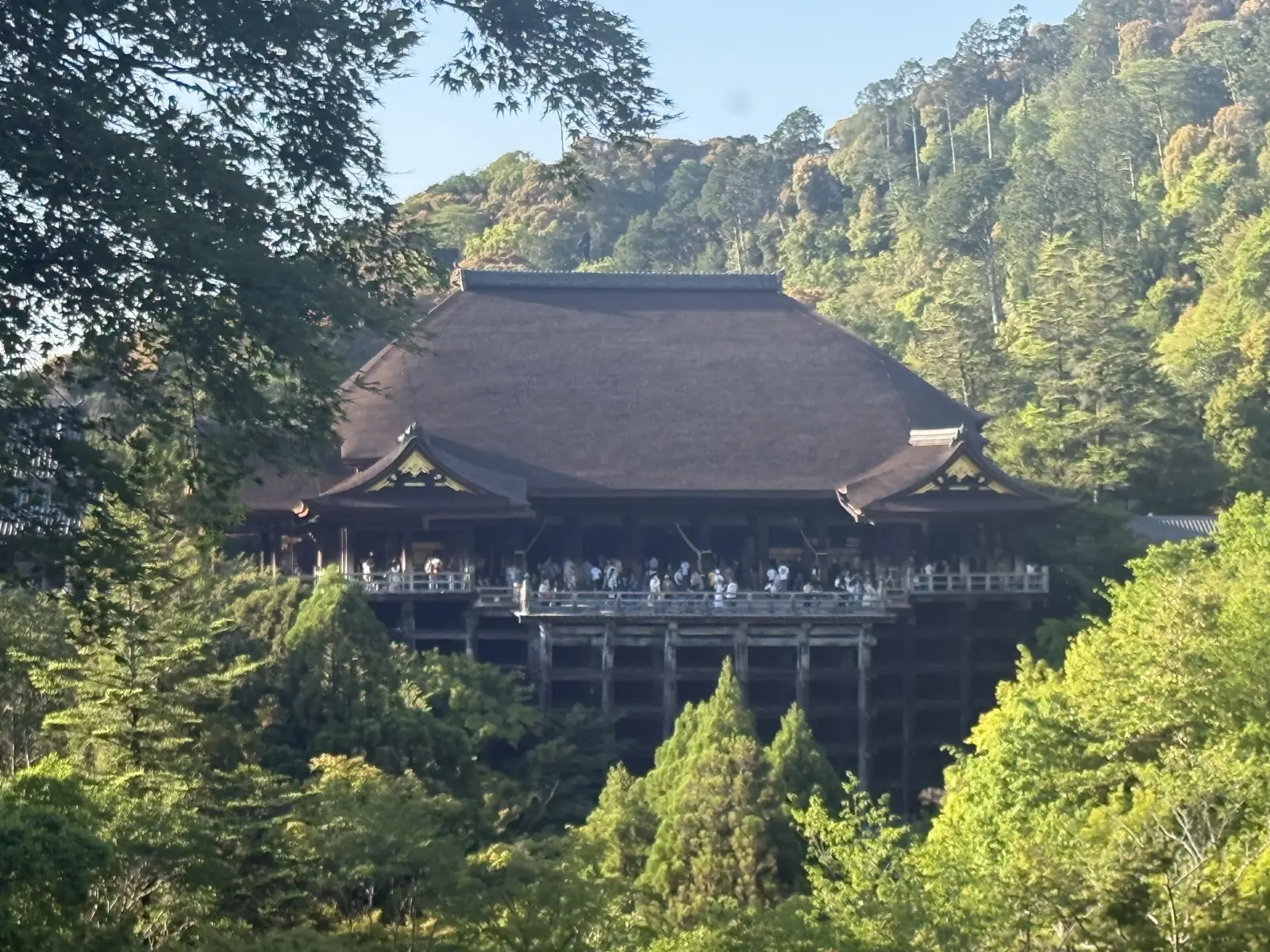
There's a phrase every Japanese person knows: "to leap from the stage of Kiyomizu" (Kiyomizu no butai kara tobioriru) — meaning to take a huge, life-changing decision. It isn't just a saying: Edo-period temple records list more than 200 people who actually jumped, believing a survived leap would grant their wish (most did survive — the trees below helped). Jumping is very much forbidden now, but stand at that railing and you'll feel where the expression came from.
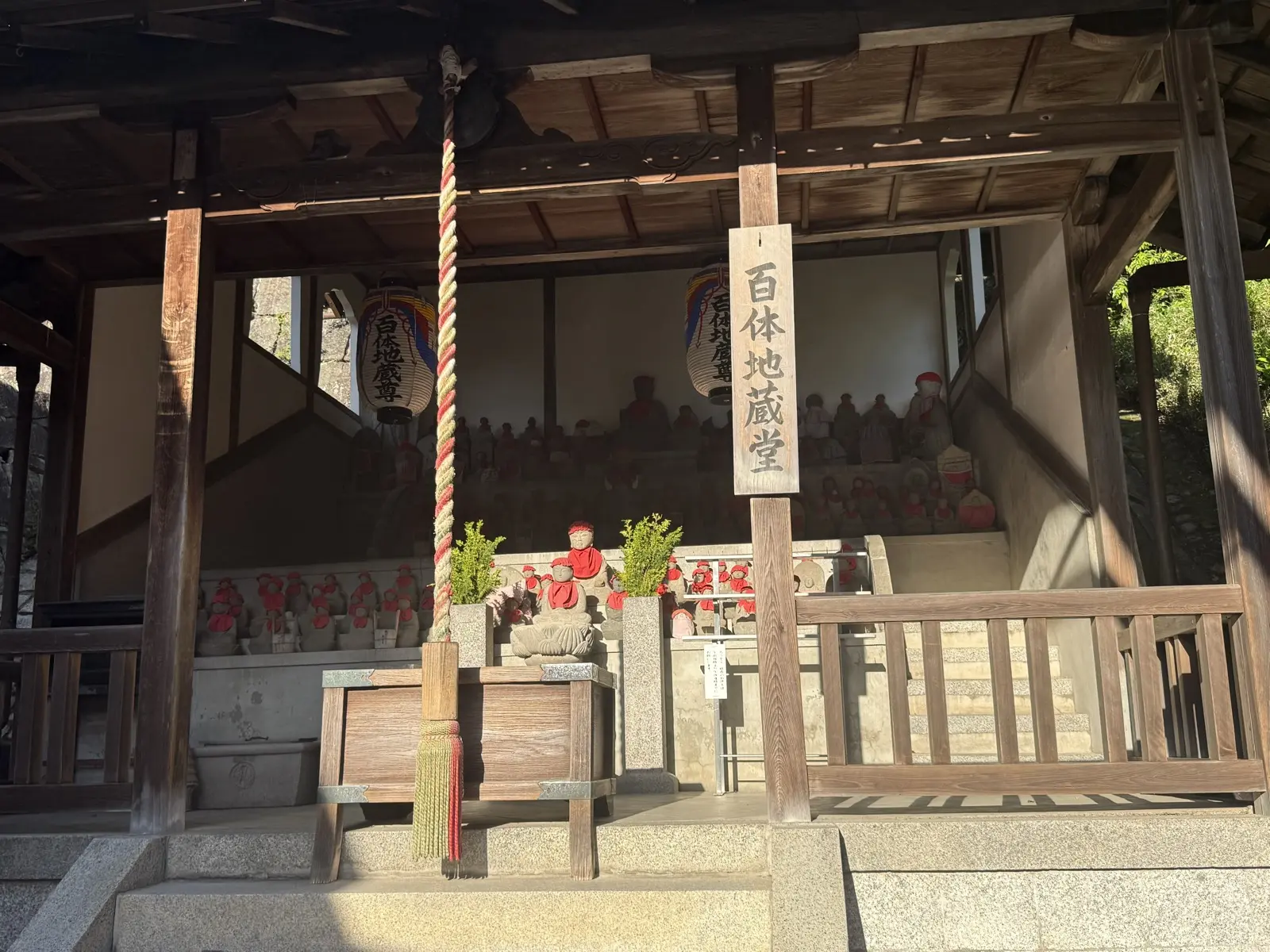
Follow the path down below the stage and you reach the Otowa Waterfall (Otowa-no-taki) — the spring the temple is named after (kiyomizu means "pure water"). Its water falls in three separate streams, and you use a long-handled cup to drink from one. Each stream is said to grant a different blessing — roughly longevity, success in study/work, and love. Here's the honest local etiquette: choose just one. Drinking from all three is seen as greedy — pick the wish that matters most to you. It's a small thing, but it's the moment most visitors remember.
Kiyomizu sits up a hill in eastern Kyoto, and the honest problem is the buses from Kyoto Station are notoriously packed. Here's the smart way to go:
Take the Keihan Main Line to Kiyomizu-Gojo Station, then walk about 20–25 minutes uphill through the old Higashiyama lanes. It skips Kyoto Station and its bus queues entirely — and the walk up past the shops is half the fun. About an hour door-to-door from central Osaka.
If you're already at Kyoto Station, take City Bus 206 or 100 to Gojozaka, then walk ~10 minutes uphill. Be warned: these buses are the most crowded in Kyoto, especially mid-morning.
Whichever way you come, you finish on foot up Sannenzaka and Ninenzaka — preserved stone-paved streets lined with sweet shops and craft stores. Give yourself time here; it's one of the prettiest walks in Kyoto.
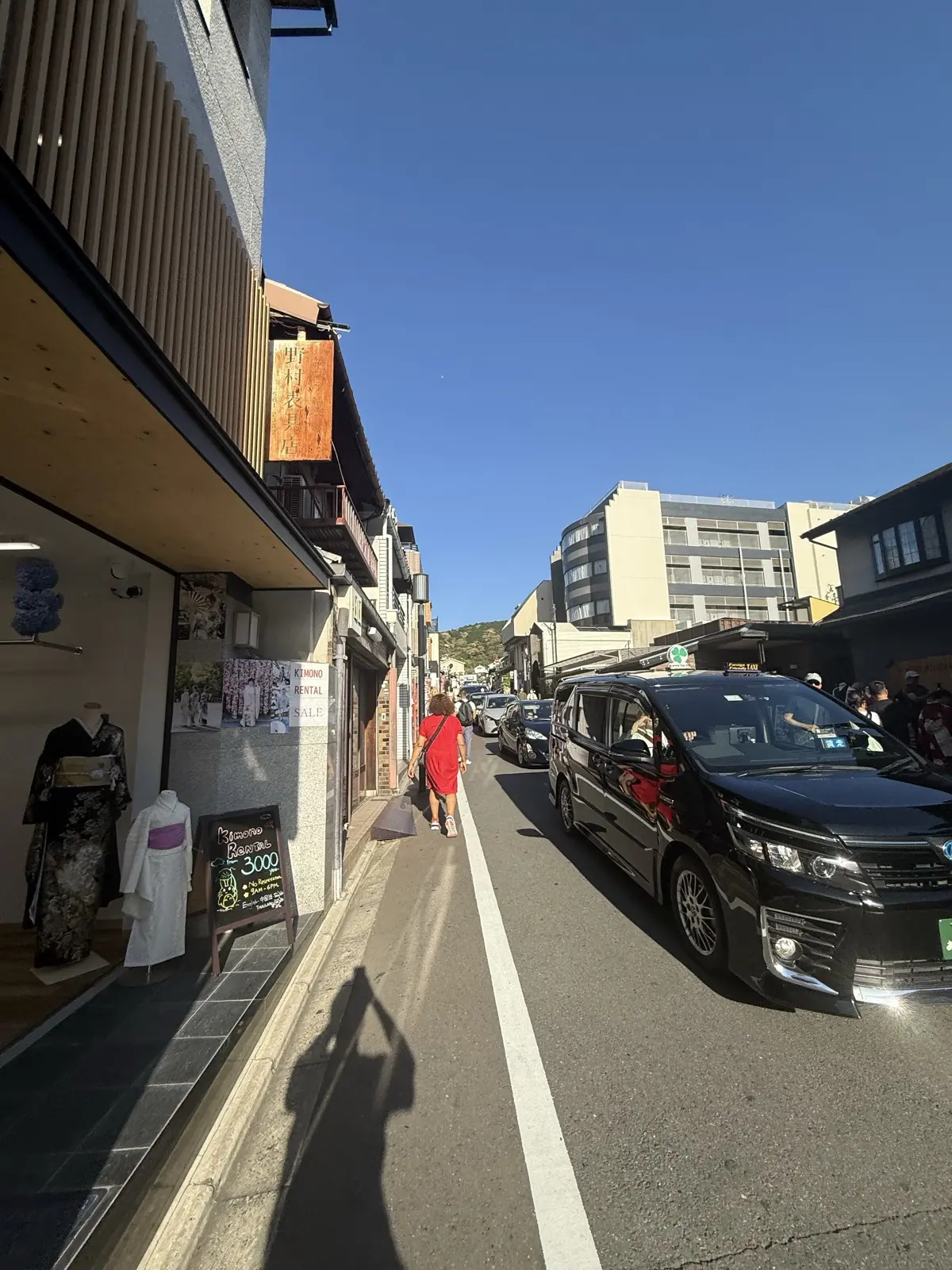
One thing to expect: the last stretch to the temple is a steady uphill climb on foot — up shop-lined slopes such as Chawan-zaka and Gojo-zaka, past kimono-rental shops, sweet stalls and souvenir stores. It's genuinely part of the fun, but it is a climb, so wear comfortable shoes and don't be in a rush.
Kiyomizu is an easy day trip from Osaka — no need to base yourself in Kyoto. The route, door to door:
Reckon on about 1 to 1.5 hours each way. Kiyomizu opens at 6:00, so an early start buys you the famous stage almost to yourself before the tour buses arrive. It pairs perfectly with a wider Higashiyama-and-Gion day.
Planning the whole day? See our Osaka-to-Kyoto day-trip guide for line-by-line routes and a ready-made plan.
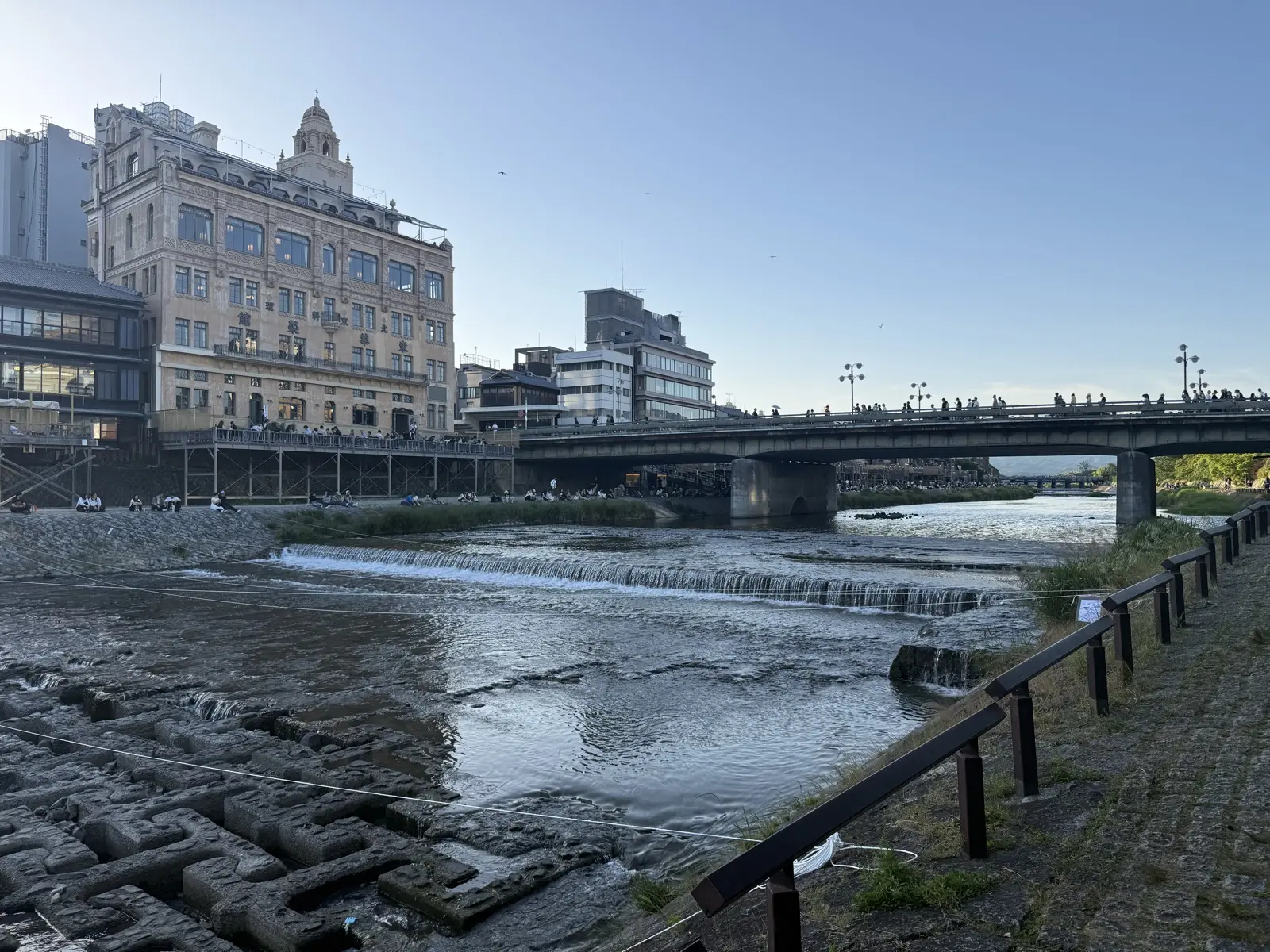
Don't just tap the temple and leave — make it the anchor of a Kyoto day trip from Osaka. The walk up and back down through Sannenzaka and Ninenzaka — preserved stone lanes full of sweet shops and craft stores — is half the experience. And when you're done in Higashiyama, carry on down toward the Kamo river (Kamo-gawa): it's a short walk or hop west, and it's where Kyoto actually relaxes — people sit on the grassy banks, hop the stepping-stones and watch the water go by. Grab something to eat and join them; it's free, and a lovely, unhurried way to end the day.
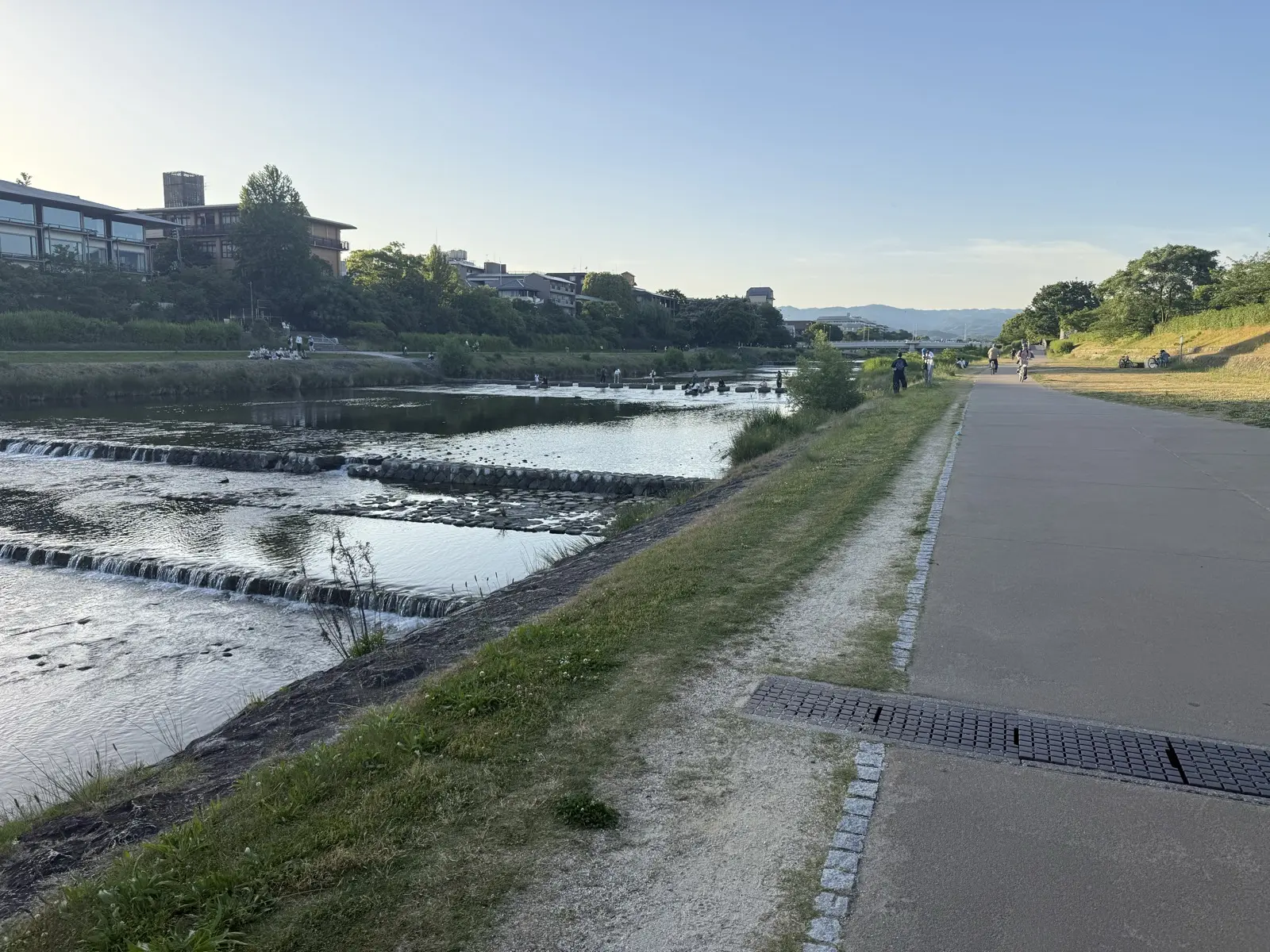
Beyond arriving at opening: spring (cherry blossoms) and autumn (maples) are jaw-dropping but brutally crowded — go at 6am then, or accept the crowds. A weekday beats a weekend. Wear comfortable shoes for the hill and the uneven stone streets. And build in the walk down through Sannenzaka for snacks and souvenirs — trying to "just see the temple" and leave misses half of what makes this corner of Kyoto special.
Admission is ¥500 for adults and ¥200 for elementary/junior-high students. It opens early — 6:00, closing around 18:00 (later in summer and on special night-viewing dates).
The easiest way is the Keihan Main Line to Kiyomizu-Gojo Station, then a 20–25 minute walk uphill — about an hour from central Osaka, and it avoids the crowded Kyoto Station buses. Alternatively, JR to Kyoto Station then City Bus 206 or 100 to Gojozaka.
Arrive at opening (6:00). By mid-morning it's extremely busy, especially in cherry-blossom and autumn seasons. Weekdays are better than weekends.
Three streams of spring water that give the temple its name. You drink from one with a long cup for a blessing — longevity, success, or love. Etiquette is to choose only one, not all three.
Yes — Edo-period records list more than 200 people who leapt from the 13-metre stage, believing survival would grant a wish (most survived). It's forbidden now. The phrase "to leap from the Kiyomizu stage" still means making a bold decision.