Home › Kyoto day trip › Ginkaku-ji
Kyoto · from Osaka
Ginkaku-ji (Silver Pavilion): an honest guide from Osaka
KBy Kai Sato · a 28-year Osaka local
✅ Verified on-site
Prices, hours & access last verified July 2026 — they can change, so tell us if you spot a difference.
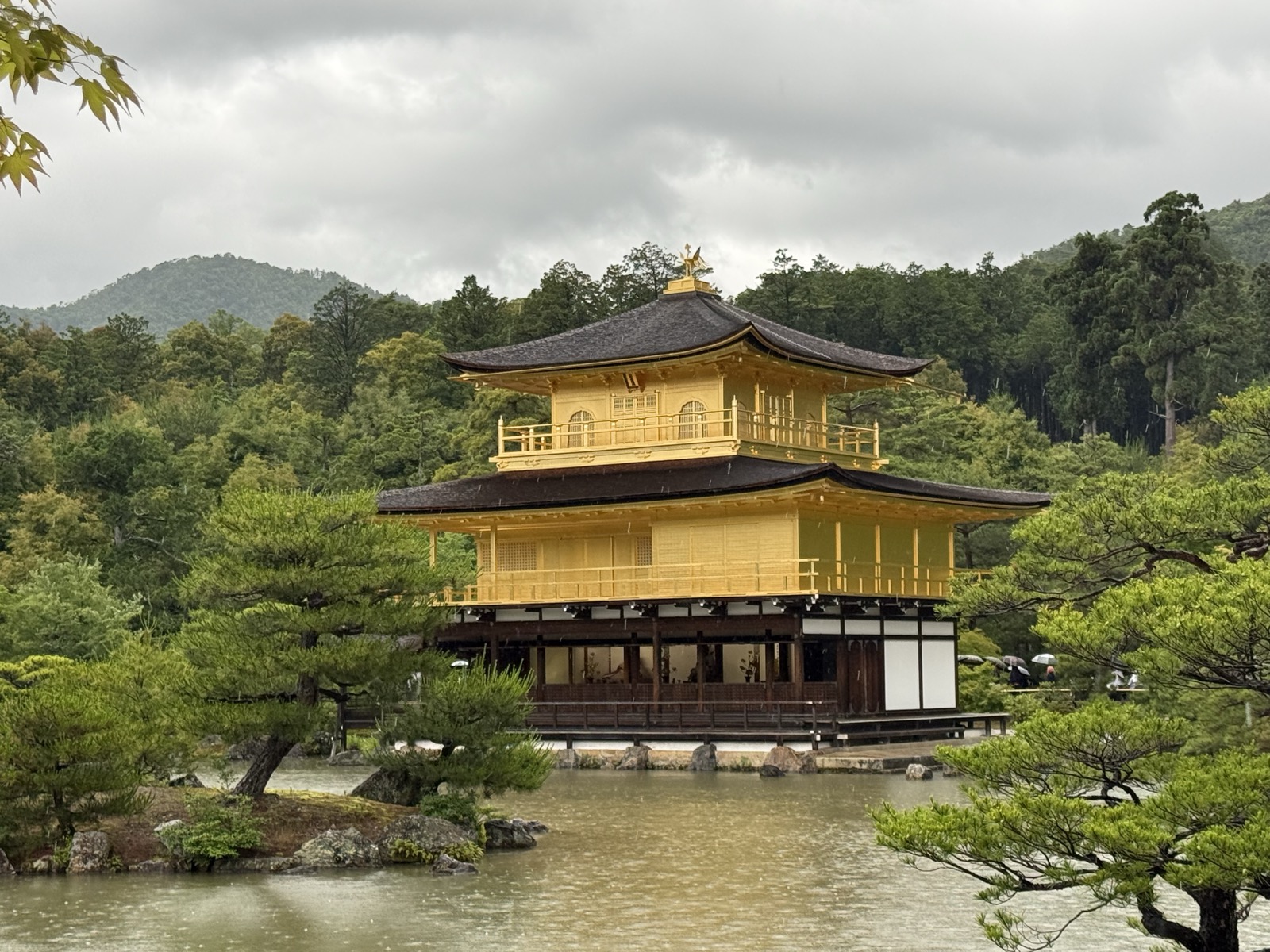
If Kinkaku-ji is the show-off cousin — all gold, all spectacle — Ginkaku-ji is the quiet, thoughtful one. It's smaller, subtler and, honestly, more Japanese in feeling: dark wood, moss, and a garden built for contemplation rather than a wow photo. Two things surprise almost everyone who comes: it isn't silver, and that mysterious sand you'll see has a name and a meaning. Let me explain both — and note the price, which just went up.
Adult admission was ¥500 for years — but from April 2026 it doubled to ¥1,000 (¥500 for elementary/junior-high students). A lot of older guides still say ¥500; they're out of date. It's still worth it, but budget the current price.
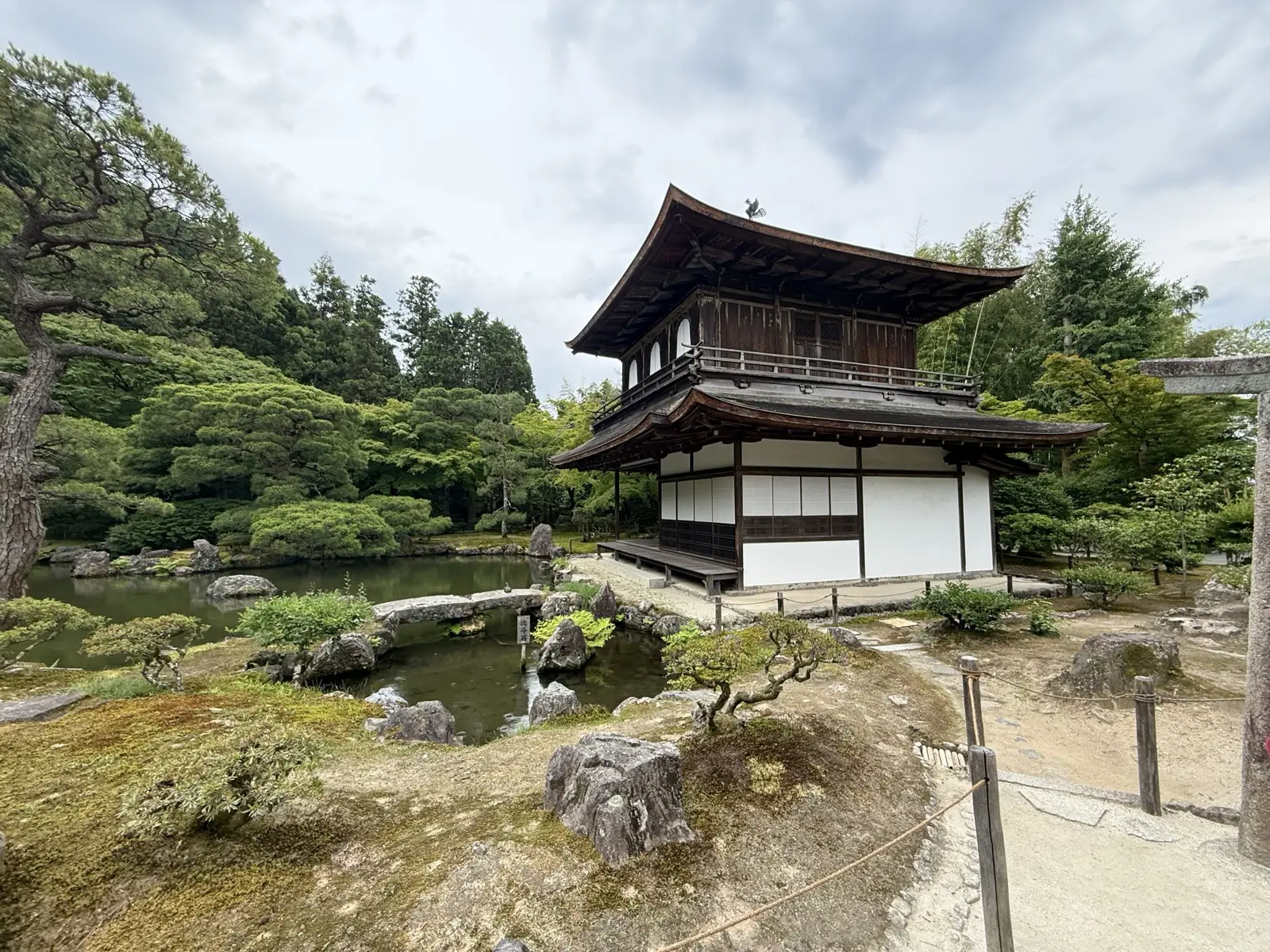
Here's the thing nobody tells first-timers: despite the name "Silver Pavilion," Ginkaku-ji was never covered in silver. It's plain dark lacquered wood, and always has been. The shogun who built it, Ashikaga Yoshimasa, modelled it on his grandfather's dazzling Golden Pavilion — but the silver leaf was never applied (whether he ran out of money and time, or simply preferred the restraint, is still debated). One popular idea is that the name comes from how the wood glows silver under a full moon. So don't arrive expecting a shining silver building — arrive for something quieter and, to a lot of us, more beautiful for it.
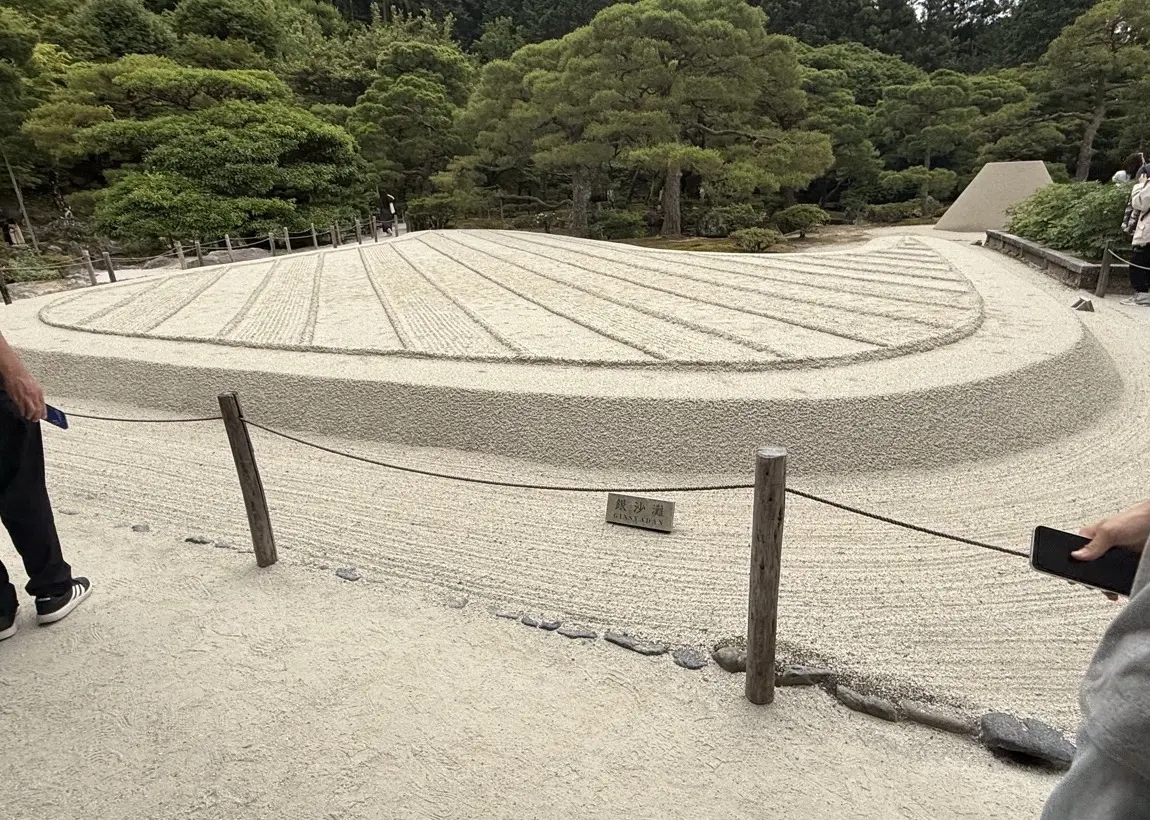
The two strange sand features are the reason people stop and stare, and almost nobody explains them. They have names:
The wide, flat expanse of carefully raked sand is the Ginshadan — the "Sea of Silver Sand." Beside it rises a precise, flat-topped cone about waist-high: the Kogetsudai, or "Moon-Viewing Platform." They're part of a dry landscape (karesansui) garden, and the leading interpretation is that they were shaped to catch and reflect moonlight, throwing a soft glow across the garden at night — turning the whole place silver without a scrap of actual silver. Monks re-rake and re-shape them by hand; that crisp geometry is maintained constantly. Knowing what they are, they stop being "weird sand" and become the whole point.
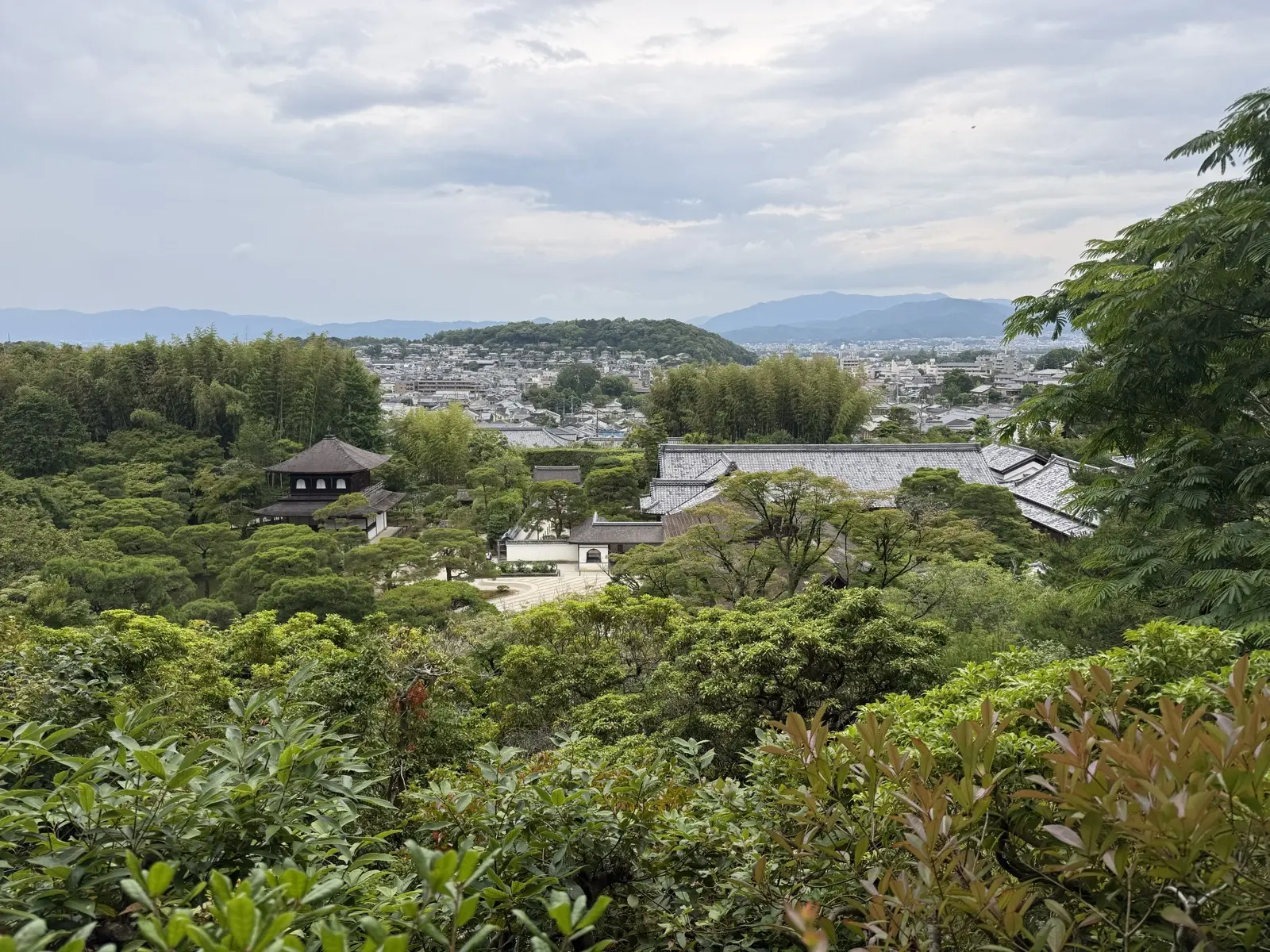
Most people photograph the pavilion and the sand and leave — but the garden path climbs the hillside through moss and maples to a small viewpoint that looks back over the temple's roofs and out across Kyoto. It takes ten extra minutes and it's the best part. This whole area is Higashiyama, the birthplace of the refined "Higashiyama culture" — the tea ceremony, ikebana and wabi-sabi aesthetics that grew out of Yoshimasa's retirement here.
Like Kinkaku-ji, Ginkaku-ji has no train station — it's reached by bus (or on foot along one of Kyoto's loveliest walks). Here's how to do it:
JR Special Rapid to Kyoto Station (~30 min), then a bus below. Allow about 1 hour 15 minutes door to door.
Kyoto City Bus 5, 17, 102, 203 or 204 to the "Ginkakuji-michi" stop (~35–40 min), then a short walk up the approach lane.
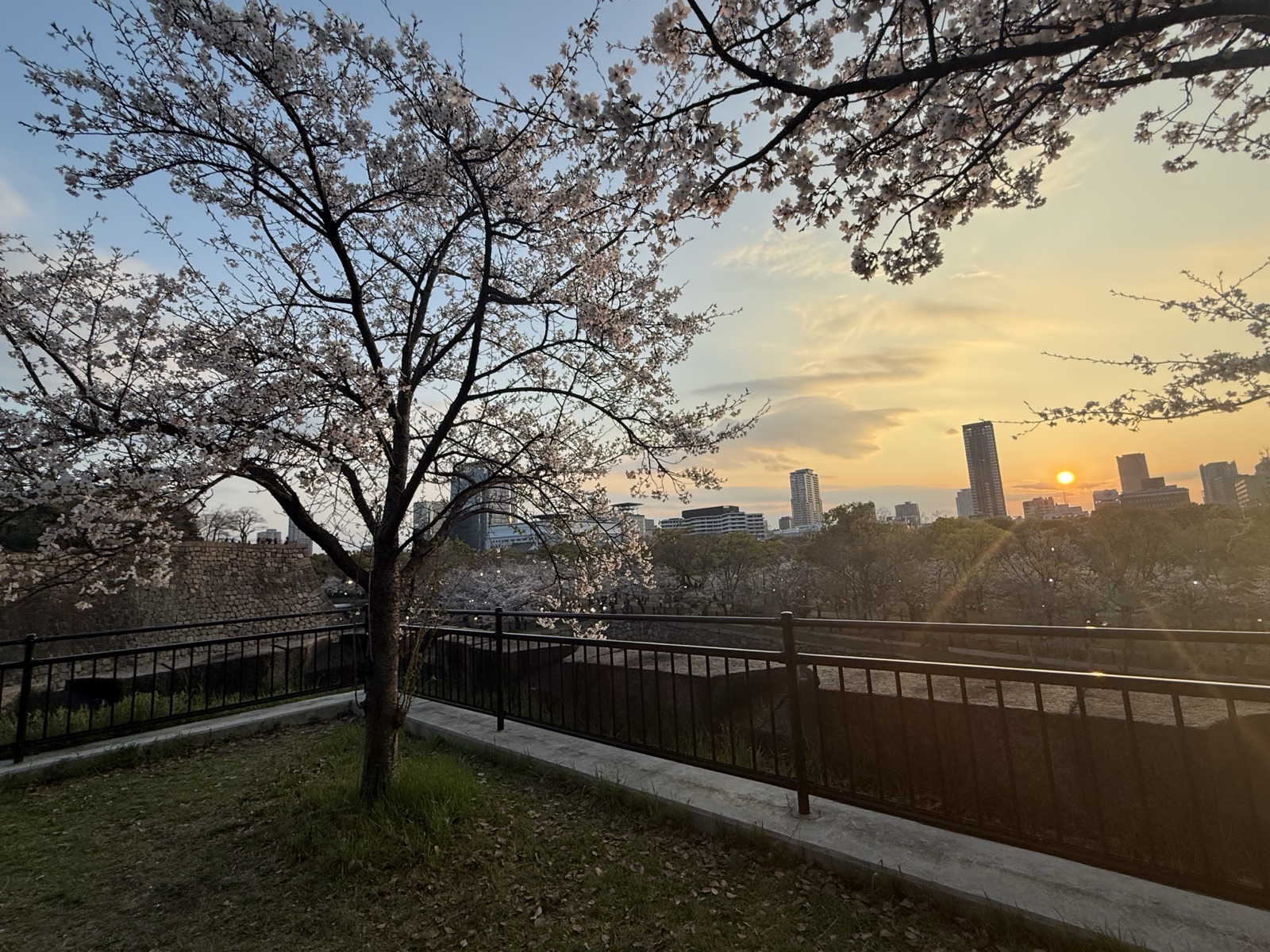
Ginkaku-ji sits at the north end of the Philosopher's Path (Tetsugaku-no-michi) — a canal-side walk lined with cherry trees. Pair it with Nanzen-ji at the other end and walk between them; it's one of the best strolls in Kyoto.
Bus fares & passes: the city bus is a flat ¥230. The faster EX100 Sightseeing Express (weekends & holidays only, from Kyoto Station via Kiyomizu-dera and Gion) is a separate ¥500 fare. The old bus-only day pass was discontinued, so for a single out-and-back, tapping an IC card (ICOCA/Suica) or paying per ride beats the ¥1,100 Subway & Bus pass.
Ginkaku-ji sits in Kyoto's north-east and makes an easy day trip from Osaka. Door to door:
Allow about 1 hour 15 minutes each way. Go earlier — the moss garden and hillside path bottleneck as tour groups build through mid-morning. Ginkaku-ji is the north end of the Philosopher's Path, so it pairs naturally with a walk south toward Nanzen-ji.
Planning the whole day? See our Osaka-to-Kyoto day-trip guide for line-by-line routes and a ready-made plan.
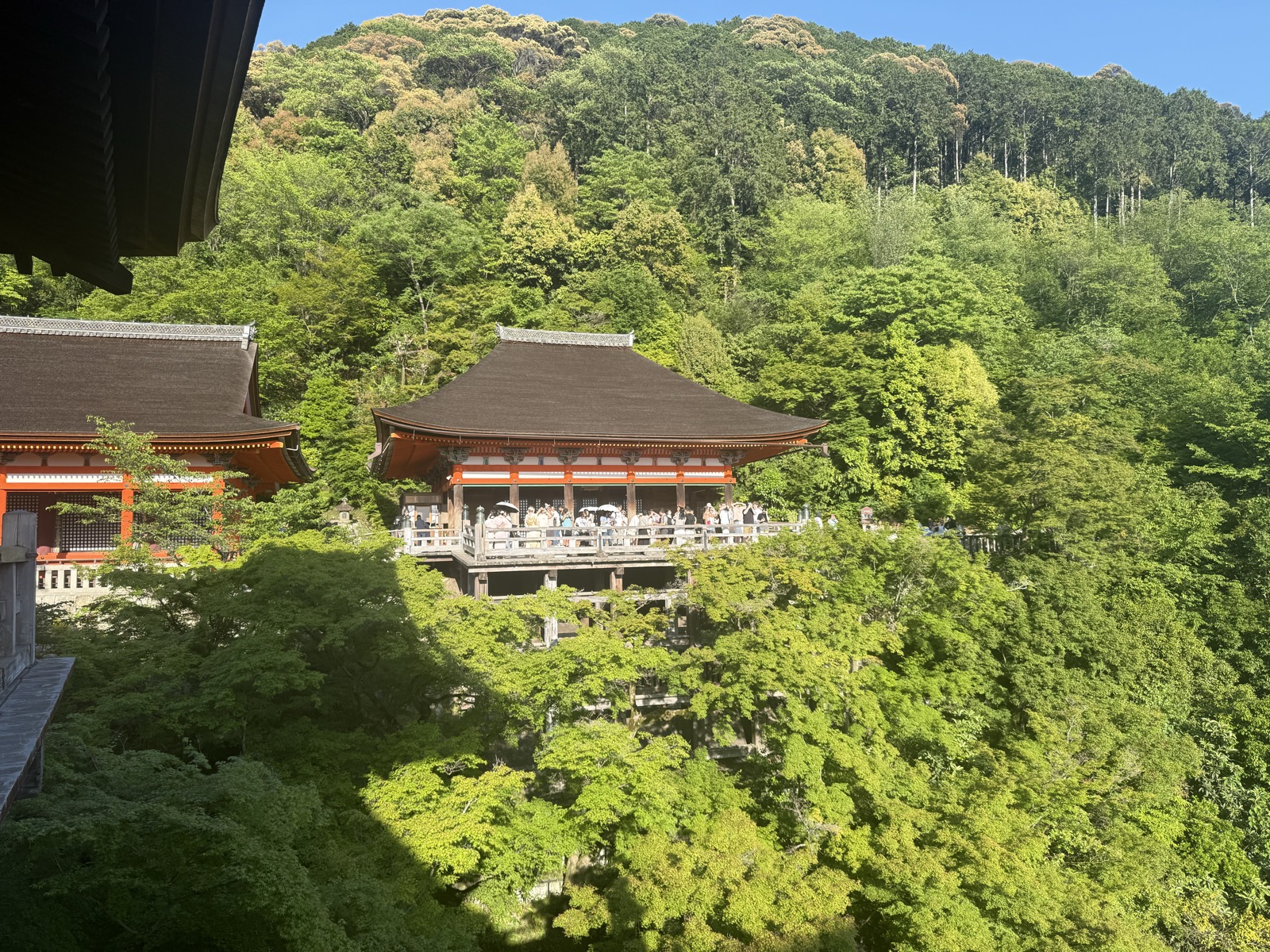
Should you go? If you loved Kinkaku-ji's spectacle and want more of the same, Ginkaku-ji might feel understated. But if you want the Kyoto that's about atmosphere and quiet detail — moss, raked sand, a garden made to be felt — it's the better temple, and usually less frantic. Go earlier in the day, give yourself time for the hill and the Philosopher's Path, and read the sand for what it is. It pairs naturally with an Osaka–Kyoto day trip that also takes in Kinkaku-ji or Kiyomizu-dera.
Ginkaku-ji keeps seasonal hours, which trip up people who plan around a single closing time:
| Period | Open | Close |
|---|---|---|
| March 1 – November 30 | 8:30 | 17:00 |
| December 1 – end of February | 9:00 | 16:30 |
The temple is open year-round with no regular closing days, but last entry is at the posted closing time, so aim to be through the gate at least 30 minutes before.
How long inside? The temple's own FAQ says about 30 minutes, and that is honest for a brisk loop. The grounds are compact and strictly one-directional. Most visitors who linger on the moss garden and climb the hillside spend closer to 45–60 minutes; 90 minutes is more time than the site rewards. If you are choosing between arriving early or staying late, early wins here because tour groups build through mid-morning and the hillside path bottlenecks.
The honest answer for wheelchair users and anyone with mobility limits: Ginkaku-ji is partially accessible. The paths are gravel with small, shallow stones (firmer than many temples), and the sand gardens, moss garden and the areas around the buildings can be visited on wheels. An accessible restroom sits near the gift shop.
The problem is the hillside loop that delivers the famous elevated view over the pavilion and the city — it is a stepped, sometimes uneven climb and is not wheelchair accessible. You can skip it and still see the pavilion, sand cone and gardens, but you lose the signature panorama. The temple's FAQ confirms a wheelchair visit is possible "with the exception of some scenic viewing spots."
For families: the one-way route and hill steps make strollers awkward; a baby carrier is easier, and the 30–45 minute loop is short enough for most children. Pets are allowed only if carried or kept in a carrier — they may not walk on the temple path.
Ginkaku-ji sits at the northern end of the Philosopher's Path, and the smart move is to see the temple first (before the midday crowd), then walk south. Trying to pack in everything along the way is the classic over-ambitious mistake; narrowing to roughly "two temples plus one café" makes for a calmer half-day.
Walking the ~2 km path one-way takes about 30–40 minutes without stops, or 1.5–2 hours if you dip into temples and cafés.
The lane approaching Ginkaku-ji is lined with matcha-sweet stalls and small eateries, so you will not go hungry, though quality varies. A few reliable, walkable choices:
Note that most casual spots near the temple keep short hours built around temple opening times (roughly 9:00–17:00), so this area is for lunch and afternoon sweets rather than dinner. Verify current opening days and prices before relying on any single restaurant, as small Kyoto eateries change hours and take irregular days off.
Common mistakes to avoid:
Do I need to book tickets in advance? No. Tickets are bought at the gate; there is no timed-entry reservation system.
Can I take photos? Yes, throughout the outdoor grounds. Interiors of the pavilion buildings are not open to enter.
Is it worth it given the ¥1,000 admission? It is worth it if you value gardens, the sand sculptures and the hillside view, and you go early; skip it if you have already seen several Kyoto temples that week and dislike crowds, since the loop is short for the price.
Are there coin lockers or a cloakroom? Not confirmed on-site — plan to travel light or use lockers at Kyoto Station or the nearest bus hubs (verify).
Best time of day? Right at opening, ideally on a weekday, before tour groups arrive.
Admission is ¥1,000 for adults and ¥500 for elementary/junior-high students (raised from ¥500 in April 2026). Hours are 8:30–17:00 from March to November and 9:00–16:30 from December to February.
No — despite the name "Silver Pavilion," it was never covered in silver leaf. It's dark lacquered wood; the name is linked to how it glows silver under moonlight.
It's the Kogetsudai ("Moon-Viewing Platform"), a shaped sand cone beside the Ginshadan ("Sea of Silver Sand"). They're part of a dry landscape garden believed to reflect moonlight across the grounds.
Take the JR Special Rapid to Kyoto Station (~30 min), then City Bus 5, 17, 102, 203 or 204 to Ginkakuji-michi (~35–40 min). There is no train station at the temple. Total about 1 hour 15 minutes.
They're different moods. Kinkaku-ji is gold and spectacle; Ginkaku-ji is quiet, mossy and contemplative, with the famous sand garden and a hillside viewpoint. Many locals prefer its calmer atmosphere.