Home › Getting around Osaka
Osaka · Getting around
Getting around Osaka: where everything is, and how long it takes
KBy Kai Sato · a 28-year Osaka local
Times & fares last verified July 2026 — they vary slightly by exact station and time of day.
Good news: Osaka is compact and easy to get around. Almost everything a visitor wants sits on one of two subway lines, the city is small enough that most hops take 10–20 minutes, and one card handles all of it. The only genuinely confusing part is the giant Umeda/Osaka Station hub — so this guide covers the transport you actually need, exactly where the main sights are, how long it takes between them, and how to route a day without backtracking.
Get an ICOCA card and tap everywhere. Learn two lines: the Midosuji subway (red — the north-south spine linking Umeda, Shinsaibashi, Namba and Tennoji) and the JR Osaka Loop Line (which circles the city and reaches the Castle, Shinsekai and the USJ turn-off). Base in Umeda (north) or Namba (south) and you're never far from anything.
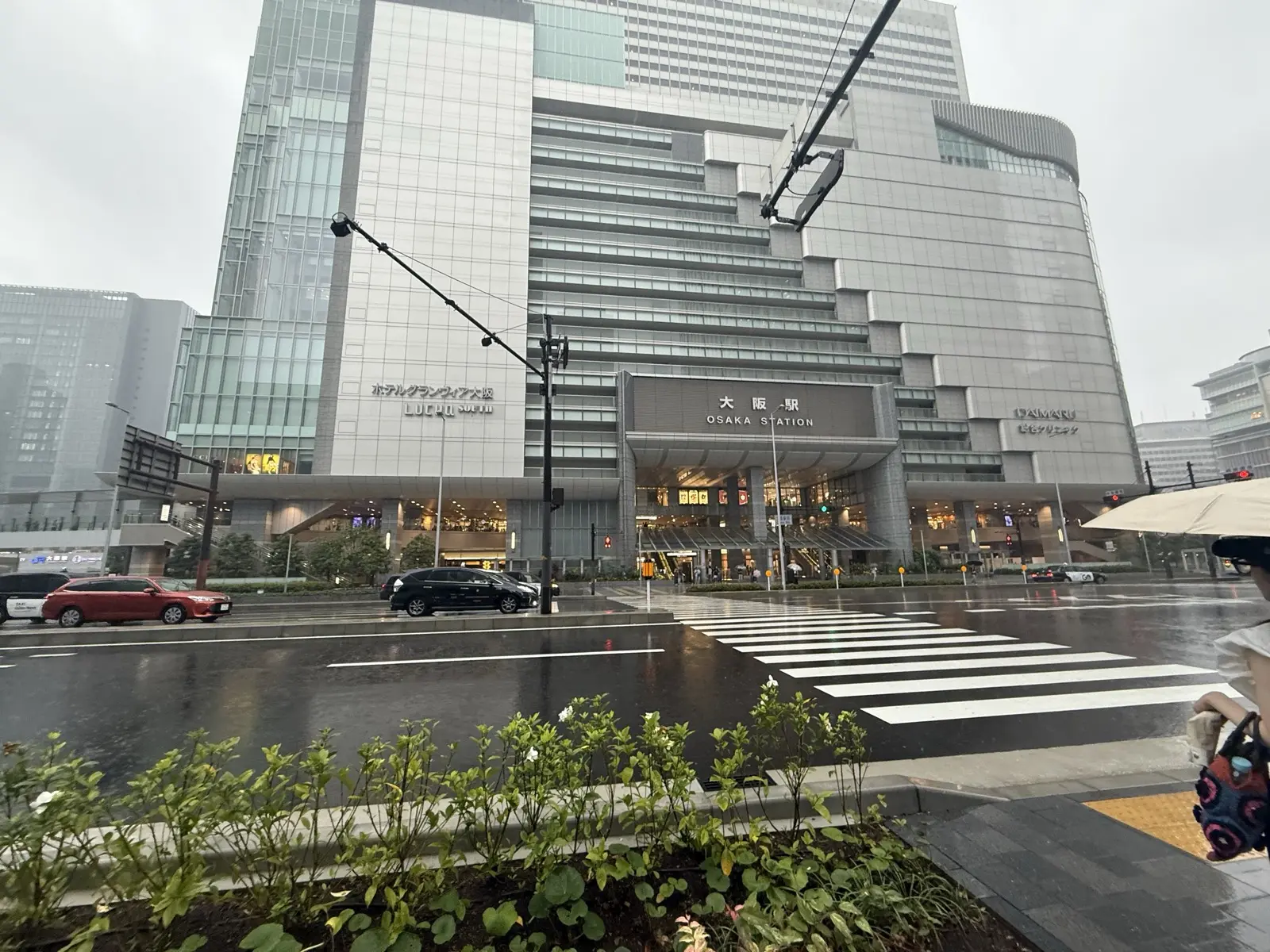
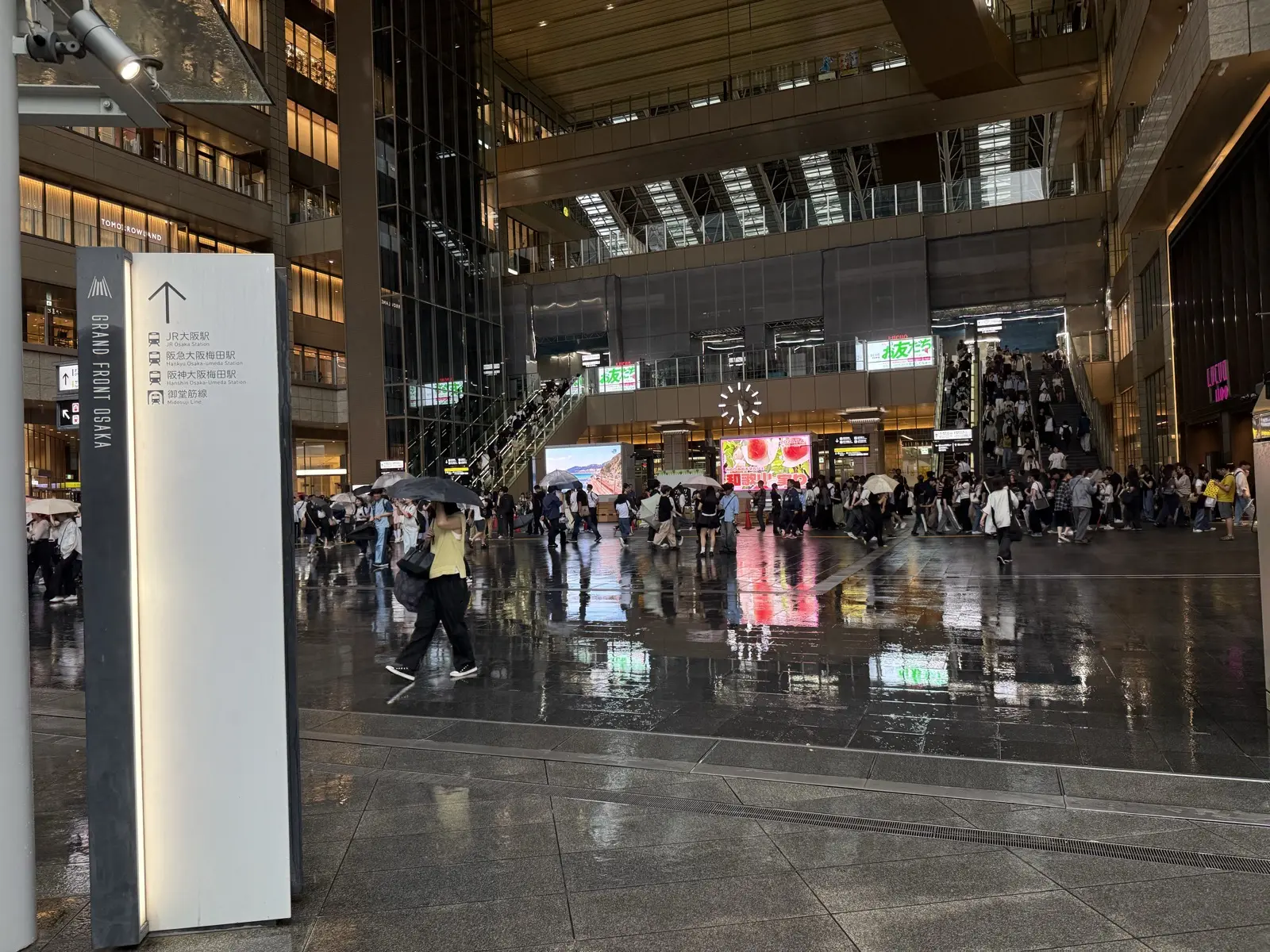
Here's the one thing that trips everyone up. The huge northern hub is several different stations stacked together under different names, and the signs switch between them:
They're all connected by walkways, but it's a maze. The trick: follow the line/colour you need, not just "Umeda," and give yourself 10 minutes to transfer here. Once you know it's normal for the names to change, it stops being scary.
Approximate train times from the two bases most visitors use — Umeda (Kita, north) and Namba (Minami, south):
| Attraction | Nearest station | From Umeda | From Namba |
|---|---|---|---|
| Dotonbori / Namba | Namba | ~9 min | you're there |
| Osaka Castle | Osakajōkōen (JR) / Tanimachi 4-chōme | ~11 min | ~15 min |
| Shinsekai & Tsutenkaku | Dōbutsuen-mae / Ebisuchō | ~15 min | ~6 min |
| Umeda Sky Building | Osaka / Umeda | ~10 min walk | ~9 min |
| Tennoji / Abeno Harukas | Tennoji | ~17 min | ~8 min |
| teamLab (Nagai) | Nagai (Midosuji) | ~22 min | ~13 min |
| Osaka Aquarium (Kaiyukan) | Osakakō (Chūō line) | ~25 min | ~25 min |
| Universal Studios (USJ) | Universal City (JR) | ~12 min | ~20 min |
The pattern to notice: the north (Umeda) and south (Namba) are only about 9 minutes apart on the Midosuji line, so wherever you stay, the whole city is within easy reach.
Because the Midosuji line runs straight north–south, the smart move is to work in one direction rather than zig-zagging. For example: start north at the Umeda Sky Building, ride Midosuji down to Shinsaibashi for shopping, continue to Namba/Dotonbori for the evening, and finish at Shinsekai/Tennoji in the south. Save the Castle (east, on the Loop Line) for its own half-day, and USJ and the Aquarium (west, by the bay) for separate outings, since they're off the main line.
Osaka is the best base in the Kansai region because the day trips are all short:
| Destination | From Osaka | Time · fare |
|---|---|---|
| Kyoto | JR Special Rapid | ~30 min · ~¥580 |
| Nara | JR / Kintetsu | ~45 min |
| Kobe (Sannomiya) | JR | ~30 min · ~¥410 |
| Himeji (castle) | JR Special Rapid | ~1 hr (shinkansen ~30 min) |
| Kansai Airport (KIX) | Nankai (from Namba) | ~40 min |
For most trips, an ICOCA card is all you need — pay-as-you-go, no maths. Consider a pass only if it clearly beats that: the Osaka Amazing Pass bundles unlimited subway with free attraction entry (worth it on a packed sightseeing day), and there are cheaper subway-only day tickets if you'll ride a lot in one day. If you're day-tripping across Kansai a lot, look at the Kansai-wide passes — but don't over-buy; for a typical trip, ICOCA wins.
The airport transfer is where most visitors overpay or overcomplicate their first day. KIX sits on an artificial island about 50 km south of central Osaka, so there is no cheap 15-minute hop. Here is every realistic route, with 2026 fares.
| Option | Destination | Time | One-way fare |
|---|---|---|---|
| Nankai Rapi:t (limited express) | Namba | ~34 min | Base fare ¥930 + limited-express seat charge (Rapi:t total is higher; the ¥930 is the plain Airport Express fare) |
| Nankai Airport Express (ordinary) | Namba | ~45 min | ¥930 |
| JR Haruka (limited express) | Tennoji / Shin-Osaka / Kyoto | ~50 min to Tennoji, ~75 min to Kyoto | ¥2,850 to Kyoto |
| JR Kansai Airport Rapid | Tennoji / Osaka Stn | ~50 min / ~65-70 min | ¥1,060 / ¥1,190 |
| KATE Limousine Bus | Umeda / Namba | ~60 min / ~35 min | ¥1,800 / ¥1,300-1,600 |
The honest verdict: if the accommodation is near Namba, the ordinary Nankai Airport Express at ¥930 is the smart-money choice — it is only ~10 minutes slower than the premium Rapi:t for a fraction of the seat cost. If staying near Umeda/Osaka Station, the JR Kansai Airport Rapid (¥1,190) goes there directly and costs less than half the Haruka. The Haruka only makes sense for continuing straight to Kyoto or for guaranteed reserved luggage space. The limousine bus is worth it mainly for travelers with heavy suitcases (up to two checked pieces per person carried free), no stairs, and a hotel on the bus route — but it is at the mercy of expressway traffic.
The article already covers ICOCA as a card; the 2026 wrinkle is that you may not need a plastic card at all. JR West now lets ICOCA load into Apple Pay, and any iPhone can add a Suica or ICOCA directly in the Wallet app and top it up with a foreign credit card — no counter, no deposit, no queue. Android phones sold outside Japan generally cannot do this, which is the single biggest gotcha: an overseas Android user should buy a physical card instead.
One card can cover the whole trip — trains, subway, buses, convenience stores and vending machines — so there is rarely a reason to juggle multiple cards.
Osaka's subway does not run all night. On the Midosuji Line, first trains start around 5:03-5:07 and last trains from central stations leave roughly 23:50-00:05, with no service at all between about 00:30 and 05:00 (verify exact times for your specific station and date). Miss the last train and the options narrow fast.
USJ is not on the subway — it is on the JR Yumesaki (Sakurajima) Line, and the access station is Universal City, a five-minute walk from the park gate. From Osaka Station the fare is just ¥180 and the trip is about 12 minutes on a direct train, 13-15 with a transfer.
Trains get densely packed around opening time; arriving before the morning peak makes the ride far more comfortable with kids and strollers.
Osaka Metro is more accessible than its age suggests. The operator reports a step-free "one route" at all 133 Metro and New Tram stations, including step-free transfer routes at interchange stations, plus platform gates and reduced gaps between platform and train floor. Each train car has a dedicated space beside the doors for a wheelchair or stroller, and stations keep folding ramps for boarding.
Partly. It covers JR lines — the Osaka Loop Line, the Yumesaki Line to USJ, and airport JR trains — but not the Osaka Metro, city buses, or private railways (Nankai, Hankyu, Hanshin, Kintetsu). For most in-city hopping you will still lean on the Metro, so the Pass rarely replaces an IC card or Metro pass for daily sightseeing.
Because different operators each named their terminal Namba: Nankai's Namba, the Metro's Namba (Midosuji/Yotsubashi/Sennichimae lines), JR Namba, and Kintetsu/Hanshin's Osaka Namba are separate stations linked by underground passages. Check which line your train uses, not just the word "Namba," and give yourself extra minutes to walk between them.
No. They are separate fare systems with separate ticket gates. A Metro ticket or day pass does not cover JR, and vice versa — tapping through the wrong gate is a classic first-day error.
Yes — a single Suica/PASMO/ICOCA works on Metro, JR, private railways, buses, convenience stores and vending machines across the country, so there is no need to carry several.
The worst crush is about 8:00-9:00 and 17:30-19:30 on weekdays. With luggage, a stroller, or low tolerance for crowds, plan sightseeing so you are not boarding the north-south spine during those windows.
Get an ICOCA card and use the subway — mainly the Midosuji line (north–south through Umeda, Shinsaibashi, Namba, Tennoji) and the JR Osaka Loop Line (for the Castle, Shinsekai and the USJ change). Most trips take 10–20 minutes.
About 9 minutes on the Midosuji subway — Umeda is the northern hub (Kita), Namba the southern one (Minami). Wherever you stay between them, the city is easy to reach.
The northern hub stacks several stations: JR Osaka Station, the Midosuji subway's Umeda Station, and the Hankyu/Hanshin Osaka-Umeda stations, plus Higashi- and Nishi-Umeda. They connect by walkways — follow the specific line you need, not just "Umeda," and allow 10 minutes to transfer.
About 11 minutes from Umeda on the JR Loop Line to Osakajōkōen, or 15 minutes from Namba. The castle is on the eastern side of the city.
Usually no — an ICOCA card covers everything with no planning. Consider the Osaka Amazing Pass only if you'll pack several paid attractions into a day; otherwise pay-as-you-go is simplest.