Home › Kyoto day trip › Shimogamo Shrine
Kyoto · from Osaka
Shimogamo Shrine: an honest guide from Osaka
KBy Kai Sato · a 28-year Osaka local
✅ Verified on-site
Details last verified July 2026 — they can change, so tell us if you spot a difference.
If Kinkaku-ji and Kiyomizu are the headline acts, Shimogamo is the one for when you want the real, unhurried Kyoto. It's one of the city's oldest shrines — a UNESCO World Heritage site — and it's free to enter, tucked inside an ancient forest that feels a world away from the temple crowds. Better still, it hides three small experiences most tourists walk straight past. Here's how to do it like a local.
Near the southern entrance is Kawai Jinja, dedicated to a goddess famed for her beauty and revered as a protector of women. Its ema (wooden prayer plaques) are shaped like hand mirrors: you decorate the "face" with make-up (there's a spot to borrow colours, or use your own), write your wish on the back, and offer it up to pray for beauty. It's become hugely popular — especially with overseas visitors — and it's genuinely charming. Don't skip it just because it's near the entrance.
In front of the main hall stand the Kotosha — seven small sanctuaries that between them guard all twelve signs of the Chinese zodiac. Work out your sign (it's by birth year) and pray at yours. It's a lovely, personal little ritual almost no one tells you about. Here's exactly how to find your sign and pray the right way, just below.
Here's one for sports fans: within the forest is Sawata-sha and a monument marking one of the earliest rugby matches played in the Kansai region. It's quietly become a small pilgrimage spot for Japanese rugby fans — an unexpected footnote in a 2,000-year-old shrine.
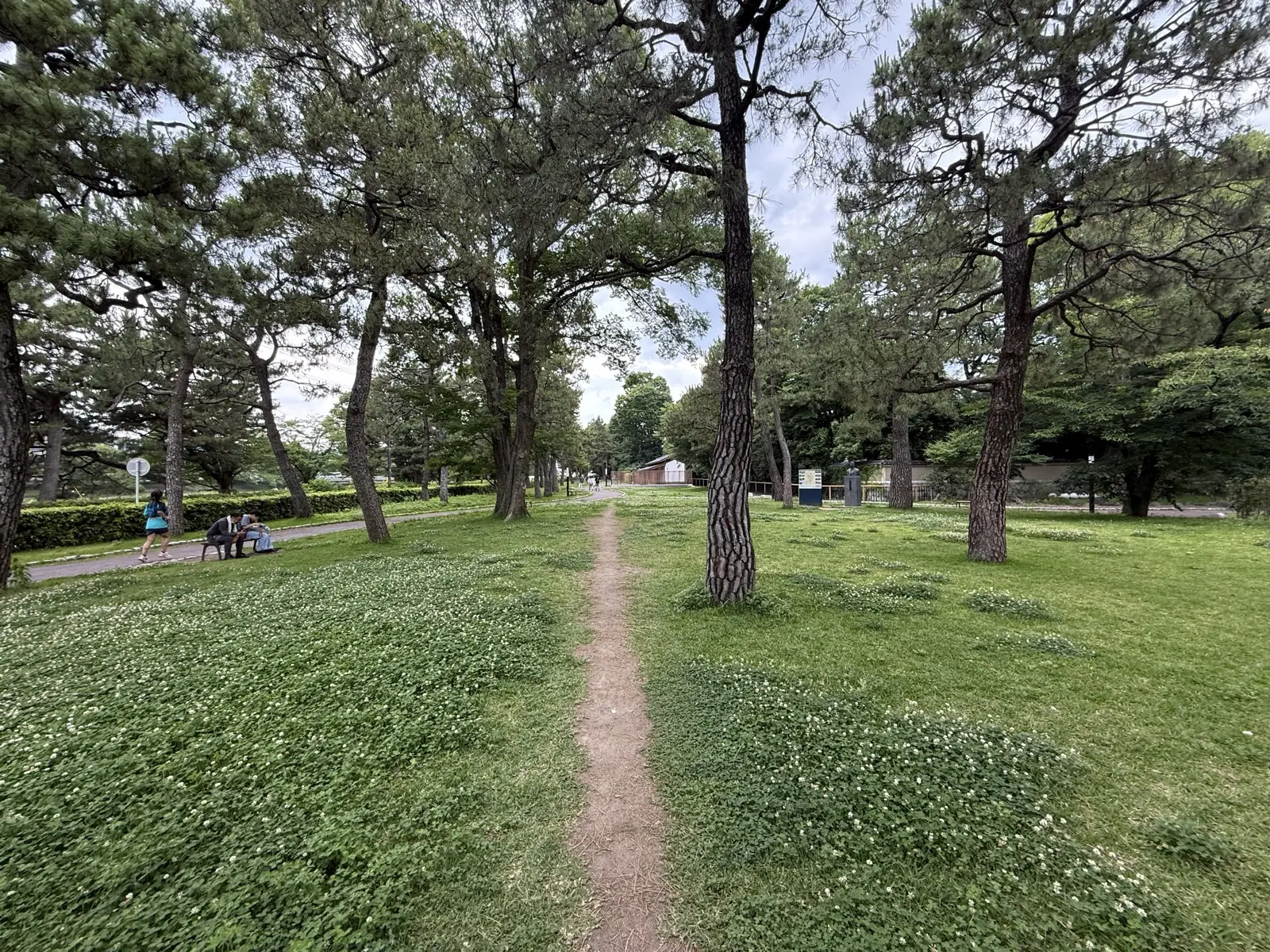
Right by the shrine's nearest station (Demachiyanagi) is the Kamo-gawa delta — where two rivers meet and locals sit on the grassy banks, hop the stepping-stones, and do nothing in particular. Grab a snack and sit by the water; it's one of the nicest, most local things to do in Kyoto, and it's free. Watch the couples along the bank, too — there's a famous local phenomenon where pairs space themselves out at almost perfectly even intervals along the river (we half-jokingly call it the "Kamogawa equidistant law").
This is the little ritual almost no guide explains properly — so here's the whole thing, start to finish.
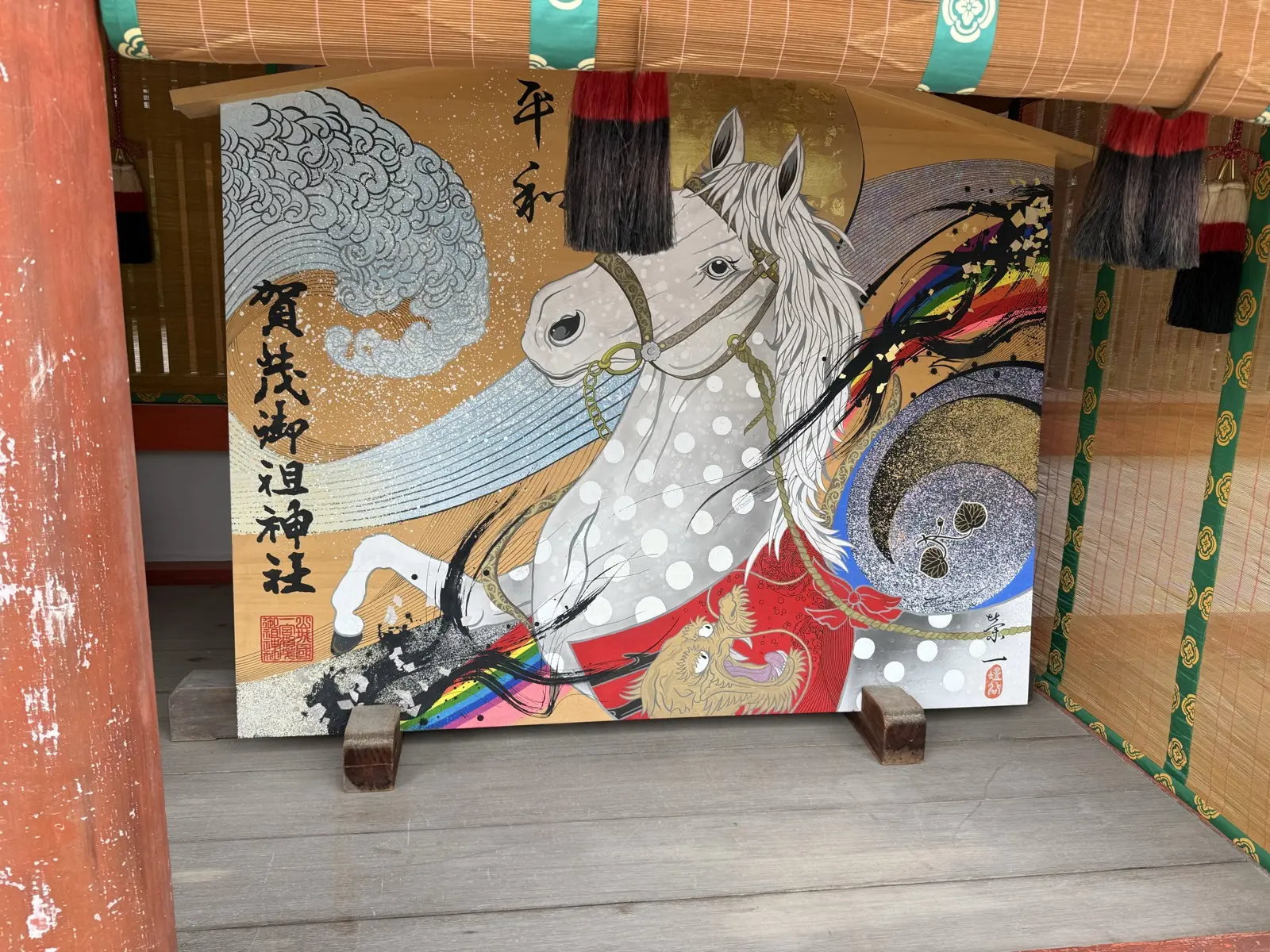
The Chinese (East Asian) zodiac — jūnishi in Japanese — is a twelve-year cycle in which each year is assigned an animal: Rat, Ox, Tiger, Rabbit, Dragon, Snake, Horse, Goat, Monkey, Rooster, Dog and Boar. The animal of the year you were born is "your sign" — a bit like a Western star sign, but set by birth year rather than month. 2026 is the Year of the Horse.
The cycle repeats every 12 years — find the row with the year you were born:
| Animal | Birth years |
|---|---|
| Rat | 1972, 1984, 1996, 2008, 2020 |
| Ox | 1973, 1985, 1997, 2009, 2021 |
| Tiger | 1974, 1986, 1998, 2010, 2022 |
| Rabbit | 1975, 1987, 1999, 2011, 2023 |
| Dragon | 1976, 1988, 2000, 2012, 2024 |
| Snake | 1977, 1989, 2001, 2013, 2025 |
| Horse | 1966, 1978, 1990, 2002, 2014, 2026 |
| Goat | 1967, 1979, 1991, 2003, 2015 |
| Monkey | 1968, 1980, 1992, 2004, 2016 |
| Rooster | 1969, 1981, 1993, 2005, 2017 |
| Dog | 1970, 1982, 1994, 2006, 2018 |
| Boar | 1971, 1983, 1995, 2007, 2019 |
One honest catch: traditionally the zodiac year turns in early February (around risshun), not on 1 January. If you were born in January or the first days of February, your sign may be the previous year's animal — check a lunar-calendar converter if you want to be sure.
In front of the main hall stand the seven Kotosha shrines. They enshrine seven names of a single great deity (Ōkuninushi), and between them they guard all twelve signs — so some shrines cover two animals. Rat and Horse each get one to themselves; Ox pairs with Boar, Snake with Goat, Rabbit with Rooster, Tiger with Dog, and Dragon with Monkey. Each shrine is clearly labelled with the animals it protects, so just find the one with your sign.
The order the shrine itself recommends: (1) pray at the main hall first, then (2) at your own birth-year animal's shrine, then (3) at the shrine for the current year's animal — the Horse shrine in 2026. People come to pray for health and a year free of illness. It takes five minutes, it's free, and it's the kind of small, personal thing that makes a visit stick.
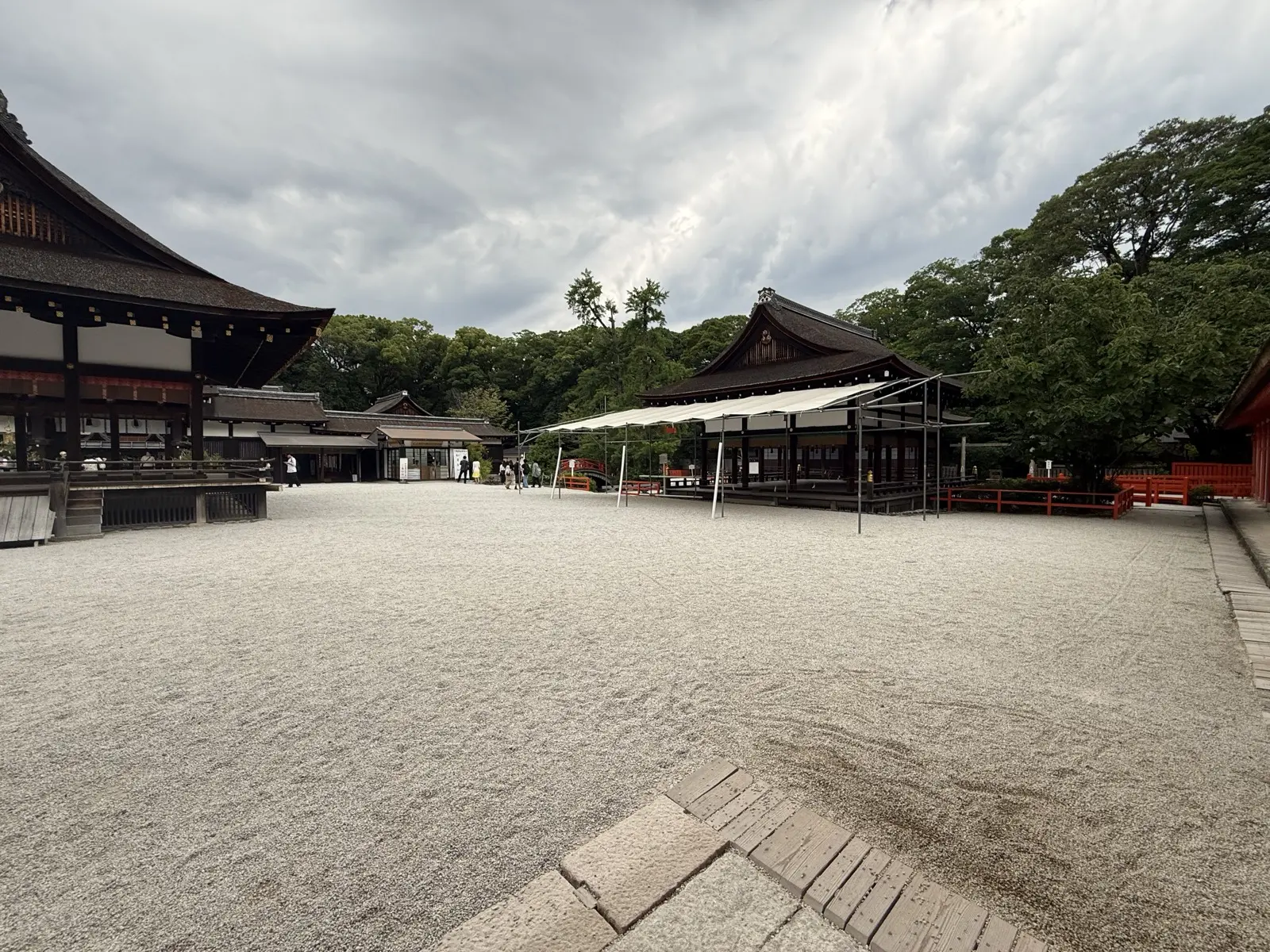
Officially Kamo-mioya-jinja, Shimogamo predates the founding of Kyoto itself and is one of Japan's oldest Shinto shrines. Its forest, Tadasu-no-Mori, is a rare surviving patch of primeval woodland in the middle of the city. Every May it hosts part of the Aoi Matsuri, one of Kyoto's three great festivals, with a procession in Heian-era costume.
Take the Keihan Main Line from Yodoyabashi all the way to Demachiyanagi — no transfer, about 50–55 minutes — then walk ~10 minutes up through the forest to the shrine.
City Bus 4 or 205 to the "Shimogamo-jinja-mae" / "Tadasu-no-Mori" area, about 30 minutes, then a short walk.
Demachiyanagi is also the start of the Eizan Railway to Kurama/Kibune, and steps from the Kamo delta — an easy, low-stress corner of Kyoto to spend a relaxed half-day.
Shimogamo is a low-stress day trip from Osaka — and one of the calmer corners of Kyoto. Door to door:
Reckon on about 1 hour each way. Demachiyanagi sits right by the Kamo river delta and is the start of the Eizan Railway to Kurama and Kibune, so Shimogamo slots easily into a relaxed half-day in northern Kyoto.
Planning the whole day? See our Osaka-to-Kyoto day-trip guide for line-by-line routes and a ready-made plan.
Because it's free and a little out from the main temple trail, Shimogamo is usually far calmer than Kiyomizu or Fushimi Inari — a real relief in peak season. Go in the morning, walk the forest slowly, do the mirror ema and your zodiac shrine, then drift down to the river. It's not a "wow" sight like the golden pavilion; it's a place to slow down. Come for that and you'll love it.
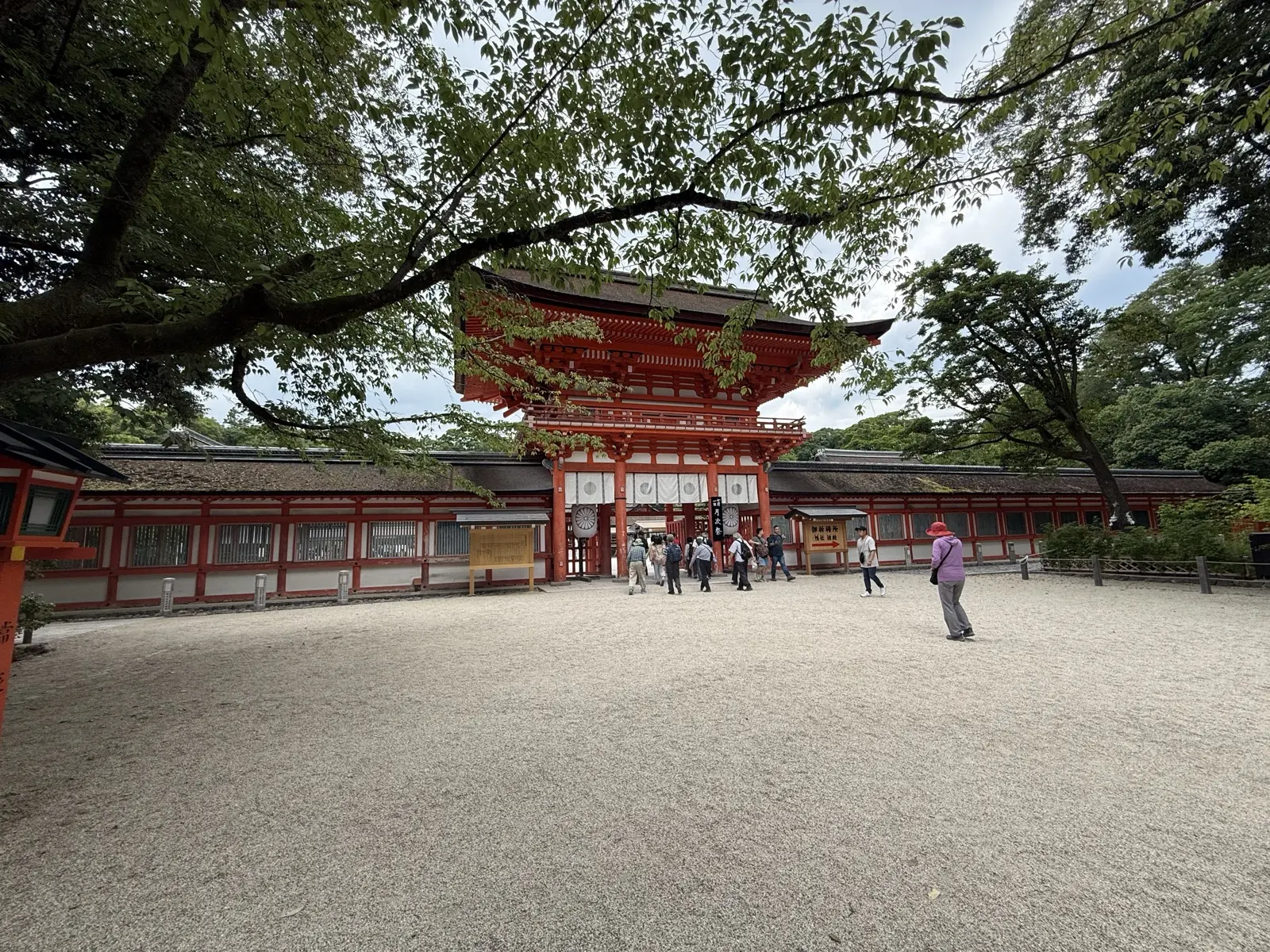
The main grounds and the Romon (tower gate) are open daily from 6:00 to 17:00, and admission is free year-round. Amulet and goshuin (stamp) counters open later, at around 9:00, so an early-morning visit means an empty forest but no charms or stamps. Special interior viewings run 10:00-16:00 (see below).
The honest answer on timing: the shrine itself rarely feels crowded even at peak season, because the long Tadasu-no-Mori approach spreads people out. The exception is the Mitarashi Festival in late July, when the sub-shrine pond area draws big evening queues. If the goal is a calm walk, arrive before 9:00 or after 15:30. Photographers favour the low light of early morning through the forest canopy.
Note: published hours vary slightly by source and season, and the shrine occasionally adjusts gate times for ceremonies. It is worth checking the official site before a dawn visit.
Beyond the free grounds, Shimogamo runs a special viewing (tokubetsu haikan) that most day-trippers never notice. It costs 1,000 yen for adults; free for junior-high age and younger, and runs 10:00-16:00.
The ticket gives access to areas closed to ordinary visitors, including the Oidono (the "God's Kitchen"), the Shinfukuden hall with its imperial throne room, the Jinguji temple ruins, a small museum with rotating exhibits, and a reconstruction of Kamo no Chomei's Hojo hermitage — the tiny hut behind the 13th-century essay Hojoki, a genuine draw for anyone into Japanese literature.
Who it's for: history and literature travellers, and anyone who wants context beyond the standard shrine photo stops. Skip it if the visit is a quick 30-minute pass on the way to somewhere else. The elaborate Junihitoe (twelve-layer kimono) try-on and court-dance viewing is a separate, reservation-only group program (roughly 80 seats per session, about one hour) and is not offered on New Year's Day or on the day of the Aoi Matsuri.
Two events transform the shrine and are worth planning around.
One of Kyoto's three great festivals, dating to the Heian period. A procession of over 500 people in Heian-era court dress walks roughly 8 km. It departs the Kyoto Imperial Palace at 10:30, reaches Shimogamo around 11:40, then leaves at 14:20 for Kamigamo Shrine, arriving about 15:30. Rain pushes it to May 16. Paid grandstand seats are sold along the route for those who want a guaranteed view; otherwise the free roadside spots fill early.
The shrine's most atmospheric event. Visitors pay 500 yen for a candle and wade barefoot through the cold spring water of the Mitarashi pond to ward off illness — a rare interactive Shinto ritual. In 2026 it runs July 18-30. Evenings are busiest and most magical; go on a weekday if possible, and bring a small towel.
Shimogamo sits beside the literal birthplace of a famous Japanese sweet, so this is one shrine where the food combo is a highlight rather than an afterthought.
| Shop | Signature | Price / hours | Notes |
|---|---|---|---|
| Kamo Mitarashi Chaya (beside the shrine) | Mitarashi dango — this is the shop that invented it (founded 1922) | 3 sticks ~420 yen; open 9:30-18:30, closed Wed | The dumplings are famously spaced to represent a human body; takeout available |
| Demachi Futaba (~5 min from Demachiyanagi Station) | Mame-mochi (bean mochi), founded 1899 | Open 8:30-17:30, closed Tue & 4th Wed; sells out early | Queues run 15-30 min on weekdays and can top 90 min on weekends/holidays |
Practical tip: Demachi Futaba's mochi contains no preservatives and is best eaten the same day. Phoning ahead to reserve an order (pickup within about 30 minutes) is a known workaround for the weekend queue. Both shops close on days that catch visitors out — Kamo Mitarashi Chaya on Wednesdays, Demachi Futaba on Tuesdays — so a same-day plan for both only works on Thursday through Sunday.
Shimogamo and Kamigamo are sister shrines (together the "Kamo shrines") and share UNESCO World Heritage listing, yet most visitors only do one. Kamigamo sits about 3.5 km upriver.
The efficient move: from Demachiyanagi Station, take Kyoto City Bus No. 4 bound for Kamigamojinja-mae. It stops right beside Shimogamo (about 5 minutes, 230 yen), and the same route continues to Kamigamo (roughly 30 minutes total from Demachiyanagi, 230 yen). So both shrines are doable on one bus line in a half-day.
Kamigamo is quieter, more spread out, and known for its conical sand mounds (tatesuna) and a broad approach. The honest verdict: if time is tight, Shimogamo's forest approach makes the stronger single visit; pair them only if shrines and Heian history are a genuine interest rather than a box to tick.
No — the grounds and Tadasu-no-Mori forest are free and need no booking. Only the 1,000-yen interior viewing and the group kimono program involve payment or reservation.
Most visitors spend 45-90 minutes for the free grounds and forest walk. Add an hour for the paid interior tour, or 30 minutes for the walk from the Kamo delta.
The main approach through Tadasu-no-Mori is a wide, largely flat gravel path, which is manageable but can be slow-going for wheels on loose gravel; the central shrine buildings are reached over flat ground. There are steps and raised thresholds within some inner structures. (Specific accessible-toilet and ramp details: verify with the shrine.)
Yes — the open forest, the dango shop next door, and the wade-in Mitarashi pond in July make it more child-friendly than most Kyoto temples. Interior tours are free for junior-high age and under.
Do not assume the sweet shops are open every day — both have midweek closures — and do not turn up expecting goshuin or amulets before 9:00.
Yes — entry to the shrine grounds and forest is free. Special viewings of certain inner halls cost around ¥500. Decorating a mirror ema at Kawai Jinja has its own small charge.
Kawai Jinja, near the southern entrance, where you decorate a mirror-shaped ema with make-up and write a wish to pray for beauty. It's especially popular with women and overseas visitors.
Take the Keihan Main Line direct from Yodoyabashi (Osaka) to Demachiyanagi — about 50–55 minutes, no transfer — then walk ~10 minutes through the forest. From Kyoto Station, City Bus 4 or 205.
The Kotosha — seven small sanctuaries in front of the main hall that guard the twelve Chinese zodiac signs. You pray at the one for your birth-year sign.
The Kamo-gawa delta is a few minutes' walk from Demachiyanagi station — a free, relaxed riverbank spot where locals sit, picnic and cross the stepping-stones.